 Vancouver
METRO VANCOUVER NEWS
Alcohol, whey and motorcycles targeted by U.S. import ban on Canadian products
The U.S. plans to ban imports of most Canadian alcohol, some whey and molasses products, and larger motorcycles on Sept. 29 as the Canada-U.S. trade war escalates.
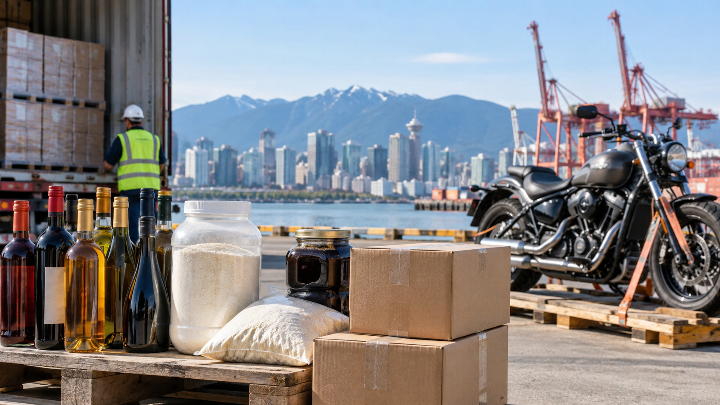
The United States has announced import bans on most alcoholic beverages from Canada, along with whey, molasses and motorcycles, in a further escalation of the Canada-U.S. trade war.
The U.S. had already imposed 50 per cent tariffs on about $20 billion in Canadian products, roughly 5 per cent of the $381.92 billion in goods Canada sent to the U.S. last year. The bans announced late Tuesday target some of those products and are set to take effect Sept. 29. Canadian businesses already faced difficulty exporting goods subject to the 50 per cent levy.
Jonathan Doh, a professor of international business at Villanova University, called import bans extremely unusual as a trade-policy tool and said he could not recall a modern-era action involving an absolute ban. He said their overall material effect would not be large, except in specific categories such as alcohol.
Provincial liquor boards and stores in Canada began removing U.S. labels from shelves in 2025 amid boycotts of American alcohol. Doh said that effectively barred U.S. liquor, wine and beer from the Canadian market, and may have prompted U.S. trade officials to respond by banning some Canadian imports.
The U.S. ban covers malt beer, certain wines, and spirits including bourbon, whisky, gin and vodka. The Distilled Spirits Council of the U.S. says 17.5 million nine-litre, or 2.4-gallon, cases of Canadian whisky were sold in the United States in 2023, generating about $2.3 billion in revenue for distillers. U.S. trade data show the country imported about $846.1 million worth of products on the ban list in 2025. Doh characterized the move as largely tit-for-tat.
The dairy-related ban focuses on whey, a cheese-making byproduct used to add protein to products. Demand for added-protein products has surged, creating shortages of food-grade whey protein and pushing prices to records.
U.S. trade data show nearly half of the $73.6 million in general and modified whey imported by the U.S. in 2025 came from Canada, although products covered by the ban represent a smaller share. The ban includes eight types of whey, including protein concentrates and modified whey, as well as some molasses products.
It also covers larger-engine motorcycles and mopeds, which account for most motorcycles imported into the U.S. from Canada. They represent a relatively small share of total U.S. motorcycle imports: of the $943.7 million in motorcycles imported in 2025, the Canadian motorcycles affected by the ban accounted for less than 9 per cent, or about $80.6 million.
Not all tariff-list changes are bans. Cement, toilet paper, bedsheets and fishing rods will be removed from the list. Maine Republican Sen. Susan Collins, who faces a difficult re-election contest, urged the administration last month to exempt cement and paper, saying the levies could jeopardize the viability of Maine companies and the jobs they support.
Barry Appleton, co-director of the Center for International Law at New York Law School, said the latest measures, including bans and the addition of key products such as steel and aluminum to the tariff list, risk further Canadian retaliation. He said the measures would not improve economic efficiency or affordability, and would reduce consumer choice and disrupt supply chains.