 Vancouver
METRO VANCOUVER NEWS
CentreBC proposes more police and Crown prosecutors in Surrey safety plan
CentreBC leader Elenore Sturko says the party would add 500 RCMP officers and 60 Crown prosecutors over five years if elected, alongside expanded recovery and long-term care options.
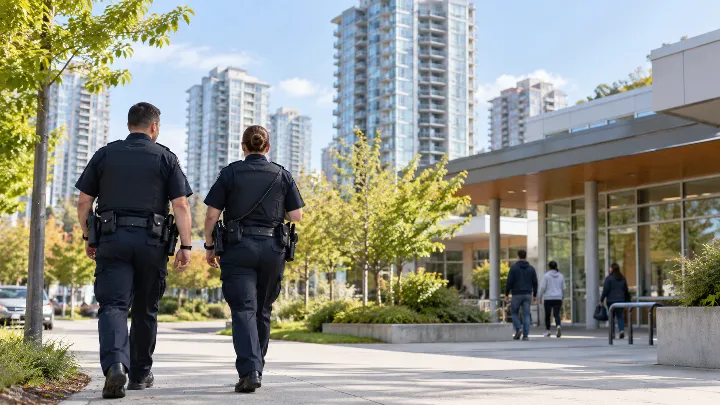
CentreBC is promising to hire 500 additional RCMP officers and 60 Crown prosecutors over five years as part of a provincewide public safety plan announced in Surrey on Oct. 15. Party leader Elenore Sturko, who is running in Surrey South, outlined the commitments outside Surrey Provincial Court with party members ahead of the Oct. 24 provincial election.
Sturko said concerns about public safety and the province’s response to vulnerable people, including those experiencing mental illness and brain injuries, were among the reasons she entered politics. She served with the Surrey RCMP before entering provincial politics in 2022. She said people still do not feel safe walking on streets, using public transit or running a business in British Columbia.
Under the proposal, CentreBC would increase the number of RCMP officers funded through the provincial budget. Sturko said that number has remained at 2,602 under the NDP and previous governments. The party also plans to expand public-safety units and maintain funding for extortion task forces addressing targeted attacks linked to international and domestic gangs.
CentreBC would double annual funding to $26 million for the Special Investigation and Targeted Enforcement (SITE) and Community Safety and Targeted Enforcement (CSTEP) programs, which target repeat and violent offenders. Sturko said the funding would also include dedicated Crown prosecutors.
The plan would combine enforcement with rehabilitation and longer-term care, Sturko said. As a former RCMP officer, she said, she knows effective enforcement and accountability work alongside rehabilitation and long-term care to support public safety.
CentreBC also plans to open two voluntary recovery units within B.C. corrections by 2028-29. Each unit would be independently evaluated based on reoffending rates and overdose incidents. Sturko said public drug use and street disorder remain problems in cities across the province, even though decriminalization experiments are long over.
Within its first 100 days, a CentreBC government would formally ask the federal government to change directives governing the laying of criminal charges for drug possession, Sturko said. She said the party would use alternative measures and restorative justice where appropriate to help direct people into care. The plan would also expand voluntary treatment and involuntary care, including intensive housing for people who need a higher level of support.
Sturko said some people living on the street experience severe and lasting brain injuries or cognitive impairments caused by overdoses, head injuries or fetal alcohol spectrum disorder. She said they can cycle through emergency rooms, hospitals and jails without receiving the long-term support they need.
If elected, CentreBC would ask Ottawa to help fund intensive-care homes with round-the-clock nursing, medication assistance and daily support. The province would provide the land and cover the cost of care, with a goal of opening approximately 300 spaces by 2030-31, Sturko said.
Sturko said accountability and treatment are compatible. CentreBC believes people can be expected to take responsibility for their actions while recognizing that effective treatment and rehabilitation can reduce the likelihood of reoffending, she said. She added that the party’s public safety commitments are intended to help people feel safer in their communities. British Columbians deserve a justice system that takes crime seriously, responds effectively and helps people feel safe in their communities, she said. “That is our commitment to British Columbians.”