 Vancouver
METRO VANCOUVER NEWS
Two new sea spider species discovered near Vancouver
UBC researchers found two previously undocumented sea spider species in the Salish Sea, marking the first such discoveries in nearly a century.
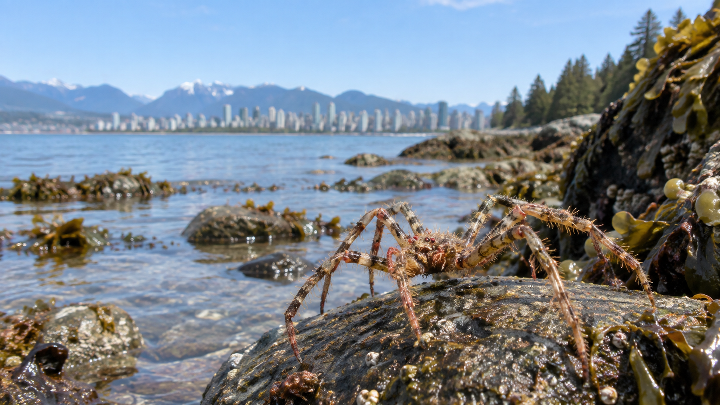
UBC researchers have discovered two previously undocumented sea spider species in the Salish Sea, including near Vancouver. The specimens were collected between September 2023 and August 2024 during dives of up to 18 metres in habitats around Quadra Island, Vancouver, Bamfield and Victoria.
UBC says the project is the first comprehensive study of Salish Sea sea spiders to use both detailed imaging and DNA analysis. Lead author Cromac Toler-Scott conducted the work while completing a master's degree in zoology at UBC. He said marine invertebrates in the Salish Sea are particularly vulnerable to climate change and human disturbance, but little is known about which species live there or how they live. Identifying them is a necessary first step in understanding those impacts and protecting key parts of the ecosystem.
One species, Callipallene pilosuspedes, was named for the long, curved spines on its lower legs; its name plays on the Latin for “hairy feet.” The other, Tanystylum kiixin, was named after an Indigenous village site near where specimens were first collected. It is pronounced “kee-hin,” a word derived from the sound of waves breaking at the base of the village site.
Sea spiders are marine arthropods rather than spiders in the conventional sense. UBC says they breathe through their skin and males rear the young. Females produce eggs from ovaries spread through their limbs, while males use egg-carrying limbs called ovigers to collect the eggs and attach clusters of egg sacs to their bodies. The flexible ovigers of Callipallene pilosuspedes can also be used for grooming, while the smaller, less dexterous egg-carrying limbs of Tanystylum kiixin leave it unable to groom itself effectively.
UBC says sea spiders evolved about 500 million years ago and are related to scorpions, spiders and horseshoe crabs. They can have up to 12 legs and a sucking proboscis, and range from under one centimetre to more than 70 centimetres in Antarctica. Toler-Scott said that, despite having only one field season, he believes more undocumented diversity remains in the region. The research was recently published in Organisms Diversity & Evolution.