 Vancouver
METRO VANCOUVER NEWS
U.S. tariffs on Canadian imports could drive hockey equipment prices higher
A new 50 per cent U.S. tariff on more than 550 Canadian goods includes hockey sticks and skates, raising concerns about costs for families already facing sharply higher equipment prices.
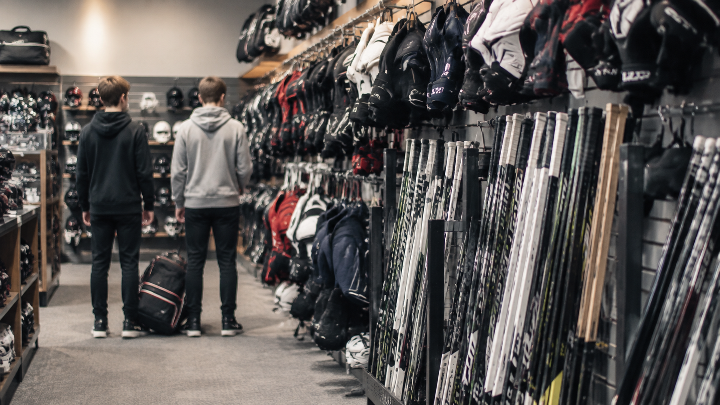
A new round of 50 per cent tariffs imposed by President Donald Trump’s administration on Canadian goods could add to the cost of hockey equipment, an already expensive sport for families paying for gear, ice time, travel and coaching. Hockey sticks and skates are among more than 550 products named by the White House.
Kelly Rand of St. Paul, Minn., said her teenage twin sons’ growth spurts mean frequent equipment purchases. A goalie helmet that cost $400 in 2022 now costs $1,000, while a chest protector bought last year for $465 now sells for $900. She said a broken stick can prompt immediate concern among parents over how many $400 replacements they can afford in a season.
B&R Sports director of e-commerce John Merola said an average stick now costs about $200 and high-end models reach $400. He said custom skates and goalie equipment made by True Hockey in Canada are imported into the United States, and Bauer, CCM and True continue to make many custom items in Canada. Sports & Fitness Industry Association CEO Todd Smith said substantial Canadian manufacturing remains despite production shifts to other countries, making the tariff significant.
The association’s manufacturers sales report found spending on hockey equipment rose 45.4 per cent from $228.9 million in 2020 to $332.9 million in 2025, alongside growing participation. U.S. International Trade Commission data, which does not distinguish ice hockey from field hockey equipment, shows Canada supplied about 8.5 per cent of relevant U.S. imports last year, behind China at 52.7 per cent, Vietnam at 13.2 per cent and Thailand at 9.5 per cent.
Of 2.1 million hockey sticks imported last year, more than 1.5 million, or 74.1 per cent, came from China; 268,000, or 12.8 per cent, came from Mexico; and 18,909, or 0.9 per cent, came from Canada. University of Michigan-Flint economics professor Chris Douglas said Canada’s relatively small share makes a blanket 50 per cent price increase unlikely, though higher demand could increase a stick’s price by about $50. An added $50 or $100 could lead some families to stop enrolling children in hockey, he said.
Merola said manufacturers initially absorbed costs when Trump imposed tariffs on China, before later raising prices. A similar wait-and-see approach could delay cost pass-through this time. Douglas said the response depends on whether tariffs are expected to last; if they are seen as long-term or permanent, higher production costs could be passed quickly to consumers.
Merola expects long-term tariffs to shift more manufacturing to the United States, Asia or elsewhere. Roustan Hockey, described as Canada’s last major hockey-stick factory, reaffirmed last week that it will continue production in Canada. After federal minister Evan Solomon toured its Brantford, Ontario, facility, founder W. Graeme Roustan said the company remained committed to its Canadian employees, customers and manufacturing operations.
Smith said U.S. hockey participation has risen 7 per cent over three years, a boom he attributed to the 4 Nations Face-Off, the Winter Olympics and other factors. He said learn-to-play programs supported by the National Hockey League, USA Hockey and teams, offering free equipment and ice time, have also helped, but warned tariffs could stunt that growth.