 Vancouver
METRO VANCOUVER NEWS
B.C. Conservatives promise women’s and children’s hospital in Surrey if elected
B.C. Conservative Leader Lorne Doerkson says a Conservative government would build a women’s and children’s hospital in Surrey if elected Oct. 24. The pledge follows proposals from Surrey civic candidates Doug McCallum and Brenda Locke, who are also pressing provincial parties for hospital commitments.
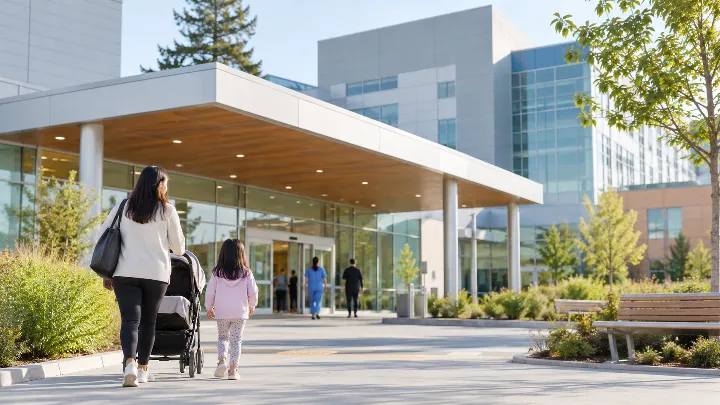
The Conservative Party of B.C. appears to have drawn on Surrey mayoral candidate Doug McCallum’s election promise to build a third hospital in the city if it wins the provincial election. Leader Lorne Doerkson announced Oct. 15 that a Conservative government elected on Oct. 24 would build a new Women and Children’s Hospital in Surrey, so families would no longer have to travel an hour or more to Vancouver for care.
The pledge comes amid the Oct. 17 civic election campaign. On Sept. 21, McCallum’s Safe Surrey Coalition issued a release headed, “McCallum to Build a Children’s Hospital for Surrey on City-Owned Newton Land.” Later in the release, the proposal was described as a full-service general hospital at 6965 King George Boulevard.
McCallum welcomed the Conservative pledge. A subsequent Safe Surrey Coalition release also noted that NDP Leader David Eby said on Oct. 13 he would work with “Surrey leaders who have offered City land to the Province to build a new health care facility.” McCallum said that three weeks earlier he had said Surrey would tell Victoria its priorities, with a hospital first. He thanked both leaders for responding.
McCallum said the issue is not partisan in Surrey. He said Vancouver has six hospitals for 730,000 people, while Surrey has one. He added that mothers from Surrey are sent to other cities to give birth, and children are driven across a bridge because Fraser Health has no paediatric intensive care. He said Surrey’s position would be the same whoever wins Oct. 24, and called for the project to proceed.
McCallum says that if he is elected with a majority on council, he will dedicate the Newton land to the hospital and issue all required City of Surrey permits within 60 days. He said building a hospital requires putting the land on the table, issuing permits and continuing to hold people in Victoria or Ottawa accountable. During a campaign stop in Newton on Oct. 7, Doerkson had vaguely hinted that voters should watch for a Surrey hospital announcement. He said the party was considering the issue for its platform rollout and would provide information later.
On Oct. 15, Surrey Mayor Brenda Locke’s campaign joined the debate, calling on provincial parties to commit to five requests for Surrey, including a women’s and children’s hospital. Locke said in a release that the commitments were vital to Surrey’s future and would ensure the city received the services it deserved as it became B.C.’s largest city.
Locke’s Surrey Connect slate also wants the provincial parties to commit to building a second tower at Surrey Memorial Hospital, repealing Bills 44 and 47, legislating a Surrey Charter, ensuring reform at Metro Vancouver, and “complet[ing] an equity review of provincial funding in Surrey versus Vancouver.” The release linked to reports about Eby’s support for a Surrey Charter and Surrey Connect’s claims about the cost of the North Shore wastewater treatment plant.
The release said Surrey Connect rolled out its platform on Oct. 1 and committed to providing the province with a piece of land for a Women’s and Children’s Hospital in Surrey. It claimed Surrey Connect was the only party to commit to helping build such a hospital. Locke said the slate was calling on all parties to support Surrey, adding that the city had been treated as second to Vancouver for too long and deserved its share of funding and resources.
Bill 47 requires municipalities to designate Transit-Oriented Areas, or TOAs, around SkyTrain stations and bus exchanges in their jurisdictions. Each TOA has three density tiers, with minimum permitted densities set for each tier. Bill 44, also known as the Housing Statutes Amendment Act, requires cities with populations over 5,000 to permit three to six dwellings on residential lots that had been reserved for duplexes and single-family homes.