 Vancouver
METRO VANCOUVER NEWS
Oilpatch has what it wanted, but will companies build?
Alberta Premier Danielle Smith wants to double oilsands output within a decade, and recent policy changes have made new projects easier for industry to consider. Experts say major investment still has to compete with shareholder returns and meet cost and policy conditions.
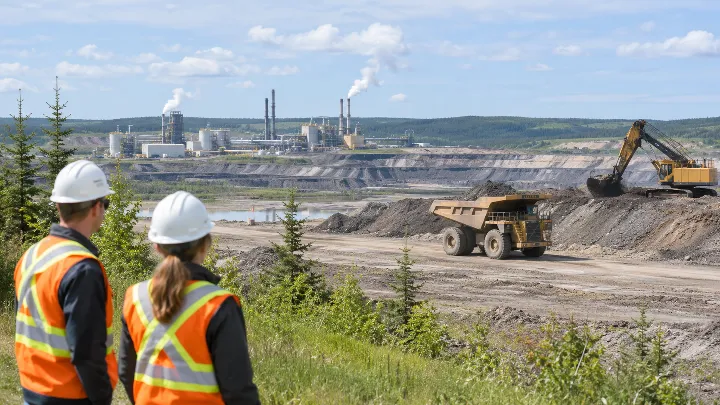
CALGARY — Alberta Premier Danielle Smith has set an ambitious goal of doubling oilsands production over the next decade. Industry players say recent federal and provincial policy changes have made the prospect of bringing new projects forward easier to accept.
“It’s almost like the dog that got the car,” said R.J. Johnston of the University of Calgary’s School of Public Policy at an Alberta Securities Commission conference last month. “We got what we wanted as an industry. Now the pressure’s on to invest.”
Ottawa has taken several steps intended to boost output, including reversing a series of environmental policies from the Trudeau era and permanently making more investments eligible for immediate tax deductions. Alberta announced a new royalty program on Friday to spur development. The two governments are also shouldering most of the investment in the proposed Pacific Link pipeline to southern B.C., which would enable greater exports to Asia.
Experts say any large upstream investments that result will have to compete for capital with the dividend growth and share buybacks oilpatch investors have come to expect in recent years, while avoiding the severe cost overruns of the past.
“Expectations that the industry will follow through with massive investment are maybe a little unrealistic,” Johnston said, adding that such expectations do not fully account for how companies are positioned with shareholders and capital providers.
Michael Berger, a senior analyst at Enverus, said producers have been prioritizing debt repayment and shareholder returns, and he expects that to continue in the coming years. He also sees an appetite for growth. Large oilsands operators have multi-decade inventories, he said, and must balance adequate shareholder distributions with prudent capital allocation for growth.
Chris Seasons, a partner at ARC Financial and former head of Devon Canada, told the Alberta Securities Commission conference that the oilsands had a “go go go” mindset from about 2000 to 2014. Investor expectations for growth were high, he said, and the industry as a whole spent more than its cash flow while capital was readily available. Many projects were rushed, driving capital costs up and economics down.
The 2014 global oil-price collapse was a rude awakening. Since then, operators have worked to reduce the cost of extracting each barrel of bitumen. Seasons said he believes that discipline will remain as the industry expands.
**Growth potential**
On recent third-quarter conference calls, executives at Canada’s largest oilsands producers expressed optimism about pursuing growth under the right conditions.
Imperial Oil CEO John Whelan told analysts late last month that the company could double its gross operated upstream production through three steam-driven oilsands developments: Aspen, Clarke Creek and Corner. Imperial had been considering a final go-ahead decision on a 150,000-barrel-a-day project at Aspen at the end of the decade, but that decision could come sooner. Whelan said the company is weighing whether to bring it forward and has options. Ultimately, he said, the decision will depend on technology, project economics and the fiscal environment, and he is encouraged by what he is seeing.
Suncor Energy Inc. CEO Rich Kruger said on the company’s quarterly call with analysts that Suncor had been considering about half a dozen in-situ projects to complete over the next decade. That remains the base case, he said, but the company is doing preliminary work on whether it could do more or move faster. It has not yet decided.
Cenovus Energy Inc. aims to pursue development opportunities through its proposed $5.7-billion acquisition of smaller peer Athabasca Oil Corp. Cenovus said production from Athabasca’s oilsands assets could rise from its current 40,000 barrels of oil equivalent per day to 115,000 barrels a day by 2032. The deal would also give Cenovus an undeveloped prospect at Corner and an opportunity to expand its operating Leismer project.
On the conference call announcing the Athabasca deal, Cenovus CEO Jon McKenzie said recent announcements on tax policy, royalties, new pipelines and regulatory efficiency were important steps in the right direction. He said they would have a meaningful impact on the company’s ability to advance growth projects such as Leismer and Corner.
Top oilsands producers have been in intensive talks with Ottawa and the Alberta government, seeking an agreement that would advance the Pathways carbon-storage project while encouraging increased oilsands output. First proposed in 2021 and later scaled down, Pathways is intended to offset some of the greenhouse gas emissions that would result from increased production enabled by Pacific Link. Under a broad energy accord signed by Ottawa and Alberta last year, advancing Pathways is a condition for the pipeline to proceed, and vice versa.
Canadian Natural Resources Ltd. president Scott Stauth said in an interview earlier this month that the company’s growth plans depend on the outcome of those negotiations. He said he hopes the agreement will enable growth opportunities.
Berger said oilsands growth could take several forms: redeveloping existing projects, adding expansions or building from scratch. He expects a mix of approaches moving at different paces. There are enough resources and projects, he said; the question is ultimately the pace at which capital is deployed.