 Vancouver
METRO VANCOUVER NEWS
How to vote in B.C.’s 2026 provincial election, including advance voting
Advance voting runs Oct. 16 to 21, with polls open from 8 a.m. to 8 p.m. Voters can also vote by mail or on election day, Oct. 24. Registration is closed, but eligible voters can still register in person; ID rules and mail-in deadlines apply.
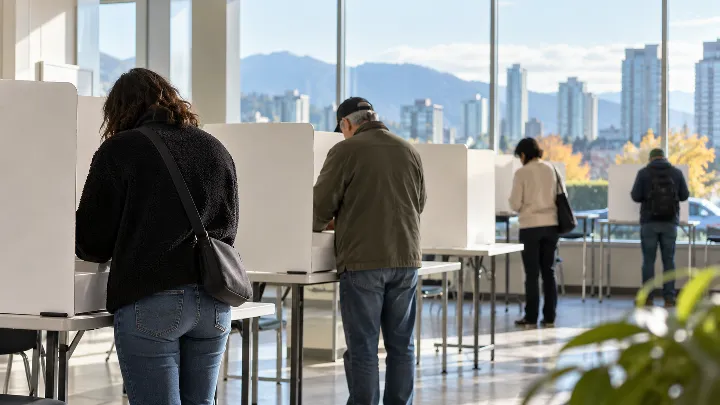
Advance voting in the 2026 B.C. provincial election runs from Oct. 16 to 21, with voting places open from 8 a.m. to 8 p.m. All residents can vote at any advance voting location, though not every location is open on every day. Elections BC lists locations and hours online. Registration is closed, but people can still register in person. To register, a person must be a Canadian citizen, at least 18 years old and have lived in B.C. since April 23, 2026.
Residents who cannot get to a voting location can request a vote-by-mail package through the Elections BC website or by calling 1-800-661-8683. Elections BC says mail voting can work for people who are away during advance voting or on election day. The deadline to request a package is Oct. 18. Completed packages must reach Elections BC by 8 p.m. on Saturday, Oct. 24. They can be mailed or dropped off at any district electoral office or voting place. Packages include step-by-step instructions.
Election day is Saturday, Oct. 24, one week after municipal election day on Oct. 17. Voting is open from 8 a.m. to 8 p.m. Voters are assigned a voting place and can look it up on the Elections BC website. They can also vote at any district electoral office until 4 p.m. on election day. General office hours are Monday to Friday, 9 a.m. to 5 p.m.; Saturdays, 10 a.m. to 4 p.m.; and advance voting days, 8 a.m. to 8 p.m. Elections BC has a list of district electoral offices online.
Voters must prove their identity. Any one of these documents can be used for quick verification at a voting place: a B.C. driver’s licence, B.C. ID card, B.C. Services Card, another Government of B.C. card with a photo, name and address, or a Certificate of Indian Status. If a voter does not have one of those, they can bring two pieces of ID or documents. Examples include a B.C. CareCard; a B.C. Services Card without a photo; a birth certificate; a Canadian Forces ID card; a citizenship certificate; a citizenship or membership card issued by a First Nation governing body in B.C.; a Correctional Service Canada offender ID card; a firearms possession and acquisition licence; a firearms possession-only licence; a Métis Nation B.C. citizenship card; an old age security ID card; a passport; a SIN card; or a Veterans Affairs Canada Health Care ID card.
Elections BC lists additional ways to confirm identity on its website. The agency also has the full list of candidates in the 2026 provincial election and further voting information.