 Vancouver
METRO VANCOUVER NEWS
Canada officially named host of 2028 Sommet de la Francophonie
Canada will host the Sommet de la Francophonie in the National Capital Region in 2028, 20 years after its last turn as host. Prime Minister Mark Carney says the summit will focus on promoting French language and culture in the digital age, alongside initiatives to deepen ties with Francophone partners.
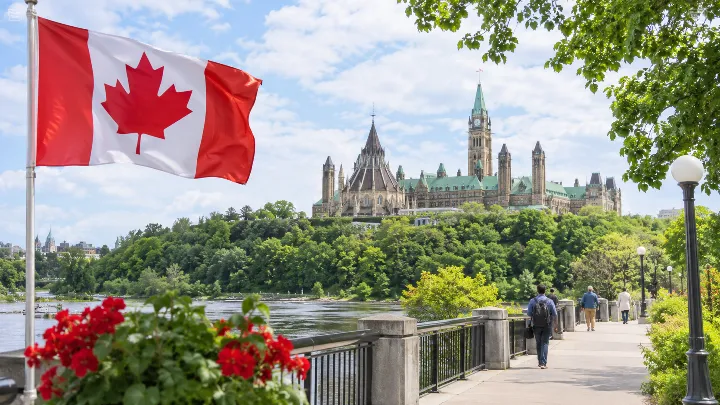
Prime Minister Mark Carney represented Canada at the 20th Sommet de la Francophonie in Phnom Penh, Cambodia, this week. At the summit, Canada was officially designated as host country for the 2028 edition. The National Capital Region will welcome delegates from more than 90 member states and governments of La Francophonie. Canada last hosted the summit in 2008, in Québec City.
Carney said French is at the heart of Canada’s identity and a strong link to key partners around the world. As artificial intelligence (AI) and digital technologies change how people communicate, create and learn, protecting French language and culture in the digital world has become an increasingly important challenge. Canada will make that effort a focus of the 2028 summit, promoting French language and culture in all formats, particularly in the age of social media and AI. Québec has long been at the forefront of this work at home and abroad.
In Phnom Penh, Carney announced initiatives to strengthen Canada’s partnerships with Francophone countries. He welcomed Manitoba’s admission as an observer government of the Organisation internationale de la Francophonie (OIF), following Canada’s support for the province’s candidacy. Manitoba joins Québec and New Brunswick, which are full members, and Ontario and Nova Scotia, which are observers.
Canada reaffirmed its long-term institutional support for the OIF and the Agence universitaire de la Francophonie (AUF), with recent investments totalling more than $23 million over four years. The funding is intended to promote French, advance cultural and linguistic diversity, and strengthen scientific and educational co-operation. Canada also announced $24 million for projects with countries across Francophone Africa to strengthen community resilience, protect vulnerable children and youth, advance the rights and economic empowerment of women and girls, support the transition to sustainable transportation, and strengthen public health security. This includes $2 million to prevent and reduce the spread of Ebola in affected regions of Africa.
Canada supports the creation of the Réseau de la Cité internationale de la langue française de Villers-Cotterêts. The network is intended to foster exchanges and partnerships among cultural organizations and professionals across La Francophonie, promote the diversity of Francophone cultures, and expand their global reach. Carney also welcomed a memorandum of understanding between the Public Health Agency of Canada and the Africa Centres for Disease Control and Prevention. It is intended to strengthen emergency preparedness and response, health surveillance and intelligence, testing capabilities, research, and medical countermeasures.
While in Phnom Penh, Carney addressed business leaders at FrancoTech, a trade and innovation show held alongside the summit. He emphasized the importance of strengthening ties among Francophone economies, businesses and young people ahead of Canada’s hosting of the 2028 summit.
Carney also met Cambodian Prime Minister Hun Manet for an official bilateral visit focused on trade, investment and security. The leaders announced the signing of a memorandum of understanding on trade and economic co-operation to expand commercial ties, business engagement and innovation. Building on the agreement, they agreed to begin exploratory discussions toward a Canada-Cambodia Foreign Investment Promotion and Protection Agreement. The proposed agreement would establish clear, predictable rules for investors, give Canadian businesses greater confidence to expand into new markets, and create high-paying careers at home. They also agreed to explore a potential double-taxation agreement to facilitate cross-border trade and investment.
To strengthen bilateral security co-operation with Cambodia, Carney announced a memorandum of understanding between the Financial Transactions and Reports Analysis Centre of Canada and Cambodia’s Financial Intelligence Unit to combat money laundering and terrorist financing. He also welcomed Cambodia’s inclusion in Canada’s Military Training and Cooperation Program, which will expand defence co-operation through military training, education and capacity building.
The government said Canada is building strength at home and diversifying its partnerships abroad. Carney will continue that work in China, where he will advance the new Canada-China strategic partnership and the Canada-China Economic and Trade Cooperation Roadmap.
Carney said: “The French language is at the heart of who we are as Canadians and a powerful link to key partners around the world. In a rapidly changing world, Canada is deepening these ties, opening new opportunities for our businesses and workers, and putting our expertise to work with countries across La Francophonie. As we prepare to host the next Sommet de la Francophonie in 2028, we will carry this commitment forward to advance shared prosperity and ensure the protection and preservation of the French language and culture.”
This was Carney’s first participation in a Sommet de la Francophonie, which is held every two years, and his first official visit to Cambodia. He was joined by Foreign Affairs Minister Anita Anand and Parliamentary Secretary to the Minister of Foreign Affairs Mona Fortier. Governor General Louise Arbour also represented Canada at the summit.
Carney noted that New Brunswick will host a Francophonie youth pre-summit in Moncton in August 2028, ahead of the main summit in the National Capital Region. The pre-summit will bring together young people from Canadian provinces and Francophonie member countries to network, debate summit issues and present their positions to heads of state and government.
The AUF and the Observatoire de la Francophonie économique are headquartered in Montréal. The Institut de la Francophonie pour le développement durable and the OIF’s Representation for the Americas are in Québec City. According to the Observatoire de la langue française, based in Québec City, La Francophonie represents nearly 16.5 per cent of global GDP and 20 per cent of international merchandise trade.
Canada’s presence in Cambodia has grown significantly in recent years, including with the opening of an embassy in 2025. Bilateral merchandise trade between Canada and Cambodia reached approximately $3.1 billion in 2025. Canadian direct investment in Cambodia amounted to $3.8 billion that year.