 Vancouver
METRO VANCOUVER NEWS
Isolated Indigenous people in Brazil seen near village as activists call encounter a crisis
About 20 members of the isolated Awa people were seen near a Guajajara community in Brazil’s Maranhão state. Authorities have sent protection and health workers and activated an emergency co-ordination mechanism amid concerns about disease and illegal incursions into the group’s forest territory.
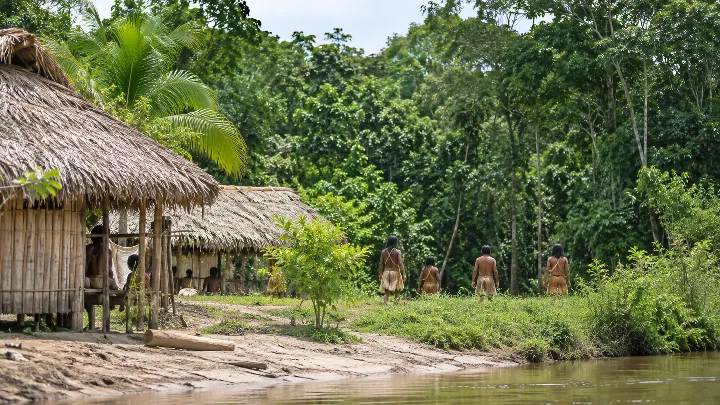
BOGOTÁ, Colombia — A rare encounter between Indigenous people living in isolation in Brazil’s Amazon rainforest and members of a neighbouring community has prompted government protections, amid concerns about the group’s health and threats to its forest home.
The encounter began Monday near a government access-control post and the Guajajara Indigenous village of Tawari in the northeastern state of Maranhão, according to a statement Tuesday from Brazil’s Ministry of Indigenous Peoples. The ministry said about 20 members of the isolated Awa people had been seen approaching the area in Arariboia Indigenous Territory. It cautioned that the information was preliminary as authorities assessed the situation.
The Awa have spent decades hunting, fishing and gathering food while avoiding outsiders. It is unclear why members of the group would suddenly approach a neighbouring community. Illegal logging, hunting and other incursions threaten their forest territory, raising concerns about the circumstances behind the encounter. Images of it have also drawn widespread attention.
Sarah Shenker, head of Survival Brasil, which is part of Indigenous rights advocacy organization Survival International, called the encounter “a crisis moment really and a wake-up call.” She urged Brazilian authorities to crack down on illegal intrusions into Awa territory. Shenker said the images could help affirm the existence of isolated Indigenous groups, whose presence is sometimes disputed by people seeking access to their lands. But she warned that the circumstances surrounding the encounter were troubling.
### Rare encounter documented
Footage recorded by members of the neighbouring Guajajara community and shared by Survival International shows Awa adults and children gathered amid dense vegetation. Some are carrying bows and arrows and wearing feathered headdresses and necklaces.
The reason for the group’s approach remains unclear. Survival International says the Awa apparently approached a government team, asked for yams and took them back into the forest.
The Arariboia territory has faced decades of pressure from illegal intruders, Shenker said. As surrounding forests have been cleared, isolated communities have become increasingly vulnerable.
The Brazilian government said the Awa group is registered in the official database of isolated Indigenous peoples and is monitored by a specialized protection team from Funai, the federal Indigenous affairs agency. Funai personnel and Indigenous health workers are now in the area. Authorities have also activated an emergency co-ordination mechanism to assess potential contact situations and health risks.
Survival International has previously estimated that around 100 Awa remain uncontacted, though that is not necessarily a current population count. Other Awa live in settled villages and maintain contact with outsiders.
### Concerns about the group’s safety
One of the most immediate concerns is the risk of disease. Indigenous peoples living in isolation can be particularly vulnerable to infectious illnesses because they have had limited previous exposure to pathogens common in the wider population.
The ministry stressed that its policy is not to encourage contact, but to protect the Awa’s right to remain isolated and let them decide for themselves whether to establish relations with outsiders. It also cautioned that a brief encounter does not necessarily mean a group has abandoned its isolation or chosen to establish permanent contact.
The Arariboia territory is also home to the Guajajara people, whose Indigenous forest guardians have spent years monitoring their lands and confronting illegal intrusions.
Shenker said those efforts have led to violence against the community, including the killings of some community members. She said responsibility for protecting the territory ultimately rests with the Brazilian government. “The only way that they will survive is if intruders are kept out of their forest once and for all,” she said.
Despite the attention generated by the rare images, Shenker said she would rather the Awa had remained out of sight, living undisturbed in their forest. “We would rather not have images and not have video footage of the uncontacted Awa when that means that they are living in the way that they choose in their forest, able to get on with their lives, hunting, fishing, gathering,” she said.
Reporter Gabriela Sá Pessoa in São Paulo, Brazil, contributed to this report. The Associated Press’ climate and environmental coverage receives financial support from multiple private foundations. AP is solely responsible for all content.
Steven Grattan, The Associated Press.