 Vancouver
METRO VANCOUVER NEWS
Advisory group on firearms classification, including the SKS, has yet to meet
A federal advisory group is expected to hold its first meeting this fall, nearly a year after Ottawa announced a review of firearms classification that includes the SKS. The government says it will consider the group’s advice before deciding the rifle’s status.
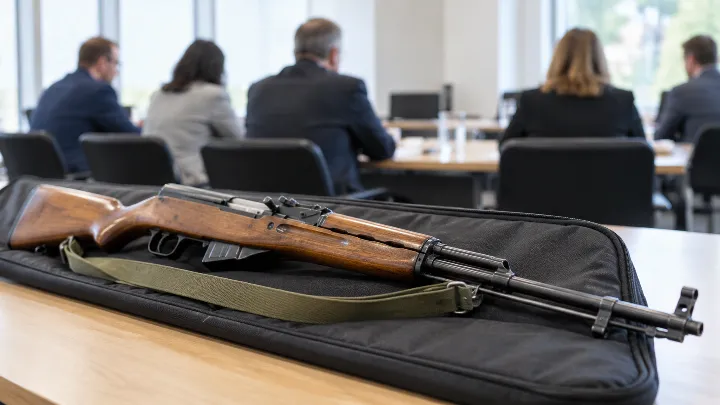
An advisory group supporting a federal review of firearms classification, including the SKS rifle, is expected to hold its first meeting this fall, nearly a year after Ottawa announced the review. Public Safety Canada says members of the Firearms Classification Technical Advisory Group, appointed to advise the department and the RCMP, “will be meeting later this fall.”
The Liberal government has faced renewed questions about the SKS after a document filed in a U.S. court said the killer in the Tumbler Ridge, B.C., mass shooting had talked about having an SKS. Jesse Van Rootselaar, 18, killed eight people in the Feb. 10 attack before taking her own life. The RCMP has declined to disclose details about the firearms used, saying its investigation is ongoing.
The SKS has been used in police killings and other high-profile shootings. It is also commonly used in Indigenous communities to hunt for food. Prime Minister Mark Carney recently indicated that the government would consider the advisory group’s advice before making a decision about the SKS’s status. Since May 2020, Ottawa has prohibited approximately 2,500 types of firearms on the grounds that they belong only on the battlefield. The SKS has not been banned.
Gun-control advocacy group PolySeSouvient has long urged the government to immediately ban new SKS sales, remove modern, assault-style versions of the rifle from circulation and introduce a voluntary buyback of older models. It calls for an exemption for Indigenous hunters who use the SKS primarily for sustenance.
In early December last year, Public Safety Minister Gary Anandasangaree said the government would “shortly be launching a comprehensive review of the firearms classification regime,” with an emphasis on simplicity and consistency. In a statement, he said the review would be supported by an expanded advisory group and include dedicated consultations with First Nations, Inuit and Métis communities, including on the SKS, to ensure Indigenous perspectives and traditions are an active part of the process. “The review will take a broad view of the legal framework for firearms, devices, magazines and ammunition to modernize the regime and ensure Canadians’ safety.”
In response to questions from The Canadian Press this month, the Public Safety Department said more information about the Technical Advisory Group and engagement activities for the classification review would be available “in the near term.” Members, the department said, would bring diverse technical knowledge, experience and expert views.
PolySeSouvient said this week that instead of implementing a comprehensive ban on assault-style firearms and high-capacity magazines, “the government keeps announcing new consultations and panels, and each one becomes another reason to postpone actual change.” The group told The Canadian Press: “Lives are at stake. The government needs to stop consulting and start acting, before more people are killed in mass shootings.”
In a recent commentary on its website, the Canadian Shooting Sports Association said many questions remain about the Tumbler Ridge shootings, including which firearms were used, how they were obtained and whether police had previously seized any of them. “Reclassifying another firearm before answering those questions may satisfy the demand for immediate action,” the commentary said. “It does not prove that banning another firearm would have prevented this mass murder.”