 Vancouver
METRO VANCOUVER NEWS
Activists rally in Surrey to protest the Build Canada Strong Act
Protesters urged Surrey-Newton MP Sukh Dhaliwal to oppose Bill C-39, warning it could affect labour, environmental and Indigenous rights. Dhaliwal said the bill would not take away the right to strike, while an Indigenous chiefs’ group called for work on the legislation to pause.
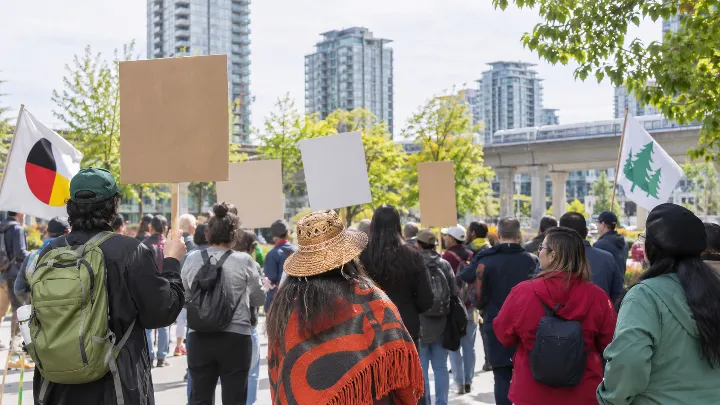
Activists gathered outside Surrey-Newton MP Sukh Dhaliwal’s office on Nov. 12, urging him to reject the Build Canada Strong Act (Bill C-39) as it approached a final-reading vote. The protest was part of a National Day of Action coordinated by climate justice movement 350Canada and local groups opposed to the Liberal government’s proposed legislation. 350Canada said 65 rallies took place across the country that day to pressure MPs.
Constituents across Canada are concerned the legislation could infringe on Indigenous rights, environmental law and labour rights in the name of “national interest.” Nolen Scott, a BC Greens candidate for Surrey-Panorama in the 2026 election and one of the organizers of Surrey’s only protest against Bill C-39, said in a Nov. 8 interview that Surrey is B.C.’s fastest-growing city. He said the bill and the new federal budget favour megacorporations and billionaires rather than local needs such as growth and affordable housing. Scott added that the bill would directly affect many union workers who call Surrey home.
Scott described the bill as omnibus legislation that would greatly expand government power, saying it could undermine the right to strike, weaken environmental protections and increase value for oil and gas stakeholders. If there were job action, he said, the government could use the vague concept of “national interest” to impose binding arbitration and end a strike. He said that would be unacceptable for a functional labour movement in Canada.
The Government of Canada says Bill C-39 would strengthen the economy through measures including modernizing the federal labour relations framework and reducing the federal approval process for major economic projects from more than five years to one year. Shiva Olyaei, a KPU policy studies professor, said in an email that the bill would shorten federal review timelines, expand cabinet’s discretion to designate regions of national interest, and change the rules for ministerial intervention in federally regulated labour disputes. Taken together, she said, the measures risk shifting power away from First Nations, workers in federally regulated sectors and other affected communities.
Scott said he understood a project of national interest to be one that prioritized people’s interests and respected due process in community consultation, but he did not see that reflected in the Liberal government’s proposal. Protest organizer Lexi Whitely said in a speech that the bill aims to approve national-interest projects within one year, a timeframe she said was insufficient for adequate consultations and impact assessments for projects of that scale.
Dhaliwal attended the rally and agreed to meet protesters behind closed doors in his office. The discussion lasted about 30 minutes. Protesters said he did not give a direct “yes or no” answer on whether he would vote against Bill C-39 if constituents’ opposition grew strong enough. Dhaliwal was vice-chair of the special joint committee on the exercise of powers under the Building Canada Act (Bill C-5), which forms the foundation of Bill C-39.
Before entering the meeting, Dhaliwal told Surrey Now-Leader that Bill C-39 would not take away the right to strike, but would modernize labour law so negotiations could be concluded expeditiously. He also said Indigenous rights were protected and Indigenous people had been consulted on projects proceeding under the legislation.
In an Oct. 13 letter to Prime Minister Mark Carney, the Union of B.C. Indian Chiefs (UBCIC) said it was unaware of any consultation or co-operation by the Government of Canada on the specific development of Bill C-39. The letter cited B.C. First Nations’ concerns that the bill could threaten their inherent and constitutionally protected title and rights, jurisdiction, and decision-making authority. UBCIC said a one-year review process was inadequate for deciding on major projects, called for an immediate pause in developing the bill, and asked the federal government to work directly with First Nations title and rights holders to amend it.
Samantha Jack, director-at-large for the Fraser Region Aboriginal Friendship Centre, said in a speech submitted to the protest that she hoped elected leaders would listen closely to those gathered. She said real progress happens when people work together in good faith, rather than rushing past voices.