 Vancouver
METRO VANCOUVER NEWS
Teacher Ruth Foster, who helped steward Mossom Creek for more than 50 years, dies
Foster and fellow biology teacher Rod MacVicar brought students to Mossom Creek to help restore salmon habitat, building a community effort that endured setbacks and a devastating 2013 fire.
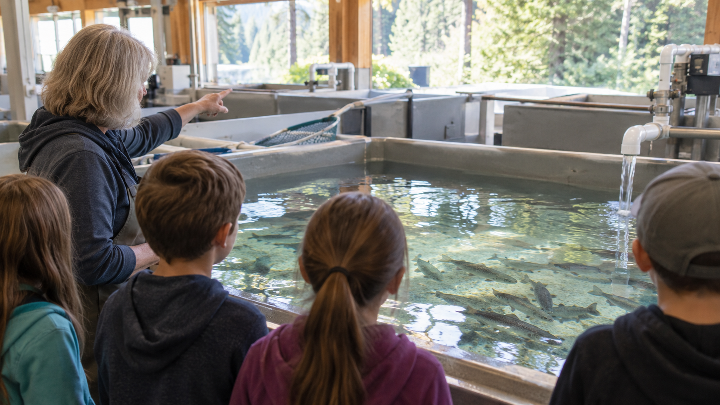
Ruth Foster, whose philosophy was stencilled inside Mossom Creek Hatchery as “You Only Care About What You Know About,” died Sept. 28 after a brief illness. For more than half a century, she used her considerable intellect and energy to help students learn about and care for the watershed and its wildlife. “The more you know about a watershed and the creatures that live in it . . . the more you’re going to care about it,” she once said.
While teaching at Centennial Secondary in the 1970s, Foster found a kindred spirit in fellow biology teacher Rod MacVicar. Both wanted to teach outdoors more often, she said. They took students to Mossom Creek to see if they could bring salmon back to the barren stream. The effort grew into 50 years of stewardship marked by reversals and resilience. Construction waste fouled the creek; storms and contaminated soil required attention; and the pair fought a sprawling development proposal for land that eventually became Bert Flinn Park. Former students and volunteers, guided and inspired by Foster and MacVicar, helped sustain the work. Foster said they continued to follow former students’ paths and cheer them on as they took up meaningful careers and volunteer roles in the community. Former students still return to Mossom, sometimes bringing their children and grandchildren to work parties or Sunday open houses.
Foster could be seen walking along Ioco Road, pulling invasive plants, or along the creek pointing out bleeding heart, bunchberry and Siberian miner’s lettuce, which she proudly called native to the watershed. She and MacVicar may not have fully understood what they had built until it was nearly lost. A fire broke out at the hatchery on Dec. 11, 2013. Foster recalled that the flames quickly grew so intense they could be seen from the Port Mann Bridge. The first fire truck up the hill slid on the ice and ended up sideways at the gate, effectively blocking other emergency vehicles. More than three decades of work were destroyed; the old Mossom sign, battered and charred, was all that remained.
The community rallied immediately. Port Moody coordinated donations to help Mossom raise money to rebuild. Foster said they were astonished by the community’s support, which made them realize the project mattered for much more than fish: it was about people. Mossom Creek Hatchery and Education Centre opened in 2015.
Kevin Ryan, president of the Burrard Inlet Marine Enhancement Society, which is associated with the hatchery, told the Dispatch that Foster’s death was a huge loss for everyone at Mossom. He said the love and support he was seeing in the community eased his pain somewhat, as people leaned on and cared for one another. Ryan recalled that Foster made complete strangers feel welcome. When he first visited Mossom 10 years ago, he said, her warm smile and enthusiasm made him feel he belonged. He added that her ability to teach was instinctive and that many volunteers pursued careers in environmental sciences because of what they learned at Mossom. Foster also wrote hundreds of letters of recommendation to help young students advance their careers, Ryan said. Several young educators at Mossom were deeply saddened by her passing, he added; she had left too early, with much more still to teach them.
An obituary posted by Mossom Creek remembered Foster’s care and guidance. It said she taught people that the creek needs those who will show up year after year, and that the best way to honour her is to keep doing the work. Many people shared tributes after her death. The Pacific Streamkeepers Federation called her a “stewardship hero,” while Adel Gamar wrote that Foster taught generations of young people to care for the environment, their community and something bigger than themselves.