 Vancouver
METRO VANCOUVER NEWS
Iran says upgraded missile signals pre-emptive action against threats
Iranian state media described the Qassem Basir as a strategic turning point as Washington rejected Tehran’s proposed restrictions near the Strait of Hormuz.
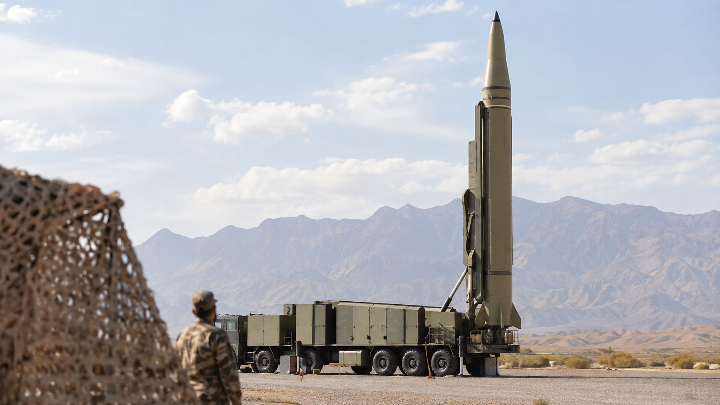
WASHINGTON (AP) — Iranian state media said Monday that an upgraded ballistic missile demonstrates a new doctrine under which Tehran will act against any threat before it is carried out. The state news agency repeatedly cited comments by Mohsen Rezaei, head of Iran’s Supreme National Security Council, who told state television Sunday that a new missile capability had been tested against a U.S. warship.
It was unclear whether the test involved the solid-fuel Qassem Basir described in Monday’s report. The United States said Saturday that ballistic missiles had been launched at its warships and that it struck three Iranian oil tankers in response. Experts called the launch a dangerous escalation, noting that Iran’s maritime attacks during the preceding six months of war had targeted commercial shipping. The U.S. said its warships evaded the attacks.
Iranian messaging has become more assertive in recent days. State media called the Qassem Basir a turning point in Iran’s defence strategy and said it has greater range and accuracy and a half-ton warhead. The missile was unveiled last year with a stated range of at least 1,200 kilometres, or 745 miles. Concerns over Iran’s ballistic missile program were among the reasons cited by the U.S. and Israel for their attacks on Iran early this year, which sparked the war.
The White House rejected Rezaei’s plan for an exclusion zone near the Strait of Hormuz for vessels seeking to transit it, saying the waterway is open and controlled by the United States. It said the U.S. Navy had cleared mines from the strait and that tanker traffic to non-Iranian ports would increase. A U.S. blockade of Iranian ports continues in an effort to limit oil exports and increase Tehran’s economic pressure. The U.S. military said 94 commercial vessels had been redirected and three disabled as of Monday.
Tehran wants ships to use a route of its choosing through the strait, which had been considered an international waterway before the war. Rezaei acknowledged that the U.S. is helping a limited number of ships transit along a route off Oman and said Iran was not sinking them because they carry oil, citing environmental concerns. Kpler, a global commerce information firm, said on X that transits through the waterway fell sharply last week.
An attack on a Saudi-owned tanker a week ago killed two crew members and left seven missing. If the missing are confirmed dead, it would be the deadliest attack on a commercial vessel since the war began Feb. 28 with U.S. and Israeli strikes.
Gulf countries again voiced frustration over uncertainty surrounding the route, which is vital to global oil, natural-gas and fertilizer-related trade. Anwar Gargash, a diplomatic adviser to the UAE president, told a world-leaders forum in Abu Dhabi that no single state should control the strait and said the UAE’s energy exports, trade and economic activity would not be held hostage. The close U.S. ally has repeatedly faced Iranian missile and drone fire during the war and suspended all trade with Iran last month after saying it came under renewed attack.
Gargash warned that rebuilding trust between Iran and Gulf countries could take decades. Nabil Fahmy, secretary-general of the Arab League, told a ministerial meeting in Cairo that maritime corridors must not become bargaining chips in others’ calculations, and condemned Iran’s attacks on Gulf nations.