 Vancouver
METRO VANCOUVER NEWS
B.C. police training examined at inquest into autistic teen’s fatal shooting
A coroner’s inquest heard how autism-related content was added to B.C.’s crisis intervention training and when officers are expected to complete it. The revised course launched in November 2025, but the three-year refresher cycle means the full rollout is not expected until November 2028.
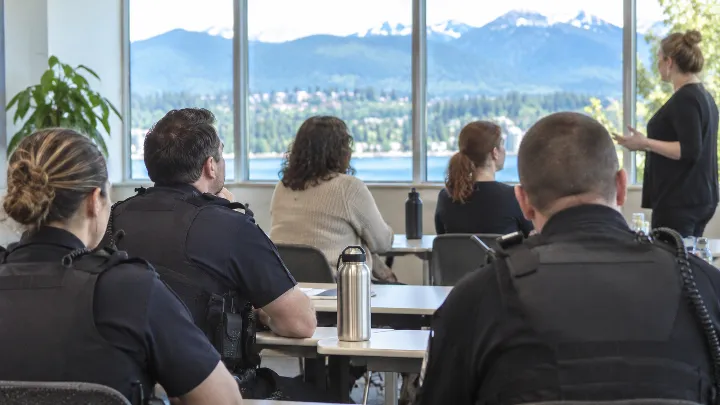
B.C. police agencies are receiving updated crisis intervention training that includes recognizing and responding to autistic people, a coroner’s inquest heard Monday. Testimony in the second week of the inquest into the death of Chase De Balinhard, a 15-year-old autistic teen fatally shot by police in Surrey on Feb. 9, 2025, outlined how advocates were brought into the curriculum process and when officers are expected to complete the instruction. Witnesses included a provincial official responsible for police training standards and a neuroscientist who trains first responders on autism.
Lucie Vallieres, director of the Standards and Training Unit in the province’s Policing and Security Branch, testified that work to update mandatory crisis intervention and de-escalation training began in 2023, nearly two years before Chase’s death. She confirmed AutismBC was consulted toward the end of development. The revised training became available in November 2025, but officers are not expected to have all completed it until November 2028 because refresher training takes place on a three-year cycle.
### CTV investigation questioned consultation
In September 2025, CTV News investigated whether B.C. officers were adequately trained to recognize and respond to neurodivergent people experiencing mental health crises. The five-part investigation, published after Chase’s death, included interviews with autism advocates, policing experts, former officers and provincial officials. At the time, several prominent autism organizations told CTV News they had not been consulted on the province’s planned revisions to crisis intervention and de-escalation training. They included AutismBC, Pacific Autism Family Network, Autism Support Network, Autism Community Training (ACT) and Autism Canada.
Nina Krieger, B.C.’s public safety minister at the time, told CTV News the updated training was informed by police officers, mental health professionals, people with lived experience and other stakeholders. Asked about the apparent absence of major autism advocacy groups, Krieger maintained that the process involved extensive consultation. After CTV News made inquiries, AutismBC confirmed the minister’s office had contacted it. AutismBC and ACT subsequently joined the consultation, and the province later recognized both organizations for their advocacy, collaboration and engagement.
Vallieres said the province had identified gaps in existing training, including a need for more instruction on neurodivergence. A working group with police representatives and mental health organizations helped develop the revisions. AutismBC and other organizations were consulted toward the “tail end” of the process to “help refine” the material, she said. The updated curriculum covers autism, behaviours officers may encounter, and ways to adapt communication and de-escalation when responding to someone in crisis. It also adds a practical scenario involving an autistic person in crisis to the material for instructors teaching the initial in-person course. Vallieres acknowledged that the role-player in the scenario is not required to be autistic.
### What officers are being taught
Under B.C.’s Police Act, the Director of Policing and Law Enforcement Services can establish provincial policing standards. Vallieres testified that her unit develops training requirements on behalf of that office. The standards apply to police agencies providing services across the province, including municipal departments and the RCMP. Each police service is responsible for ensuring officers complete the required instruction. All front-line officers and supervisors must take crisis intervention and de-escalation training, commonly known as CID.
According to Vallieres, initial training includes an online component and about seven hours of in-person classroom learning, discussion and practical exercises. Officers must complete refresher training every three years. The updated curriculum adds a section on neurodivergence, including autism. Officers are taught to recognize behaviours that may be associated with sensory sensitivities or communication differences, such as repetitive movements, avoiding eye contact or responding to instructions in ways they might not expect. The material also suggests adjustments to police interactions, including reducing sensory stimulation or changing communication strategies.
Because officers take refresher training on a three-year cycle, the new material is being introduced gradually. In response to a juror’s question, Vallieres confirmed it will be November 2028 before all officers are expected to have completed the revised instruction. She emphasized that provincial standards set minimum requirements and police agencies may add to them.
### Why autism-specific training matters
Earlier Monday, Dr. Fakhri Shafai, chief science officer at AIDE Canada and director of professional training for the Pacific Autism Family Network, testified about autism, communication differences and ways first responders can adapt their approaches. Shafai has a PhD in neuroscience and has worked with autistic people for more than 20 years. She estimates about 130,000 British Columbians are on the autism spectrum. Recent estimates suggest about 3.8 per cent of children aged one to 17 and two per cent of adults are autistic, she testified.
Shafai also described barriers to obtaining an autism diagnosis in B.C. Publicly funded assessments for children can involve waits of about 18 months to three years, depending on location. Families seeking private assessments may wait three to six months and pay $3,000 to $5,000, she testified. Adults generally have to pay privately for assessments, which cost about $3,000 to $4,000, with waits ranging from six months to three years.
Autism is a spectrum encompassing a broad range of strengths, challenges and support needs, Shafai explained, so autistic people do not necessarily respond to stressful situations in the same way. She highlighted differences in language processing, sensory sensitivities and responses to overwhelming environments. Some autistic people need extra time to process spoken instructions, particularly when several questions or commands come in quick succession. Others may find eye contact difficult, speak differently under stress or become unable to communicate verbally.
Shafai described an autistic shutdown as an involuntary response to overwhelming sensory, emotional or cognitive stimuli. A person experiencing one may appear withdrawn or unresponsive, struggle to process information, lose the ability to speak, or move slowly and clumsily. Someone unfamiliar with autism could misinterpret those behaviours. When circumstances permit, Shafai recommended giving one clear instruction at a time, limiting unnecessary questions and allowing more processing time. Other strategies include reducing lights and sirens, creating physical space, seeking information from caregivers and identifying familiar interests that may help establish communication.
She repeatedly stressed that these recommendations apply only when safe and operationally feasible. Under questioning from lawyers for the RCMP and Surrey Police Service, Shafai acknowledged she has no formal police tactical or use-of-force training. She agreed her recommendations are meant to complement, not replace, officers’ training in threat assessment and public safety. Knowing someone is autistic does not establish whether that person poses a threat. Shafai’s testimony provided general information about autism and first responder interactions; she did not assess whether Chase was experiencing a shutdown during his encounter with police or whether the officers should have acted differently.
### Hands-on training with autistic participants
Shafai also described a separate autism-specific program she delivers to police and other first responders through the Pacific Autism Family Network. Unlike the introductory material in the province’s crisis intervention curriculum, her program can involve a half day or a full day of in-person instruction. An autistic facilitator co-delivers the training, and autistic actors take part in simulated emergency scenarios. Officers practise responses to autistic shutdowns, meltdowns and suicidal thoughts. The full-day course also includes scenarios involving autistic witnesses, victims and suspects.
The practical component gives officers immediate feedback from autistic participants about which approaches helped and which did not, Shafai testified. She said the chance to hear firsthand how participants experienced the interaction is what makes the training real for officers. The full-day program has been delivered to Metro Vancouver Transit Police and the New Westminster Police Department; training for the Victoria Police Department is underway. The Delta Police Department received a half-day version.
After that training, Delta police expressed interest in carrying sensory kits in patrol vehicles and sought Shafai’s feedback on the proposed contents. She described working with the department to develop communication cards for people who are non-speaking or experiencing a shutdown. When speaking is difficult, a person can point to information on the cards about their needs or feelings. Her testimony did not establish whether the kits have since been deployed in Delta police vehicles. CTV News has contacted Delta PD for comment.
Shafai also supported considering adapted autism-specific training for 911 call-takers, dispatchers and mental health nurses who accompany police on crisis-response teams.
### Surrey police confirm training is mandatory
In a written response to CTV News on Monday, Surrey Police Service spokesperson Ian MacDonald confirmed the department formed a formal partnership with Canucks Autism Network in 2025. The agreement was established after Chase’s death on Feb. 9, 2025, although discussions began earlier. Under the arrangement, Canucks Autism Network provides 90-minute, in-person sessions to experienced officers and new recruits during onboarding. MacDonald said the training is mandatory before officers are deployed.
Because Surrey Police Service continues to recruit new and experienced officers, MacDonald could not confirm that every current employee had completed the sessions. He said officers are required to receive the instruction as part of onboarding. The service also invited Canucks Autism Network representatives to observe scenario-based police training in 2025 and 2026. MacDonald said the observations helped inform a more extensive, one-day autism-specific course featuring professional actors in simulated police scenarios. He confirmed Monday that the course has launched, although the department was still gathering information on how many employees had completed it.
Surrey Police Service also makes two online courses developed by Canucks Autism Network available to employees. MacDonald did not say whether those courses are mandatory. The department has met with the Optimize Response Care for Autism Safety (ORCAS) Society of B.C. and says it is exploring ways to work with the organization.
CTV News requested updated information from the B.C. RCMP about autism-specific training available to its officers but had not received a response by publication time. Surrey Police Service became Surrey’s police of jurisdiction on Nov. 29, 2024, but the RCMP continued front-line policing in parts of the city during the transition, including Cloverdale, where Chase was shot. Surrey Police Service did not assume front-line responsibility for Cloverdale until April 1, 2026.
### Police say training would not change threat assessment
The inquest has heard from officers involved in the response to Chase’s 911 call, including Const. Hamza Khan and Staff Sgt. Chris DeHart, who both fired their guns. Testifying Friday, the officers said they believed Chase was holding a real firearm, not a replica, and feared for their lives when he appeared to point it at them. Khan fired the fatal shot; DeHart also fired but missed. Both gave emotional testimony.
Khan told jurors he later helped arrange autism-specific training with Canucks Autism Network. He welcomed the opportunity to better understand autistic people but did not believe additional training would have changed his decision to fire when he perceived an immediate threat. The testimony underscored a distinction raised repeatedly in Monday’s expert evidence: autism-specific training may give officers more tools for communication and de-escalation, but it does not remove their responsibility to assess an immediate threat.
The Independent Investigations Office of B.C. concluded in December 2025 that there were no reasonable grounds to believe an officer may have committed a criminal offence. The watchdog found the use of lethal force legally justified in the circumstances and did not refer the matter to Crown counsel. The coroner’s inquest has a different mandate: it is examining the circumstances of Chase’s death and considering recommendations that could help prevent similar tragedies.
### Pellet revolver brought into court
The jury also examined forensic evidence Monday, including the weapon Chase was carrying. Nis Schmidt, a forensic support investigator with the IIO, brought the recovered Crosman Model 38T pellet revolver into court and demonstrated its features. He testified that the predominantly metal, CO2-powered weapon closely resembled a real revolver. Under questioning from counsel for the RCMP, he agreed it could easily be mistaken for a real firearm without closer examination.
Forensic testing showed the CO2 cartridge recovered with the weapon had not been punctured. All six pellets in its rotating cylinder had been inserted backwards, Schmidt testified. The examination established the gun’s condition when recovered but did not determine exactly how the pellets were loaded or whether their orientation alone would have stopped the weapon from firing.
Schmidt also described testing of the pellet gun’s muzzle velocity and energy. The projectile’s velocity was below the accepted threshold for perforating skin, he confirmed, although an impact to a vulnerable area such as an eye could still cause injury. Investigators used three-dimensional scans, surveillance footage and recovered cartridge casings to estimate where the officers were when they fired. Schmidt said Khan was about 21 metres from Chase and DeHart about 19 metres away, cautioning that these were estimates rather than exact distances.
Forensic evidence established that the officers fired different ammunition. Cartridge casings were linked to Khan’s 5.56-millimetre carbine and DeHart’s nine-millimetre pistol. Bullet fragments recovered during Chase’s autopsy were consistent with ammunition fired from Khan’s carbine; a bullet found in a nearby residential garage was consistent with a nine-millimetre projectile. Investigators could not conclusively match the recovered bullets to individual firearms through direct toolmark comparisons. Based on the combined evidence, however, they concluded Khan fired the fatal shot and DeHart’s bullet struck the garage.
### How Chase obtained the pellet revolver
The inquest has heard differing accounts of Chase’s access to the weapon. In an interview with CTV News shortly after the shooting, his father, Rick De Balinhard, said the family owned an old pellet gun that was normally secured in his office. Rick said the gun was locked away, but he had unfortunately unlocked the drawer to retrieve something else. He said the storage area was ordinarily locked and Chase had never before left the house carrying the weapon.
During his final 911 call, however, Chase told the emergency operator he knew which key opened the locked drawer where the gun was kept. He said it was in his father’s drawer, which was locked all the time, but he knew the key because he had seen his father retrieve the gun. Chase’s mother, Crystal De Balinhard, testified earlier in the inquest that Rick inherited the pellet revolver from his father, a former RCMP officer. She said it was normally kept in a locked drawer in Rick’s office, with the key stored separately in a safe. Crystal testified that the family did not routinely leave the weapon accessible to Chase.
### Paramedic recounts life-saving efforts
Earlier Monday, advanced care paramedic Ashley Jacklin described the emergency response after the shooting. She testified that about 13 minutes elapsed between the shooting and her assessment of Chase’s prospects for emergency surgery. She performed several advanced medical procedures, including needle decompression of his chest and administering medication intended to reduce blood loss. Resuscitation continued for about 20 to 22 minutes, but Chase’s heart remained in asystole, meaning no effective electrical activity was detected. After consulting a physician, Jacklin stopped resuscitation. Chase was pronounced dead at 3:45 p.m.
Under questioning, Jacklin said the ideal window between loss of pulse and surgery for a penetrating cardiac arrest is about 15 to 20 minutes. However, she would not have expected Chase’s injuries to be survivable even if he had been transported to hospital earlier. She also said an automated external defibrillator would not have changed the outcome.
### Inquest considers prevention
Chase’s parents have repeatedly said they want his death to lead to improvements in emergency responses involving autistic people and others experiencing mental health crises. Throughout the proceedings, jurors have heard evidence about police training, information sharing, communication barriers, mental health resources and decisions made during Chase’s final encounter with police. Monday’s testimony focused on equipping officers to better recognize behaviours associated with autism and on changes to provincial and police-service-specific training.
A coroner’s inquest cannot determine criminal or civil liability. Its jury may make recommendations aimed at preventing similar deaths. The final day of testimony is scheduled for Tuesday.
If you or someone you know is experiencing a mental health crisis or having thoughts of suicide, call or text 988 to reach Canada’s Suicide Crisis Helpline. Support is available 24 hours a day, seven days a week.