 Vancouver
METRO VANCOUVER NEWS
NDP largely defeated itself as 17,062 Tri-Cities voters stayed home
Turnout fell across all five Tri-Cities ridings in the B.C. election, with 17,062 fewer voters casting ballots. A political science lecturer and a defeated NDP incumbent point to the party’s campaign choices and a deeper disconnect with voters.
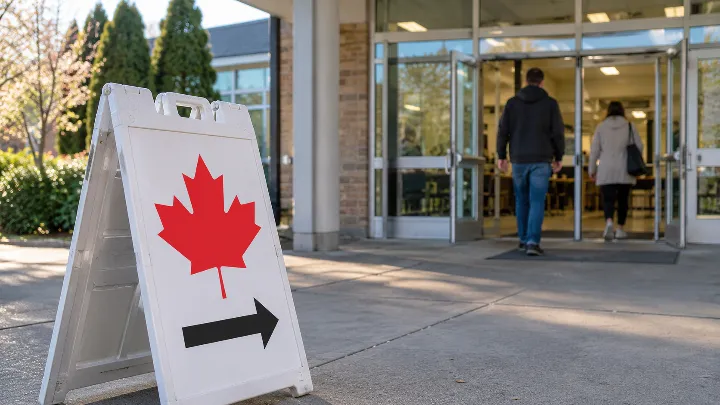
Despite better weather on Saturday than the torrential downpour on election day in 2024, 17,062 Tri-Cities voters stayed home. Across the region’s five ridings, vote totals fell by between 11 per cent in Port Moody-Burquitlam and 16 per cent in Port Coquitlam. More than 4,000 residents who voted in 2024 did not cast a ballot in the snap election in Port Coquitlam.
UBC political science lecturer Stewart Prest said the turnout decline could reflect either a mistake by Premier David Eby or a deeper disconnect between the NDP and the people who elected it. Scheduling the provincial election one week after the municipal election strained volunteers and donors, Prest said, and Eby failed to appreciate deep divisions within B.C.’s broader conservative movement.
The conservative movement was in the midst of a lively internal fight over who would represent conservatism in the province, Prest said. CentreBC was also becoming an established party. Eby’s election call “short-circuited all of that” by uniting conservative factions against a common opponent, he said. Prest compared it to a Marvel movie in which a supervillain does the one thing that reunites the Avengers; in his analogy, David Eby was the “evil mastermind.”
Prest said Eby failed to offer “a really convincing justification” for calling the election, and that his messaging tended to be negative and polarizing. Voters chose not to support the Conservatives, but to sit the election out, Prest said.
Defeated NDP incumbent Rick Glumac received 13,488 votes in 2024. His 2026 total fell by more than 3,800 votes, or 29 per cent, while overall turnout in his riding was down by 3,043 votes. Glumac said the defeat pointed to a troubling disconnect that went beyond the election call.
“Most British Columbians don’t know what the NDP stands for right now,” Glumac wrote in a lengthy social media post. “Somewhere along the way we lost clarity, both internally and with the public, about who and what we were fighting for.” He said the party needs to show progress on affordability, homelessness, addiction and hospital wait times. “And when we say we’re going to do something – we need to do it! That’s how you build trust,” he added.
The NDP saw the sharpest turnout decline, but some Conservative candidates in the Tri-Cities also received fewer votes. Ryan Peterson, the winning Conservative candidate in Coquitlam-Burke Mountain, received about 800 fewer votes than fellow Conservative Stephen Frolek did in 2024. Conservative support fell about six per cent in Port Coquitlam and two per cent in New Westminster-Coquitlam.
Matt Liang and former Anmore mayor John McEwen bucked the trend. Conservative support rose five per cent in Coquitlam-Maillardville and about two per cent in Port Moody-Burquitlam.
Prest said he was unsure whether Saturday’s result was fairly described as a “blue wave.” The Conservatives held on to their core supporters, he said, while the B.C. electorate remains divided. “What we’re seeing here is the NDP managed to alienate their own supporters and largely defeated themselves,” Prest said.
Even NDP candidates in relatively safe ridings saw their vote totals shrink. Support for NDP incumbent Jennifer Whiteside in New Westminster-Coquitlam fell about 27 per cent. She still won with 50 per cent of the vote, down from 59 per cent in 2024. Mike Farnworth received 4,000 fewer votes than in 2024, a decline of 29 per cent, but still won his seventh consecutive election. Support for NDP incumbent Jodie Wickens in Coquitlam-Burke Mountain fell by about one-third, or roughly 3,700 votes. Coquitlam-Maillardville incumbent Jennifer Blatherwick saw an approximately 32 per cent decline.
The Green Party was largely unaffected by the downturn. With the exception of a slight dip in Coquitlam-Burke Mountain, its vote totals rose across the region. The Greens gained 189 votes, or 11 per cent, in Port Coquitlam. Their strongest showing was in New Westminster-Coquitlam, where they gained 458 votes, a 19 per cent increase. Prest credited party leader Emily Lowan with building “a more positive message than either of the two leading parties,” despite Green support potentially waning in a “knife-edge election.”
With the election over and David Eby no longer serving as a common opponent, premier-elect Lorne Doerkson will likely face deep divisions within the province and his party, Prest said. He described two groups without a “true reconciliation”: one broadly sympathetic to MAGA politics and the idea of Canada moving closer to the United States, and another that believes Canada must do everything it can to defend its sovereignty.
Provincially, turnout was 48 per cent. All vote totals remain unofficial until certified.