 Vancouver
METRO VANCOUVER NEWS
Montreal’s Metro stands out as Canada’s most beautiful transit system
After visiting dozens of stations, a writer says Montreal’s Metro is Canada’s most visually impressive, and perhaps most functional, transit system. Its signature concrete architecture, distinctive details and long-term upkeep set it apart, while the network now serves more than one million riders a day.
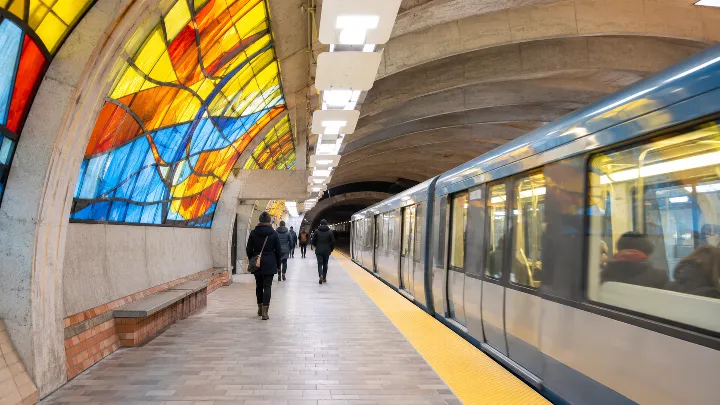
A ride on the Société de transport de Montréal (STM) Metro can feel more like walking through a linear art gallery than taking utilitarian public transit. Toronto may have Canada’s busiest subway network, and Vancouver its distinctive SkyTrain, but the Montreal Metro’s architecture and offbeat character make it an easy choice for the country’s most beautiful transit system. Jack Landau, a lifelong TTC rider, says he used to dismiss the idea that Montreal could move people better than Toronto. After visiting dozens of Metro stations over a few days, however, he calls it unquestionably Canada’s most visually impressive transit system and perhaps its most functional.
Like many major public works in Montreal, the Metro grew from major infrastructure investment ahead of Expo 67 during former mayor Jean Drapeau’s transformative tenure. In just a few years, Montreal, then still Canada’s largest city, became a full-fledged metropolis with a modern subway. The first two lines, Green and Orange, opened in 1966; the Yellow Line followed the next year. The network has since grown to 68 stations on four lines. The original stations, inaugurated on Oct. 14, 1966, established the Metro’s signature look and influenced station design for decades.
Brutalism was the prevailing architectural style of the period. The word comes from the French béton brut, or raw concrete, rather than the English-based origin readers might expect. The inaugural stations pushed the avant-garde style to its limits, creating vast underground spaces that rival Montreal’s historic cathedrals. Verdun, which first welcomed passengers on Sept. 3, 1978, opened a full 12 years after the Metro’s launch as part of a Green Line extension west to Angrignon. Its look is firmly rooted in the late 1970s, but exposed concrete, skylights and an emphasis on scale echo the original stations. Later expansions carried that aesthetic forward with extensive use of exposed concrete.
Brutalism is among architecture’s most polarizing styles. Montreal also honours the city that inspired its Metro with a distinctive piece of repurposed history: Square-Victoria–OACI station on the Orange Line houses an original Art Nouveau entrance from the Paris Metro. It was given to Montreal in 1967 in recognition of French engineers’ work on the subway. The Metro’s rubber-tired rolling stock was also inspired by the distinctive Paris system. Designed by celebrated Art Nouveau architect Hector Guimard and complete with iconic Parisian tiles, the entrance has become a popular photo spot for tourists seeking a touch of European style without a long-haul flight.
Place-Saint-Henri was another station that surprised Landau with its grandeur. Soaring ceiling vaults, geometric lighting and vibrant colour combine into something greater than the sum of their parts. The station’s appeal also lies in how it has been maintained over time. Landau says comparing it with a Toronto subway station is unfair: there are no burned-out bulbs or visible graffiti, and the rubber-tired trains produce less brake dust, leaving the ceilings clean. The cavernous stations are on a scale similar to the city’s enormous cathedral sanctuaries and, in a sense, serve as modern places of gathering and public service.
Place-Saint-Henri shows how Brutalist ideas continued to shape the Metro and much of Montreal’s architecture after the style began to fall out of favour. The station opened in 1980. At first, it may seem to reject the architectural thinking behind Montreal rapid transit, but its concourse, with coffered concrete ceilings opening onto a dramatic skyline, makes its identity clear. Georges-Vanier, another Orange Line station added in 1980, also embraces Brutalism. An almost floral raw-concrete lighting feature rises from the platform to the mezzanine. As a visitor from outside the city, Landau says he was somewhat alarmed by the number of spiders living in the station.
At times, the Montreal Metro’s stark, austere design can feel almost haunting. Pie-IX station sits in the shadow of Olympic Stadium. It opened in 1976 to serve crowds at the Montreal Olympics and later at Montreal Expos home games. Its wide walkways and generous platforms recall the throngs of fans who poured out of the former MLB stadium until the team left for Washington, D.C., in 2004. Today, the corridors echo with the footsteps of the occasional commuter, while playful platform seating sits mostly empty as trains come and go.
Brutalist influences are less evident in the newer Blue Line stations built in the 1980s and the Orange Line extension constructed in the 2000s. But the network’s core, used by more than one million riders a day, remains a collective masterpiece of raw-concrete architecture. The Montreal Metro turned 60 on Oct. 14, 2026, after six decades of profound social and physical change in the city. Expo 67 and the Metro’s opening may have marked Montreal’s high-water point, during the sweeping social shift of Quebec’s Quiet Revolution, as investment flowed into a city preparing for the world stage. Montreal was Canada’s largest city when the Metro was built, and its stations reflected confidence that the population would keep growing.
A range of political factors in the late 1960s and into the 1970s eventually shifted investment out of Quebec and southwest along Highway 401 to Toronto, which remains Canada’s primary metropolis decades later. STM continued expanding and is now the continent’s fourth-busiest subway system by daily ridership, behind only New York City, Mexico City and Toronto. The newer Réseau express métropolitain (REM), which began operating in 2023, runs independently of STM’s Metro service. Its comparatively plain station design reminds Montreal commuters how fortunate they are to have a network designed in an era when architects could take chances.