 Vancouver
METRO VANCOUVER NEWS
Carney says approval of $33-billion B.C. LNG expansion shows Canada acting like an energy superpower
LNG Canada will double annual capacity at its Kitimat export terminal to 28 million tonnes. The federal government says the expansion will unlock $33 billion in private investment.
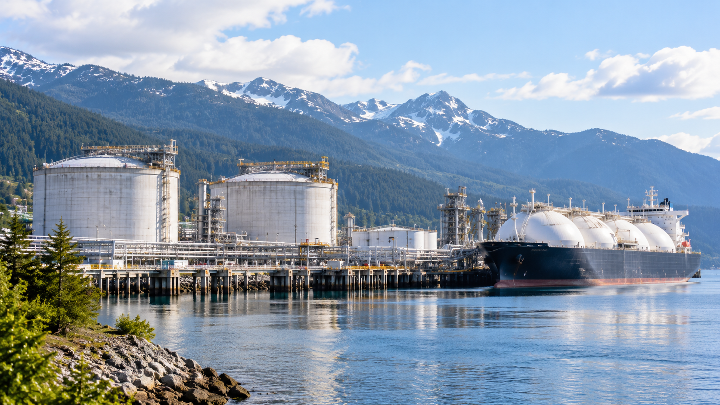
LNG Canada is moving ahead with an expansion of its Kitimat liquefied natural gas (LNG) export terminal. The Government of Canada says the decision will unlock $33 billion in private investment and double the facility’s capacity to ship LNG overseas. Phase 2 will raise annual production capacity from 14 million to 28 million tonnes, building on Phase 1, which began exporting LNG in June 2025. Prime Minister Mark Carney welcomed the private ownership group’s final investment decision on Tuesday. The federal government calls the expansion the second-largest single private investment in Canadian history and says it will make LNG Canada the world’s second-largest facility of its kind. During the provincial election campaign, both the BC NDP and the Conservative Party of British Columbia supported the announcement, while offering sharply different accounts of the provincial government’s record on the industry.
The terminal receives natural gas by pipeline and cools it into a liquid for shipment by sea. Its location on B.C.’s northern coast gives Canadian producers access to overseas customers, particularly in Asia. The expansion will add two processing units, an LNG storage tank and a loading berth, along with supporting equipment. LNG Canada expects up to 4,000 construction jobs at the Kitimat site during peak activity. Once the expansion is complete, it expects to add about 90 full-time positions and 150 contractor positions to its operating workforce.
Carney said the historic investments in LNG Canada show that Canada is building on a large and ambitious scale again. He said the facility, built in partnership with Indigenous Peoples, will export some of the lowest-emitting LNG to new markets in Asia. He also said Canada is strengthening its domestic capacity, securing new trade partners and catalysing unprecedented investment in major projects, calling that what an energy superpower looks like when it decides to act like one.
Carney’s government referred the expansion to the federal Major Projects Office in September 2025. The office has since helped coordinate federal processes and worked with the provincial government and industry to support the investment decision. Support for the project was also included in the co-operation agreement Carney and Premier David Eby reached in July 2026.
The terminal expansion also clears the way for a separate, multibillion-dollar increase in Coastal GasLink’s capacity. The 670-kilometre pipeline carries natural gas from the Dawson Creek area to Kitimat. TC Energy says new compressor stations and upgrades along the existing route will nearly double the amount of gas the pipeline can carry. Compressors help maintain the pressure needed to move gas through the system. Construction on the pipeline expansion is expected to begin in early 2027, with the upgraded system entering service in the early 2030s. TC Energy estimates that up to 2,100 people will be employed across five sites at the peak of construction.
Shell Canada owns a 40 per cent stake in LNG Canada. Malaysia’s Petronas owns 25 per cent, China’s PetroChina and Japan’s Mitsubishi Corporation each own 15 per cent, and South Korea’s Kogas owns five per cent. The investment decision also advances an opportunity for five nearby First Nations to own part of the terminal’s infrastructure. Through MNT Investments LP, the Gitga’at, Gitxaała, Haisla, Kitselas and Kitsumkalum First Nations have the option to invest up to $1 billion for a majority stake in the new 225,000-cubic-metre LNG storage tank. The arrangement would allow the tank to be leased back to the project, providing the participating First Nations with a long-term revenue source.
The federal government says LNG Canada has already awarded more than $4.9 billion in contracts and procurement to Indigenous-owned and local businesses. Coastal GasLink’s cumulative contracts with Indigenous and local businesses exceed $1.8 billion. Citing LNG Canada estimates, the Greater Vancouver Board of Trade (GVBOT) says Phase 2 could generate more than $50 billion in government revenue over the project’s lifetime.
Eby described the decision as the result of years of co-operation among the provincial and federal governments, the private sector and First Nations. He called it a major win that would create good jobs and long-term prosperity needed to deliver stronger public services for people across British Columbia. The BC NDP says some provincial revenue from the development will support climate programs helping households and businesses switch to cleaner energy. The party also cited projections that the facility’s operating emissions would be 35 per cent below those of the world’s best-performing LNG facilities and 60 per cent below the global average.
The Conservatives welcomed the expansion, while arguing the provincial government should have attracted more LNG investment much earlier. In a statement issued on behalf of the party, Claire Rattée, its MLA candidate for Skeena, said British Columbia needs many more announcements like the LNG Canada Phase 2 final investment decision, rather than a single expansion after years of waiting. She said LNG Canada has already shown what major resource development can deliver: thousands of good-paying jobs, billions of dollars in investment, opportunities for local businesses and significant economic partnerships with First Nations.
Rattée blamed regulatory delays and uncertain approval processes for proposed projects that did not advance under the BC NDP. She cited LNG Canada’s employment, business contracts and First Nations partnerships as reasons for further development. She asserted that most LNG projects proposed in the province under the NDP had stalled or been abandoned amid red tape and uncertain permitting, while the United States built more than 120 million tonnes per annum of export capacity and Qatar expanded to between 70 million and 80 million. She said the BC NDP had left the province poorer.
The Conservatives’ election energy platform calls for B.C. natural gas production to more than double by 2032 and more than triple by 2035. The targets concern gas production, which supplies LNG terminals as well as other markets. The party is also proposing a 120-day permitting law for major projects and closer co-ordination with federal approval and consultation processes, aiming to secure approvals for provincially led projects within one year. Other commitments include designating the Montney Formation—a 130,000-square-kilometre energy-rich geological deposit spanning northeastern British Columbia and northwestern Alberta—as a strategic provincial asset, courting foreign investors, and seeking federal recognition for overseas emissions reductions the party says Canadian LNG could deliver by replacing coal and higher-emitting gas supplies.
For GVBOT, the expansion demonstrates the economic value of increasing Canada’s access to overseas markets. The board’s president and CEO, Bridgitte Anderson, said LNG Canada Phase 2 is the kind of investment the country needs as it diversifies trade relationships and strengthens economic resilience. She said the project will create lasting economic opportunities, strengthen export capacity and show what governments, Indigenous partners and industry can achieve by working together on nation-building projects.
The major business advocacy group in Metro Vancouver says it has identified more than $230 billion in potential major investments across B.C., including LNG, other energy infrastructure, critical minerals and transportation infrastructure that supports trade. It is calling for faster permitting, greater Indigenous participation in project ownership and economic benefits, and stronger conditions for attracting investment.