 Vancouver
METRO VANCOUVER NEWS
Canada opens bidding for defence bank headquarters that could grow to 500,000 sq. ft.
Canada has opened bidding for the Defence, Security and Resilience Bank headquarters. It could grow from about 50 to 700 staff within 10 years, with office needs rising from 7,500 to 500,000 sq. ft. Vancouver has proposed two downtown locations.
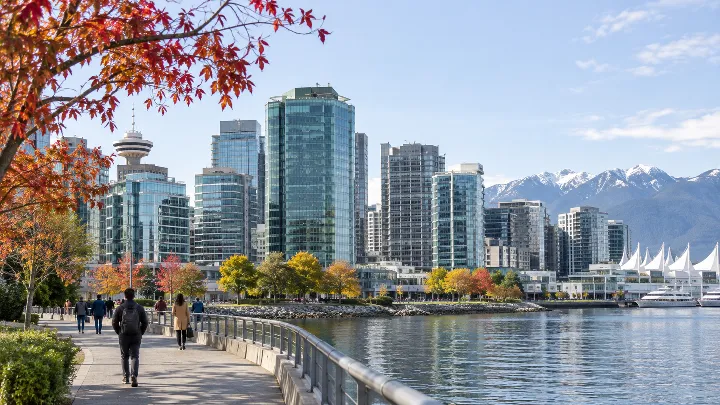
The Government of Canada has opened a formal competition to select a headquarters city for the Defence, Security and Resilience Bank (DSRB). The office could eventually require about 500,000 sq. ft. of space. Vancouver’s business and government leaders have pursued the opportunity for much of this year, with hundreds of permanent, high-paying specialized jobs, international investment and the global profile of hosting a major institution focused on international relations at stake. The competition launched Nov. 13, 2026. It echoes Amazon’s high-profile search for a second headquarters across Canada and the United States nearly a decade ago, but only Canadian cities may apply this time.
In April 2026, after negotiations in Montreal on the DSRB’s founding agreement, participating countries unanimously supported Canada as the headquarters host. The bank would provide long-term, low-cost financing to strengthen the defence, security and resilience of its member countries, including North Atlantic Treaty Organization (NATO) members and partner nations. At the July 2026 NATO summit, Canada, Albania, Belgium, Greece, Latvia, Luxembourg, Romania, Turkey and Ukraine expressed a shared intention to establish the DSRB. Membership will remain open to other allies and close partners that share its objectives.
Canada and international partners are to meet in Luxembourg on Nov. 30 to sign the Articles of Agreement establishing the DSRB. Signing would be a key step towards setting up the institution and enabling it to begin operations in 2027. The bank would help NATO members’ and allied governments, as well as defence businesses, borrow at lower cost over the long term to buy equipment, increase production and strengthen supplier networks for military and security projects. Earlier this year, BMO announced it would become a partner bank. All six of Canada’s major banks are now involved, joining previously announced partners RBC, CIBC, Scotiabank, TD Bank and National Bank.
The federal government led by Prime Minister Mark Carney will decide which Canadian city hosts the headquarters. Vancouver, Toronto, Ottawa, Montreal and Halifax had promoted themselves as possible hosts before the competition opened, but the federal call is open to Canadian municipalities broadly. It is not limited to cities already seen as likely or prospective candidates. Federal Finance and National Revenue Minister Francois-Philippe Champagne said in a statement yesterday that hosting the headquarters would put a Canadian municipality at the centre of an institution supporting collective security, stronger defence industries and more resilient supply chains. He said it would attract international talent, investment and specialized financial expertise, help address financing gaps and support Canadian businesses in allied defence supply chains.
### Staffing and office needs would grow over time
The federal request for proposals gives new details about the DSRB’s anticipated staffing and office requirements, describing gradual growth rather than a headquarters operating at full capacity from the outset. The bank is expected to start with about 50 employees in management, operations, technology and corporate support. Its headquarters workforce could reach about 700 within 10 years, well below previous estimates of as many as 3,500 staff. The DSRB would also have a European hub office in Luxembourg.
Office needs in the headquarters city are expected to rise from about 7,500 sq. ft. at startup to around 500,000 sq. ft. as operations expand. The federal requirements do not say the headquarters must occupy one building or a single contiguous block of space. The bank would need Class A offices, conference and meeting facilities, employee amenities, parking and digital infrastructure capable of protecting sensitive information and communications. Suitable startup space must be available within six months of the host city’s selection, with accommodation expanding in phases. The government says these are preliminary requirements that could change as the institution takes shape.
Beyond direct employment, the federal government expects the headquarters to attract foreign delegations, conferences, business travellers and investment. It also anticipates opportunities for businesses and researchers in areas such as artificial intelligence, cybersecurity, space technology and advanced manufacturing.
### Housing, security and financial expertise among selection criteria
Cities will have to demonstrate more than available office space. Proposals must explain how the surrounding economy, infrastructure and workforce could support a complex international financial institution. Federal evaluators will consider access to banking and investment expertise, defence-related businesses, universities, research institutions and skilled workers. International transportation connections, including well-connected major airports, and reliable digital infrastructure will also count.
Security criteria include the ability to protect the headquarters and its personnel, access to police services and round-the-clock emergency response. Applicants must address emergency preparedness and resilience to climate-related risks. Cities must also describe housing availability and affordability, schooling, accessibility and quality of life, as well as their ability to attract and accommodate employees. Service capacity in both English and French is mandatory.
Municipalities may partner with provincial governments. Where applicable, they must disclose proposed financial incentives or other contributions and identify and address any provincial approval needed for municipal participation. The bank would fund its operations from its own resources, but host cities could be asked to provide services and other support. The founding agreement also provides exemptions from direct taxes on official assets, income and activities to the extent needed for the bank’s functions, although those provisions would still need to be implemented in Canada.
Municipal proposals must identify potential headquarters locations and explain how the city meets the selection requirements. The main submission is limited to 20 pages and must be accompanied by applicable letters of support and financial disclosures. Applicants may also be asked to make a presentation. Interested municipalities have until Dec. 3, 2026, to submit proposals, leaving less than three weeks to make their case. Doug Guzman, CEO of Canada’s Defence Investment Agency, will lead the review and provide a shortlist to the prime minister and federal finance minister. The final decision rests with the federal government. No announcement timeline has been set.
### Vancouver’s campaign identified two office towers
The Government of British Columbia and the City of Vancouver announced support for the city’s private-sector-led bid in February 2026. The Pacific Security Bank Bid Committee organized the effort, bringing together representatives from business, transportation, finance, technology and other sectors. The Greater Vancouver Board of Trade and Invest Vancouver, an agency of the Metro Vancouver Regional District, have played major roles. The bid argues that Metro Vancouver already has much of the infrastructure and expertise needed to host the institution. Supporters point to the region’s Pacific location and connections with allied countries, Canada’s largest and busiest port, Vancouver International Airport’s position as the country’s second-busiest international airport, its technology industries and available office space.
Vancouver’s preliminary submission earlier in 2026, before the federal competition began, identified two possible downtown locations for the DSRB’s initial needs: Telus Garden and The Exchange in the Central Business District. Both offer substantially more than the bank’s anticipated initial requirement of about 7,500 sq. ft. of Class A space. The bid highlights existing office availability, advanced security features, communications and digital infrastructure, and capacity to support early operations at both sites.
The 24-storey Telus Garden office tower was built in 2015. The proposal lists two separate blocks of space: about 160,000 sq. ft. available after Amazon fully vacated in July 2026, following its relocation and consolidation into The Post’s north tower, which began in March 2026; and another 88,000 sq. ft. available immediately through a sublease ending in September 2035. The 557,000-sq.-ft. Class AAA building’s LEED Platinum environmental certification and existing communications and security infrastructure are highlighted in the bid. Telus’ headquarters occupies about half the tower. The Vancouver bid team says the building is already equipped to support an international financial institution handling sensitive information.
The other option, The Exchange, combines Vancouver’s historic Old Stock Exchange Building with a 31-storey office tower built in 2017 and certified LEED Platinum. The proposal identifies about 90,000 sq. ft. across seven floors, available from May 2026 through a sublease ending in December 2028. Each floor has separate, secure access. Amazon, National Bank, Mastercard and Hyperwallet Systems are among the corporate tenants in the building’s 372,000 sq. ft. of Class AAA office space. The first 11 floors are dedicated to the 201-room Exchange Hotel Vancouver.
Both towers are a short walk from major public transit hubs, including several SkyTrain stations, and are near hotels, restaurants, retail, major financial institution offices and other businesses and services. It remains unclear whether the Vancouver campaign will change its proposed sites in its formal submission in early December.
After the pandemic’s effects on the office market, only one major new office project is active in downtown Vancouver’s development pipeline. Cadillac Fairview (CF) received the City of Vancouver’s preliminary approval of its development permit application in May 2026 for a proposed 22-storey tower beside Waterfront Station. If built, CF Waterfront Tower would provide 417,000 sq. ft. of Class AAA office space on the waterfront, at the edge of the Central Business District and Gastown. CF previously told Daily Hive Urbanized that construction would take about four years after final development permit approval and tenant pre-leasing.
The incoming Conservative provincial government also supports Vancouver’s private-sector-led bid, continuing backing from the outgoing BC NDP administration. In a statement yesterday, B.C. premier-designate Lorne Doerkson endorsed Vancouver as a possible DSRB home, citing its financial expertise, universities and research institutions, skilled workforce and connections to the Indo-Pacific. He framed the opportunity as a way to attract investment and jobs while advancing Canada’s defence and security interests.
“Vancouver is a natural choice for the headquarters of the Defence, Security and Resilience Bank,” Doerkson said. He said the province offers the stability, innovation and global outlook needed to support long-term investment in defence, security and resilience, while Vancouver’s location, talent and international reach make it particularly suited to advancing Canada’s strategic interests in an increasingly complex world. He said his government was ready to work with industry leaders and federal partners to champion Vancouver as the institution’s premier home, adding that British Columbia was open for business and ready to lead.