 Vancouver
METRO VANCOUVER NEWS
Flood and landslide risks rise after B.C.’s Pear Lake wildfire
A preliminary B.C. Ministry of Forests report warns that flooding, landslides and debris flows could threaten properties, roads, railways and water sources after the Pear Lake wildfire. Elevated risks may last one to two years or longer, depending on conditions.
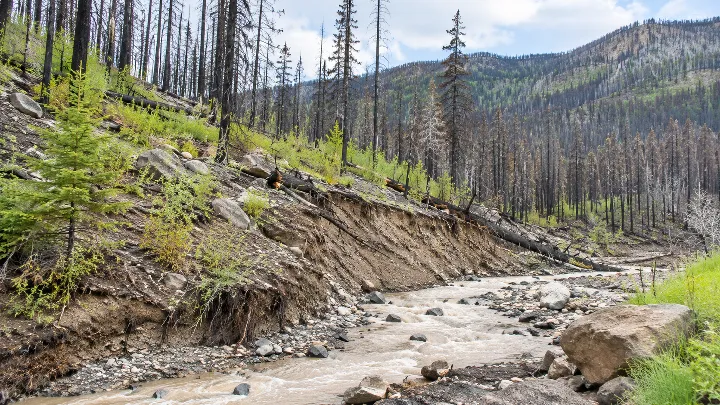
People affected by this summer’s massive Pear Lake wildfire in the Cariboo region could face new threats, according to a preliminary report from the B.C. Ministry of Forests. Colton Davies, an information officer with the Thompson-Nicola Regional District, said the risk of flooding, landslides or debris flows affecting property is higher at the bottom of steep draws or below severely burned hillsides. Areas west and south of Clinton appear to be among those at higher risk. The report says homes, highways, a railway and water sources could be affected.
Steve Law, manager of Clinton’s Community Forest, said burned trees can no longer intercept rain and snow. After a fire, soil can become hydrophobic, allowing rain to reach the ground quickly during heavy rainfall. The Pear Lake fire burned more than 165,000 hectares. It is listed as under control and no longer growing, but it has not been extinguished. Dori Hampton of 42 Creek Ranch said people could not understand the scale of the “monster” without seeing the damage. She said they had been told the area would face considerable flooding and mudslide risks.
Norene Parke, ranch liaison manager with the BC Cattlemen’s Association, said Clinton Pavilion and Kelly Lake Road are at high risk. She pointed to two places along the route where slides had already occurred in August. Davies said the risks of flooding, landslides and debris flows can remain elevated for one to two years after a wildfire, sometimes longer, depending on conditions. Asked how risks could be reduced, he said the issue is complicated: water stopped in one place may run somewhere else.
Clinton’s main concern is the Clinton Creek watershed. Village chief administrative officer Brian Doddridge said the fire has left a substantial risk of slope instability. Because the creek is the village’s water source, slope instability could lead to debris flows and flooding, as well as affect water quality. Doddridge said CN Rail has done some work to improve drainage, but the village remains concerned.
Hampton said she is especially grateful for BC Hydro’s help after the fire passed through. She said the company restored power to the area quickly and helped with spot fires when they were found. A more detailed post-wildfire report is being prepared. Its results, and what they mean for people affected by the fire, are expected in December.