 Vancouver
METRO VANCOUVER NEWS
Champagne and Carney travel across Canada to promote federal budget
Prime Minister Mark Carney and cabinet ministers promoted the federal budget across the country Friday as Conservatives attacked its spending. Carney highlighted a 10-year homelessness goal, while the plan includes billions for housing, food infrastructure and investment.
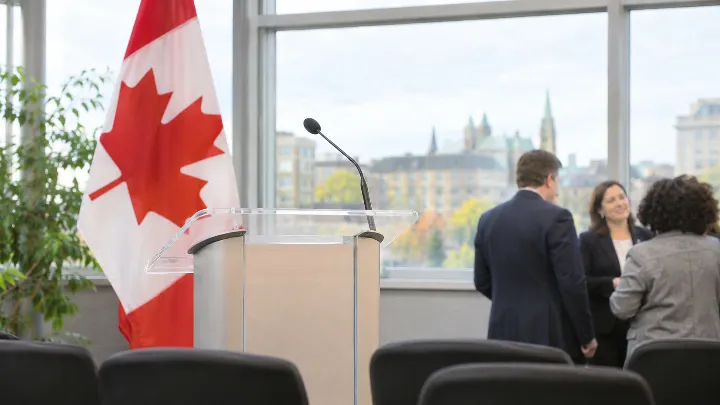
Prime Minister Mark Carney and cabinet ministers fanned out across the country Friday to promote the federal budget, while Conservatives sought to portray it as a costly spending binge. At a Winnipeg news conference with Manitoba Premier Wab Kinew, Carney highlighted the government’s pledge to end homelessness in Canada within a decade.
Carney said governments and communities have tried for decades to address the crisis, but efforts have often lacked resources, co-ordination and continuity. The government is investing a record $30 billion in a co-ordinated national plan, he said, adding that the task is difficult but success is essential. The budget allocates $11.2 billion over four years and $17.8 billion over 10 years. The federal government estimates about 65,000 Canadians are homeless.
Carney and Kinew also announced a budget-linked partnership to build about 2,000 transitional housing units and fund a new mental health and addictions centre in Winnipeg. Kinew said nation-building is central to Carney’s government and that tackling homelessness by “building up the people of Canada” is the greatest nation-building project. He credited the prime minister for committing to build housing to end homelessness, saying no one in a country as wealthy as Canada should be homeless.
Finance Minister François-Philippe Champagne travelled to Montreal on Friday for an event hosted by the Montreal Council on Foreign Relations to promote a federal spending plan that sets aside billions of dollars to stimulate investment. In his speech, Champagne said the homelessness initiative and the productivity “mega deduction,” which allows businesses to deduct new investments, would have the greatest impact of the budget’s measures a decade from now.
Champagne has described the budget, titled “Masters of our Destiny,” as an ambitious plan to give Canada a solid economic footing in an increasingly volatile world. He told reporters Friday that the aim is to make Canada more resilient, independent and strong. Greater strength, he said, would make the country more resilient to events south of the border, in the Middle East or elsewhere. He said that was the central message he wanted Canadians to understand in the phrase “masters of our destiny.”
Opposition leaders say the budget falls short, particularly in helping people facing high living costs. Conservative Leader Pierre Poilievre called it a “costly credit-card budget” full of “wasteful spending” that would drive up the national debt. He said more borrowing means more interest paid to financial institutions, and that the Liberals should have called the budget “Mastered by Debt.” Poilievre made the comments at a news conference at a local food bank facing supply shortages and a surge in demand.
Food banks across the country are under pressure as households struggle with the cost of living. Poilievre said the country had moved beyond a food crisis to a food emergency, that people could not afford to eat, and that inflation was worsening after 11 years of Liberal government.
The budget pledges to renew a local food infrastructure fund, which would help food banks and other aid organizations buy food and upgrade facilities such as greenhouses, kitchens and transportation equipment. The investment is $124 million over three years, beginning in 2027.
The Liberals and Conservatives have sent fundraising messages to supporters presenting competing accounts of the fiscal plan. The Liberals say the budget will support economic growth and make life more affordable; the Conservatives say uncontrolled spending will lead to higher taxes.
During question period in the House of Commons on Friday, Conservative finance critic Michael Chong accused the government of allowing interest costs on the national debt to “skyrocket.” He called them the fastest-growing expense in the government’s budget and asked what the government would do in another crisis like those of 2008 or 2020. Parliamentary Secretary Ryan Turnbull replied that the government’s plan remains within its fiscal guardrails. He said it would balance the operating budget one year ahead of schedule and remain on a path to reduce debt relative to GDP.
Unlike Carney’s first budget, tabled under a minority government, the Liberals now have a majority and can pass their agenda without support from other parties.
This report by The Canadian Press was first published Nov. 6, 2026, with files from Maan Alhmidi in Brampton, Ont., and Morgan Lowrie in Montreal.