 Vancouver
METRO VANCOUVER NEWS
Lawyers question whether extra funding can ease Federal Court backlog
Nearly 31,000 proceedings had been started in Federal Court by Sept. 30, up from about 7,600 in all of 2020. Lawyers say the additional $58 million over four years may not address the immigration-driven pressures behind the growing caseload.
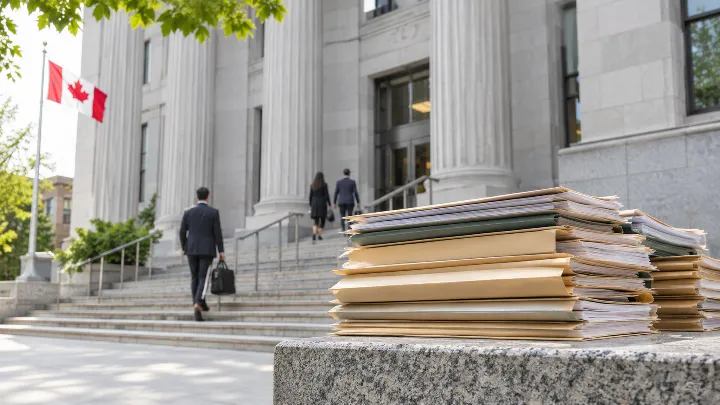
The federal budget included an additional $58 million for court administration, but the Federal Court still lacks details on how the money will be allocated or how much it can do to ease a caseload that has grown rapidly since 2020. Chief Justice Alan Diner told The Canadian Press in an emailed statement Thursday that the court had not received further information on how the confirmed funding would be distributed among its stated purposes.
The Federal Court hears immigration matters including visa applications, refugee claims, admissibility cases and removals. It also upholds the law in areas of federal jurisdiction such as intellectual property, national security and Indigenous rights. The court sought more resources after its caseload climbed to nearly 31,000 proceedings launched by Sept. 30 this year, compared with about 7,600 in all of 2020. More than 27,000 proceedings launched this year are immigration cases. In an August interview, Diner said judges and court staff had been working evenings, weekends and vacation days to manage the growing caseload, driven in large part by immigration matters.
The budget says the money is earmarked for the Courts Administration Service, which serves the Federal Court, the Federal Court of Appeal, the Tax Court of Canada and the Court Martial Appeal Court of Canada. The funding is mentioned once in documents released Nov. 5: it is intended to address the Federal Court’s caseload and help the service comply with the Official Languages Act, clear a translation backlog and modernize court infrastructure. The additional $58 million is set to begin in the 2027/28 fiscal year and run for four years, averaging $14.5 million annually.
Joannie Fogue, spokesperson for Justice Minister Sean Fraser, said the funding is intended to strengthen the national courts, respond to resource challenges and improve workload efficiency. In a media statement, she said officials were still working through the commitment’s details and implications and awaiting more information about how it would be allocated. The precise allocation remains unknown.
Immigration lawyers questioned whether the funding would help move cases through the court more quickly. Ottawa-based lawyer Jacqueline Bonisteel called any funding increase positive, but modest beside the growth in the Federal Court’s immigration caseload. She welcomed the money but said $58 million spread over four years would not be enough to meet the surge. The immigration caseload has increased by 600 per cent since 2020, she said, adding that the current number of judges and available resources cannot handle growth of that scale. An immigration case can now take “upwards of two years” to make its way through the court.
Toronto-based lawyer Zeynab Moayyed also said the Federal Court’s problems go beyond what $58 million could fix. She cited a shortage of registry staff: routine paperwork that once took about a day, such as a filing for judicial review, now takes weeks. Moayyed attributed some of the caseload increase to more people filing mandamus applications to compel the Immigration Department to make decisions after long delays.
Moayyed and Bonisteel said the quality of Immigration Department decisions has declined since the federal government adopted artificial intelligence tools and new software to review and process applications more quickly. They said the lack of direct interaction with the department turns small problems into larger ones that end up before the court. Moayyed said lawyers previously could contact Immigration, Refugees and Citizenship Canada, program managers or visa-office managers. If there was a mistake, the department could reconsider and reopen the matter; if not, applicants could understand what they had done wrong. She said those tools came into effect as informal ways of addressing problems in the system were shut down, leading applicants to turn to Federal Court.
Bonisteel said the department could ease the court’s workload by streamlining reconsideration requests before cases are sent to court. She described the causes as multifaceted and said solutions must address systemic issues driving the increase in the caseload, as well as court funding.
The Immigration Department says its artificial intelligence and advanced analytics tools are always used under human oversight and do not make decisions. It says they assist with tasks such as triaging applications, identifying routine cases, generating case summaries and answering client questions through chatbots. The department’s first AI strategy, released earlier this year, says the aim is to use the technology to reduce application backlogs and wait times.
Moayyed said the long delays are causing “a great deal of distress” for people caught in the system. She said immigration lawyers’ work has expanded to include being a client’s confidant and therapist, listening as people describe having their lives on hold and in limbo while they wait for a decision.