 Vancouver
METRO VANCOUVER NEWS
What to know as Carney’s tariffs escalate Canada-U.S. trade war
Canada imposed tariffs on about $20 billion in U.S. goods Tuesday as Mark Carney argues Washington’s terms threaten Canadian industry and independence.
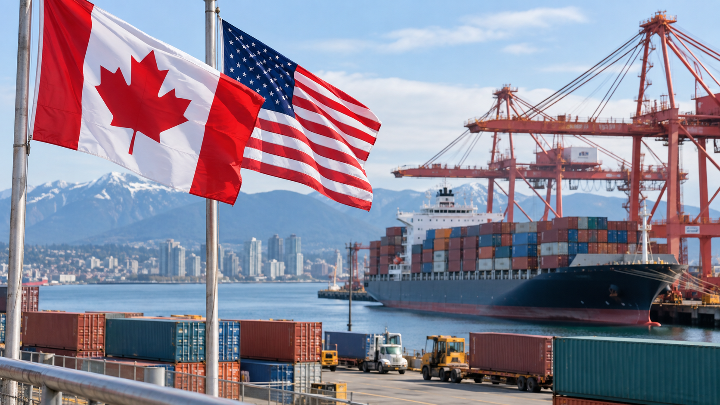
Canada imposed tariffs on about $20 billion worth of U.S. goods Tuesday in response to the latest U.S. tariffs on Canada. Prime Minister Mark Carney says U.S. demands could hollow out key Canadian industries and limit the country’s independence, while Donald Trump’s threats to Canadian sovereignty have strengthened public support for Carney.
The Canadian tariffs took effect at 12:01 a.m. Tuesday through an order in council. Ottawa says they match Washington dollar for dollar and rate for rate, applying 15, 25 or 50 per cent tariffs to hundreds of U.S. products, including steel, aluminum, cheese, appliances, clothing, cosmetics and farm equipment. The measures cover about six per cent of the US$333.6 billion in goods exported from the United States to Canada last year. RBC Economics says they are unlikely to affect overall U.S. growth but could hit some businesses hard.
Canada has also acted beyond tariffs. Eight of its 10 provinces continue to restrict or ban U.S. alcohol sales, and the Distilled Spirits Council says U.S. spirits exports to Canada fell more than 70 per cent year over year after those restrictions began.
Since Canada-U.S. trade talks collapsed Aug. 21, Trump and his administration have issued tariffs, threats and personal attacks describing Canada as weak and dependent. On Monday, Trump said he would ban Bombardier aircraft sales in the United States unless the company manufactures planes there, writing on Truth Social that its products were not good enough and that Canada should stop treating the U.S. as a “piggybank.” Flavio Volpe, president of manufacturing trade group APMA Canada, replied on X that Bombardier uses U.S.-made GE and Honeywell jet engines and employs about 3,000 U.S. workers.
Trump has previously said Canada’s economy could collapse if Carney continued treating him as an enemy and threatened consequences worse than anything that had happened to a Canadian politician. U.S. Trade Representative Jamieson Greer has said Washington could ban some Canadian goods outright. Trump also renamed Lake Ontario “Lake America,” a change ignored and ridiculed in Canada but adopted by Google and Apple in maps for U.S. users. He posted a U.S.-flag-covered map of North America on social media Monday.
Canadian historian Robert Bothwell said Carney and Canada have become symbols of resistance to Trump, and that trying to make an example of them could instead show other governments they need to move further from the United States. Trump’s trade war and repeated references to Canada as a 51st state have fuelled anger, reduced Canadian travel to the United States and prompted boycotts of U.S. products.
The trade conflict began after Trump returned to office and imposed tariffs on Canadian goods despite having negotiated and praised the North American trade agreement during his first term. Many of those tariffs violate the agreement. The rupture is notable given the countries’ integrated economies, close defence and security ties, cultural links and, before relations deteriorated, roughly 400,000 daily border crossings. Carney says talks can resume when Americans stop posting memes, making taunts and trying to appear tough, and begin negotiating seriously.
Nelson Wiseman, professor emeritus of political science at the University of Toronto, said Trump’s 2024 reelection deepened Canadians’ distrust not only of the U.S. government but of Americans’ judgment. He said Canada-U.S. relations would never return to their pre-Trump state, even without confrontation.
At the World Economic Forum in Davos in January, Carney warned that great powers were using economic integration to coerce smaller countries. Trump responded the following day by saying Canada “lives because of the United States.” Carney is scheduled to address the European Parliament next week. McGill University political scientist Daniel Béland said that if Canada’s approach succeeds, it could offer a template for resisting the Trump administration’s trade policies.
Trump has also threatened 50 per cent tariffs next year on Canadian vehicles, auto parts and steel unless Canada falls in line. He said he wants cars built in Detroit, South Carolina, Tennessee and other U.S. production centres rather than Canada. Because parts and finished vehicles repeatedly cross the border during production, such a tariff could damage Canadian plants and raise vehicle prices across North America. Carney says Washington’s terms could gradually wind down and wipe out Canadian industries.
Canada’s economy is roughly one-thirteenth the size of the U.S. economy, and more than 70 per cent of Canadian exports go south of the border. Béland said the dispute is not a normal trade fight, citing Trump’s domestic unpopularity, approaching midterms and court challenges that could undo further U.S. tariffs. U.S. refineries rely on four million barrels of Canadian oil daily, while U.S. farmers depend heavily on Canadian potash; Canadian leaders have so far ruled out taxing or restricting those critical exports. Canada’s economy grew at a 3.2 per cent annualized rate in the second quarter, compared with 1.5 per cent in the United States. Industry Minister Mélanie Joly said she was convinced Canada could show the world it would win the trade war.