 Vancouver
METRO VANCOUVER NEWS
Survey: 47% of Seattle businesses considered moving operations, jobs or investment elsewhere
A 2026 survey by the Seattle Metro Chamber and Downtown Seattle Association found that 92 of 197 respondents had seriously considered moving operations, jobs or investment out of the city in the previous year. Safety and business costs were among the leading concerns.
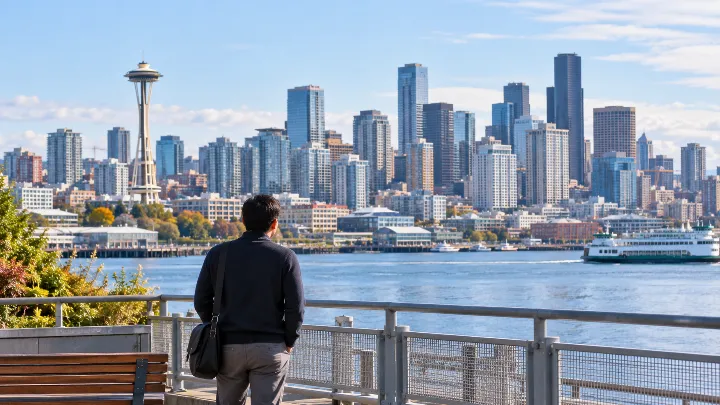
The 2026 Business Climate Survey, conducted in late summer by the Seattle Metro Chamber and Downtown Seattle Association, gathered responses from 247 businesses and organizations. Of the 197 respondents asked whether they had seriously considered moving operations, jobs or investment out of Seattle in the previous year, 92 said yes, or about 47 per cent. In a separate question about the coming year, nine per cent expected to relocate outside the city and 19 per cent anticipated shrinking their Seattle operations. Forty-nine per cent expected operations to remain about the same, while 17 per cent anticipated growth.
Respondents rated Seattle’s overall business environment an average of 39.1 out of 100. The municipal government received an average of 26.4 for how well it responds to business needs. Among those comparing conditions with a year earlier, 56 per cent reported deterioration and 12 per cent saw improvement. Looking ahead 12 months, 61 per cent were pessimistic about Seattle as a location for business activity and investment, compared with 23 per cent who were optimistic. Existing businesses’ willingness to recommend Seattle to someone starting, running or expanding a business averaged 32.6 out of 100. Their confidence in their own business or organization’s performance over the coming year averaged 52.9.
Joe Nguyen, president and CEO of the Seattle Metro Chamber, said this week the findings should be both a wake-up call and a roadmap. Businesses, he said, clearly want safer neighbourhoods and commercial districts, greater predictability around taxes and fees, and a city that recognizes a strong business environment as fundamental to jobs, investment and opportunity. Seattle has significant strengths, Nguyen said, but cannot take its economic future for granted and needs to act urgently to make it a place where businesses want to stay, grow and invest.
Asked to identify up to five pressing challenges, 64 per cent selected public safety and the same share selected taxes and fees. A combined category covering homelessness and “behavioural health conditions” was chosen by 61 per cent, while 59 per cent identified labour costs. On safety around their businesses, 40 per cent said the area always or most of the time felt safe, 42 per cent said it depended, and 18 per cent said it usually did not feel safe or never did. When taxes, fees and the cost of complying with government policies were considered together, 72 per cent disagreed that Seattle was competitive with comparable locations.
Asked to select up to three factors that would encourage them to stay, expand or invest more in Seattle over the long term, 70 per cent chose better public safety. A stronger recovery in Downtown Seattle followed at 56 per cent; 43 per cent wanted taxes and fees to be more predictable, and 41 per cent wanted more help for small businesses. Jon Scholes, president and CEO of the Downtown Seattle Association, said businesses want to invest but need conditions that give them confidence, including safe and welcoming streets, a vibrant downtown, a competitive business environment and sustained public-private partnership.
Several proposed municipal actions also drew broad support. About 91 per cent backed reviewing how taxes and fees affect businesses and employment. A proposal combining additional Seattle Police Department hiring with efforts to make the department’s leadership more stable received 89 per cent support. Another 79 per cent supported speeding up permits for improvements to commercial spaces and housing construction.
Seattle Mayor Katie Wilson, who took office at the start of 2026, has faced growing pressure from business leaders over her administration’s handling of public safety. In September 2026, more than 30 business leaders urged Wilson and Seattle City Council to deliver a 100-day public safety action plan, improve emergency response times and take further action on public drug use and homeless encampments. They included executives from major Seattle-area-headquartered companies such as Microsoft, Starbucks, Costco, T-Mobile, Nordstrom and Alaska Airlines.
Businesses in and around Downtown Vancouver have also repeatedly and increasingly raised concerns about public safety, crime, homelessness, open drug use and public disorder. They are also dealing with high operating costs and frustration over obtaining permits and approvals from Vancouver’s municipal government.