 Vancouver
METRO VANCOUVER NEWS
Ginette Lavack outlines Budget 2026 investments for Indigenous communities
The budget proposes more than $50 billion over 10 years for reconciliation, including First Nations housing and infrastructure, children and family services, education, health, safety and northern communities.
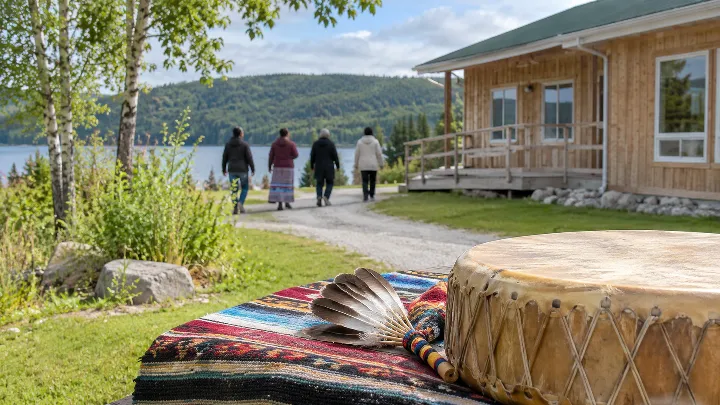
SASKATOON, Sask., Nov. 14, 2026 — Ginette Lavack, parliamentary secretary to the Minister of Indigenous Services Canada, outlined proposed Budget 2026 investments for Indigenous communities during a visit to Saskatoon. The budget, titled “Budget 2026: Masters of our destiny,” proposes more than $50 billion over 10 years to advance reconciliation and provide long-term, predictable funding for core programs. Indigenous partners have long called for stable funding to support planning, maintain essential services and build for future generations. The federal government says it is working with Indigenous governments and organizations to strengthen local economies, build housing and infrastructure, improve educational and health outcomes, support children and families, and deliver services that reflect community needs.
The proposals include $32 billion over 10 years for First Nations housing and infrastructure, and more than $18 billion over six years for Indigenous education and skills training, health and community safety, support for children and families, and emergency management.
For housing and infrastructure, the budget proposes $18.5 billion over 10 years through a new First Nations On-Reserve Infrastructure Program. It would support the construction and maintenance of assets including roads, bridges, schools and health facilities. It would also extend investments in water and wastewater infrastructure for six years beyond funding announced in June 2026. The program would consider consolidating existing First Nations on-reserve infrastructure programs and give communities more flexibility to sequence investments across assets according to their circumstances, rather than relying on typical annual funding allocations.
A further $11 billion over 10 years is proposed to improve First Nations housing. It would help communities manage and preserve 119,000 existing units through regular maintenance and repairs, build more than 6,900 homes and renovate more than 10,900 over the next decade. Another $1.7 billion over five years would accelerate housing construction in First Nations communities on reserve, speed up shovel-ready projects and free core funding for housing planning, delivery and maintenance over the next 10 years.
The budget also proposes an additional $13 billion over 10 years, on a cash basis beginning in 2028-29, to boost Build Canada Homes’ capital and expand non-market housing across Canada. At least 10 per cent of the expanded envelope would be dedicated to Indigenous housing projects using a distinctions-based formula. A proposed Partnerships for Indigenous Workforce Readiness Fund would receive $451.8 million over four years and $48 million ongoing, including new and existing funding. It could align Indigenous workforce investments with national economic priorities.
The budget proposes $657.5 million over 10 years to explore new approaches to financing First Nations housing and infrastructure. That includes $500 million over 10 years for a Monetisation Pilot to test a First Nations-led infrastructure financing model; $150 million over five years for the Yänonhchia' Revolving Housing Finance Fund, a First Nation-led initiative working with Indigenous Financial Institutions to provide housing loans to First Nations individuals and help them move toward home ownership; and $7.5 million over five years for a Surety-Bonding Pilot to test ways of helping First Nations contractors overcome barriers to bidding on large construction contracts. The budget also proposes $78.5 million over four years and $20.6 million ongoing for Crown-Indigenous Relations and Northern Affairs Canada to support renewed funding for the First Nations Financial Management Board, First Nations Tax Commission and First Nations Infrastructure Institute.
For Indigenous children and families, the budget proposes longer-term funding for Jordan’s Principle and Pirutsiagutiit, the Inuit Child First Initiative. The aim is to help First Nations and Inuit children access government-funded services without delay while supporting greater Indigenous control over child and family services in their communities. Jordan’s Principle would receive $6 billion over six years to maintain First Nations children’s access to health, social and educational services and continue work to address barriers. The Inuit Child First Initiative would receive $575 million over five years for renewal and the transition to Pirutsiagutiit. The initiative was co-developed with Inuit Tapiriit Kanatami and the four Inuit Treaty Organizations, the Inuvialuit Regional Corporation, Nunavut Tunngavik Incorporated, Makivvik Corporation and the Nunatsiavut Government. It is intended to help Inuit children access essential services and supports closer to home. Another $806.7 million over five years is proposed to renew funding for the implementation of An Act respecting First Nations, Inuit and Métis children, youth and families, helping Indigenous communities provide culturally appropriate services and supports that better meet families’ needs.
For northern, remote and Indigenous communities, the budget proposes $610.3 million over four years, $118.1 million in 2031-32 and $117.1 million ongoing to expand and stabilize funding for Nutrition North Canada and associated initiatives. It proposes $1.6 billion over 10 years to improve energy reliability in the North. Of that, $713.8 million would support renewable energy and capacity-building projects to help Indigenous, rural and remote communities move from diesel and fossil fuels to renewable sources; $929.1 million would replace and upgrade aging electricity infrastructure in northern communities. The budget also proposes $3.1 billion over five years for construction and certain maintenance costs of the Mackenzie Valley Highway, plus $10.4 million over four years for the Dechinta Centre for Research and Learning. The proposed funding, through Crown-Indigenous Relations and Northern Affairs Canada, would support the centre’s operations. It offers post-secondary land-based learning and research programs to Indigenous students in the Northwest Territories.
The government says a sustained 10-year commitment that improves funding certainty, accelerates construction and changes how projects are financed would help communities make strategic investments and gradually close housing and infrastructure gaps. It says the initiatives would support long-term success, self-determination and stronger First Nations, Inuit and Métis communities.
Finance and National Revenue Minister François-Philippe Champagne said reconciliation means ensuring Indigenous communities have the foundations needed to thrive, including safe housing, clean water, good schools, reliable infrastructure, stable and culturally responsive policing, and the ability to shape their future. He said having the tools to shape a better future is what it means to be masters of their destiny. Lavack said the budget recognizes that First Nations are best placed to set their priorities and shape their future, and that investments in housing, infrastructure and essential services can address long-standing gaps, strengthen local economic development and create opportunities for current and future generations. Mark Arcand, tribal chief of the Saskatoon Tribal Council, said housing, education, infrastructure and services for children and families are important supports. He said the council looks forward to continuing to work with the federal government on those priorities and building stronger communities for future generations.
Other proposed education measures include $5.8 billion over five years for the on-reserve Elementary and Secondary Education Program to support high-quality, culturally relevant education and improve long-term outcomes for First Nations students; and $437.9 million over five years through the Post-Secondary Student Support Program to maintain access to post-secondary education and support the next generation of First Nations leaders, professionals and skilled workers.
Health and safety measures include $2.9 billion over three years for access to health products and services through the Non-Insured Health Benefits Program; $290.7 million over four years to help Indigenous communities access public health services and support; and $865.6 million in 2026-27 for the Emergency Management Assistance Program to respond to emergencies on reserve, plus $446.2 million ongoing for future response and recovery. The budget proposes $7.8 million ongoing for wildfire protection for First Nations whose community boundaries are next to wildland, and $7 million ongoing for the First Nations Fire Protection Strategy, which supports fire-safety priorities identified by First Nations communities. It also proposes $633.7 million over four years and $250.9 million ongoing for stable and effective Indigenous policing agreements and infrastructure; $140 million over four years for First Nations and Inuit communities to develop and implement community-led safety approaches tailored to their priorities and circumstances; and $3.6 million in 2027-28 to renew the Red Dress Alert pilot developed with Indigenous partners. The latter funding would also renew the government’s capacity to coordinate federal efforts addressing the ongoing issue of Missing and Murdered Indigenous Women and Girls.
Fiscal and institutional capacity proposals include increasing the revenue-sharing rate under First Nations Personal Income Tax arrangements alongside a new revenue-sharing mechanism; revising the cost-sharing arrangement for the Canada Groceries and Essentials Benefit under First Nations Goods and Services Tax arrangements; and amending the First Nations Fiscal Management Act to allow the First Nations Finance Authority to lend to Indigenous-owned Special Purpose Vehicles.
Related links: “Budget 2026: Masters of our destiny” (https://budget.canada.ca/2026/home-accueil-en.html) and “Spring Economic Update 2026: Canada Strong For All” (https://budget.canada.ca/update-miseajour/2026/home-accueil-en.html). Media contacts: Livi McElrea, press secretary to Indigenous Services Minister Mandy Gull-Masty, olivia.mcelrea@sac-isc.gc.ca; Media Relations, Indigenous Services Canada, media@sac-isc.gc.ca.