 Vancouver
METRO VANCOUVER NEWS
Opinion: Sunk costs should not determine the future of the George Massey crossing project
Caroline Andrewes, head of the Association of Consulting Engineering Companies BC, argues that government should assess the tunnel and bridge options on technical feasibility, constructability and risk, with industry involved in the review.
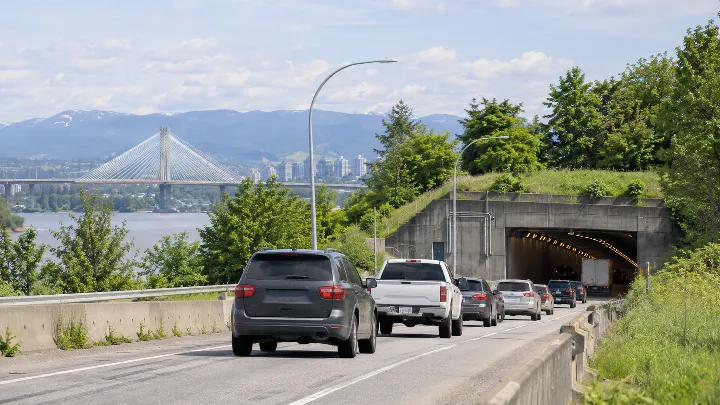
Written for Daily Hive Urbanized by Caroline Andrewes, president and CEO of the Association of Consulting Engineering Companies BC. It has been more than a decade since the provincial government announced a bridge to replace the aging George Massey Tunnel, nearly a decade since that plan was scrapped, and five years since work began on a new tunnel. As the new Conservative government settles in, much of the debate over its promise to build a bridge has focused on money already spent on the tunnel. Andrewes says that focus is understandable, but past spending should not, on its own, determine what happens next.
Avoiding the sunk-cost fallacy means looking objectively at the project’s current position, she argues. A basic project-management practice is plan, do, check and act: set a direction, do the work, review results and adjust based on what is learned. Pausing to examine performance and assess options is reasonable. From that perspective, money invested in the tunnel and the earlier bridge project has not been entirely wasted. The route taken was unusual and less than ideal, but it gave government useful insight into site conditions, technical complexity and risk.
Andrewes says a decade of investment leaves government well placed to weigh a tunnel against a bridge without delay, considering technical feasibility, constructability and project risk. She says the provincial government has what it needs to make a sensible, risk-informed decision, and that B.C.’s engineering and construction professionals are ready to support a fact-based choice in the coming months.
She argues that industry can work with senior public servants to compare options so a decision can be made quickly and work can proceed. Bringing consulting engineers and contractors into the discussion now, she says, would support better, more durable decisions and help put the project on a successful course. The choice is not only about project cost or escalation; it also involves managing risk, preserving design flexibility and ensuring industry has the capability and capacity to deliver.
Premier-designate Lorne Doerkson has said British Columbians do not care whether the crossing is a bridge, a tunnel or a treadmill; they just want it done. Andrewes says consulting engineers cannot do much to help with a treadmill, but are ready to help government advance and build the province’s critical infrastructure.
Image captions in the source describe site preparation and preliminary construction for the new tunnel beside the south end of the existing tunnel, photographed May 21, 2026. Concept images show the segment manufacturing facility on Deas Island; six new tunnel segments, each the size of a football field; tugboats moving the floating segments; the excavated trench in the Fraser River bed; cables positioning and lowering the segments; and a thick layer of boulders over them. Other images are preliminary artistic renderings of the replacement tunnel. The historical project images show artistic renderings of the cancelled 10-lane George Massey Bridge project from 2017 and an alternative eight-lane bridge concept from 2019. Images: Government of B.C.