 Vancouver
METRO VANCOUVER NEWS
B.C. Conservatives promise to limit Metro Vancouver Regional District to water and sewage services
The party says it would transfer the regional district’s housing, economic development, air quality and climate policy responsibilities to other governments, and also promises a smaller board and a full audit of the North Shore wastewater plant project.
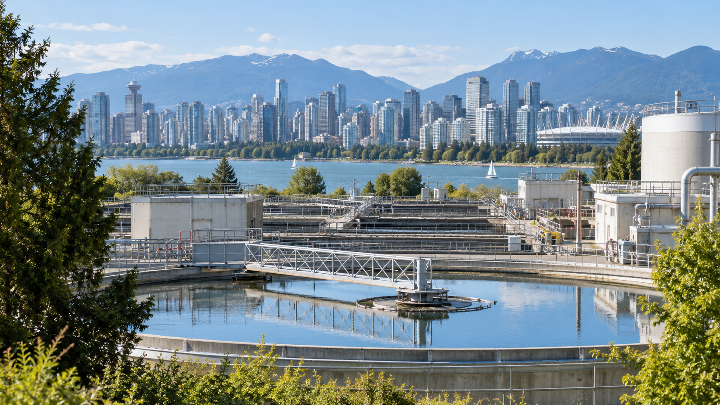
The Conservative Party of British Columbia says that, if elected, it would sharply reduce the scope, mandate and operations of Metro Vancouver Regional District. Its platform would remove the regional government’s role in coordinating housing, economic development, air quality and climate policy, leaving it focused on supplying safe, reliable drinking water to municipalities and treating their sewage. Those bulk utility services account for most of the regional government’s annual operating and capital budgets. The Conservatives argue that the provincial government and individual municipalities should take over the other four areas because the regional district duplicates work they already do. They say some services could be handled jointly by two or three municipalities, while businesses already provide or could deliver other work.
The announcement includes no estimate of potential savings, implementation schedule or details on how the provincial and municipal governments would pay for responsibilities transferred to them. The Conservatives cite the regional district’s growing debt and annual operating budget as reasons to reduce its responsibilities. They also accuse it of overspending on private consultants and contractors, saying third-party labour costs now exceed the salaries and benefits of in-house staff. Carson Binda, the party’s candidate in Vancouver-Quilchena, called the organization an unaccountable bureaucratic mess with a blank cheque. He said the Conservatives would take back control of spending, focus the regional district on water and sewage, and ensure taxpayers get value for every dollar.
The platform also calls for a smaller board of directors. The current board includes selected mayors and city councillors from 21 municipalities across Metro Vancouver, as well as representatives of Electoral Area A, which includes the University of British Columbia and the University Endowment Lands, and Tsawwassen First Nation. A smaller board would align with the board’s July 2026 request for the provincial government to amend legislation to allow a 25 per cent reduction in the number of directors. Lynne Block, the Conservatives’ candidate in North Vancouver-Seymour, said a smaller, professional board would run the utility as the essential service it is.
The Conservatives also promise a full audit of the North Shore Wastewater Treatment Plant project in North Vancouver. When construction began in 2017, the project had a budget of about $700 million and was expected to be completed in 2020. After litigation, a long pause in major construction and a change of contractors, it is now expected to cost about $3.9 billion and be completed in 2030. Regional households are facing upward pressure on user fees to cover those overruns and other expensive capital projects. This summer, the regional district restarted an independent review of what went wrong in the project’s decision-making and oversight. A final report is expected in early 2027.
Trevor Withers, the party’s candidate in North Vancouver-Lonsdale, said people want clean water and working sewers, not a regional bureaucracy that cannot build a plant on budget and is never held to account. Caroline Elliott, the candidate in West Vancouver-Capilano, said North Shore families deserve accountability for the wastewater project. She accused NDP MLAs of indifference and said a Conservative government would audit what went wrong under the NDP’s watch to help prevent a failure of similar scale.
The regional government has also been implementing recommendations from a separate governance review initiated by its board and conducted by consulting firm Deloitte in May 2025. The provincial government partnered in the review, which led to work on stronger internal auditing and changes to board compensation rules. The organization has also had a recent change in senior leadership. In early September 2026, after weeks of media speculation, it parted ways with Jerry Dobrovolny, who had served as chief administrative officer and commissioner since 2019. He had faced increasing criticism over his oversight of the North Shore plant, high compensation and allegations that he overstepped his authority internally. Before joining the regional government, he worked for the City of Vancouver for more than three decades, including four years as chief engineer and general manager of the city’s Engineering Department. Daily Hive Urbanized has contacted Metro Vancouver Regional District for comment on the Conservative platform promise and comments.
The party’s platform is for the provincial general election on Saturday, Oct. 24, 2026, one week after the civic election on Saturday, Oct. 17.