 Vancouver
METRO VANCOUVER NEWS
Delta hospital foundation joins call for funding to close South Fraser health-care gaps
The new South Fraser Healthcare Alliance, formed by foundations supporting hospitals in Delta, Langley and Peace Arch, is urging the province to increase equitable funding, beds and community hospital capacity as the region’s population grows and ages.
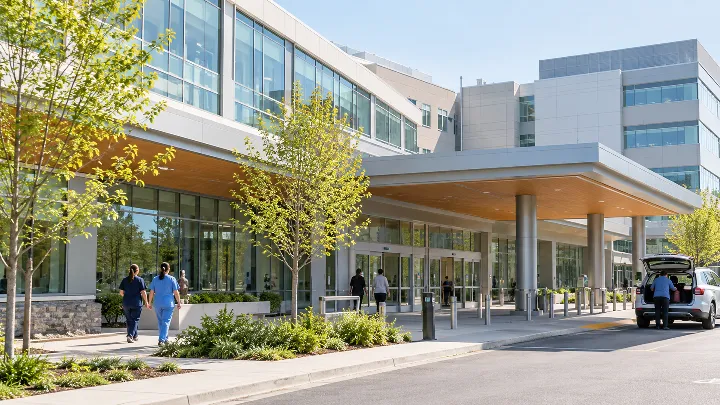
Population growth and underfunding are contributing to shortages in critical health services. Delta Hospital and Community Health Foundation has joined the foundations supporting Langley Memorial Hospital and Peace Arch Hospital to advocate for residents and patients across the South Fraser region.
The three foundations announced the South Fraser Healthcare Alliance on Tuesday, Oct. 13. The coalition plans to press the provincial government for equitable access to health care and fair investment in the region. It says funding, infrastructure and capacity must keep pace with population growth and rising demand in one of British Columbia’s fastest-growing and most underfunded regions.
Alliance chair Peter Fassbender said in a recent news release that, after living in the region for more than 50 years, he knows the importance of a strong local hospital. Fassbender is also a director on the 19-member board of Langley Community Health and Hospital Foundation. Delta, Langley, South Surrey and White Rock face many of the same pressures as their populations and demand grow, he said, adding that the alliance was formed to speak with one voice about regional needs and health-care investment.
The alliance says Delta Hospital, Langley Memorial Hospital and Peace Arch Hospital form an interconnected community-hospital network serving South Fraser. Strengthening infrastructure and capacity at all three, it says, would help more patients receive timely care closer to home and ease pressure on the wider regional health-care system.
Regardless of the outcome of Saturday’s election, the alliance is urgently asking the province to take four steps: establish fair and equitable funding for Fraser Health; invest in acute and long-term care beds; modernize and expand community hospitals to meet demand; and include health care in growth planning.
According to a release last week, current analysis shows Fraser Health receives about $2,621 per person in annual health-care funding, compared with $3,922 to $4,312 per person in other health authorities. The resulting gap is about $1,300 to $1,700 per person. The release also says Fraser Health has the lowest hospital bed capacity per capita among B.C. health authorities, with 1.06 acute care beds per 1,000 residents. The average wait for a long-term care bed is 402 days in Fraser Health, compared with 290 days provincially.
The alliance’s release says these gaps lead to poor patient outcomes, inefficient use of government funds and impacts on family earnings. It says increased investment is urgently needed to expand acute and long-term care capacity, reduce pressure on emergency departments and meet the needs of one of the province’s fastest-growing and aging populations.
For Delta resident Kerri Deane, access to long-term care close to home is personal. Both her parents, Cliff and Sheila Cox, needed long-term care in their final years. Her father received care at Mountain View Manor in Ladner, while her mother was initially placed in a care home outside their community after suffering a stroke, making regular family visits more difficult.
When a bed became available at Mountain View Manor, Sheila returned to Ladner. She spent her final three and a half years surrounded by family and supported by compassionate caregivers. Deane said in a statement shared with media that her mother’s initial transfer to a long-term care home outside the community added stress during an already emotional time. Her return to Ladner made an enormous difference, she said: the family could visit more often, her grandchildren could stop by regularly, and she remained connected to the community she called home.
Stories such as Deane’s underscore the importance of accessible, community-based long-term care as South Fraser’s growing and aging population puts more pressure on health-care capacity.
As part of its call to modernize and expand community hospitals, the alliance wants the province to invest in surgical and ambulatory care, diagnostic imaging, critical and cardiac care, and the infrastructure and equipment needed at all three member facilities. It says that would help more residents receive timely diagnostic and preventive care closer to home. The alliance also wants housing mandates and regional population growth to be accompanied by corresponding investment in health-care infrastructure and capacity.
Delta Hospital and Community Health Foundation CEO Lisa Hoglund said in a news release that residents across South Fraser are experiencing a health-care system struggling to keep pace with growing communities. When patients cannot access the appropriate level of care, she said, pressure increases across hospitals, emergency departments, long-term care and community services. Addressing capacity challenges is essential to ensuring residents can receive timely, appropriate care closer to home, she said.
Other alliance members include Rick Boates, board chair of Delta Hospital and Community Health Foundation; Stephanie Beck, CEO of Peace Arch Hospital and Community Health Foundation; and Carrisa Basham, executive director of Langley Community Health and Hospital Foundation. Fassbender and Hoglund are also part of the alliance.
Many of the same people and organizations attended a large rally at Delta’s Paterson Park in March. They protested the B.C. government’s decision to “re-pace” seven long-term care projects, including the 200-bed Beedie Long-Term Care Centre under construction to replace the 49-year-old Mountain View Manor beside Delta Hospital. They also called for equitable health-care funding south of the Fraser River.
More information about the South Fraser Healthcare Alliance is at southfraserhealth.ca (https://www.southfraserhealth.ca/).