 Vancouver
METRO VANCOUVER NEWS
Carney designates proposed West Coast pipeline a project of national interest
The Pacific Link proposal would ship up to one million barrels of Alberta crude a day to Asian markets, but it still faces regulatory review and public hearings.
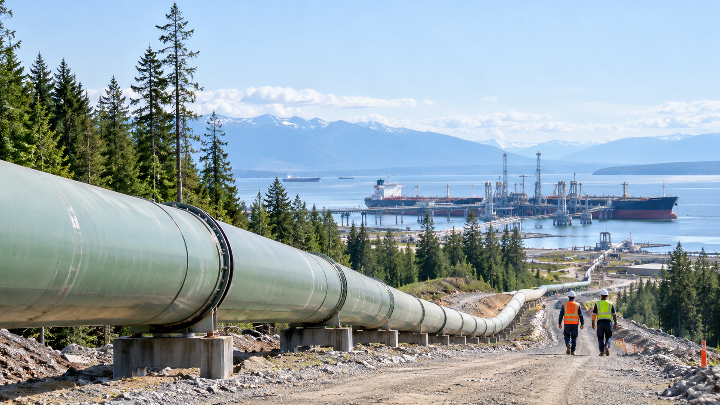
Prime Minister Mark Carney announced Thursday in Fort McMurray, Alta., alongside Alberta Premier Danielle Smith, that his government has designated a new West Coast pipeline project as being in the “national interest,” paving the way for approval. Carney said the world faces energy affordability, security and climate challenges. He expects oil demand to remain significant for decades, even under any plausible net-zero scenario, while global supply is becoming more volatile amid the U.S. war against Iran. Canada, he said, should emerge as a trusted energy supplier.
The project, called Pacific Link, would be reviewed by Carney’s Major Projects Office (MPO), a government branch intended to speed federal approvals. It would also undergo public hearings led by the Canada Energy Regulator. The government is expected to issue a conditions document setting out requirements for the proponents, with the MPO expected to issue those conditions by Sept. 1, 2027. The pipeline is expected to be jointly owned by Trans Mountain Corporation, the Alberta Petroleum Marketing Commission and Pembina Pipeline Corporation. At least 10 per cent equity would be offered to Indigenous peoples.
Pacific Link would carry roughly one million barrels of crude a day from Bruderheim, Alta., to a deepwater port outside Delta, B.C., over about 1,250 kilometres. The oil would be loaded onto large tankers for export to Asian markets. In a briefing before the announcement, the government directly linked the decision to the trade war with U.S. President Donald Trump and the instability it has caused, arguing that diversifying export markets is a matter of national sovereignty. Carney said 90 per cent of Alberta’s oil currently goes to the U.S.; Pacific Link would allow an additional one million barrels a day to be exported to growing Asian markets, reducing that dependence and bringing more customers, choice and higher prices for Canadian energy producers.
A TD Economics report released this summer said the potential pipeline could boost oil exports by 20 per cent and more than double the volume Canada currently ships to Asia by tanker. The project also carries environmental and political risks. On Wednesday, Carney announced a federal commitment of $1.2 billion for ocean protection projects in B.C. He has also backed a proposed expansion of the Port of Vancouver. Carney said the government’s approach to new investment is to protect while building.