 Vancouver
METRO VANCOUVER NEWS
Study says three historic B.C. glaciers could disappear within decades
An SFU study projects that three glaciers at Whistler and Blackcomb could vanish within 10 to 70 years after decades of rapid retreat.
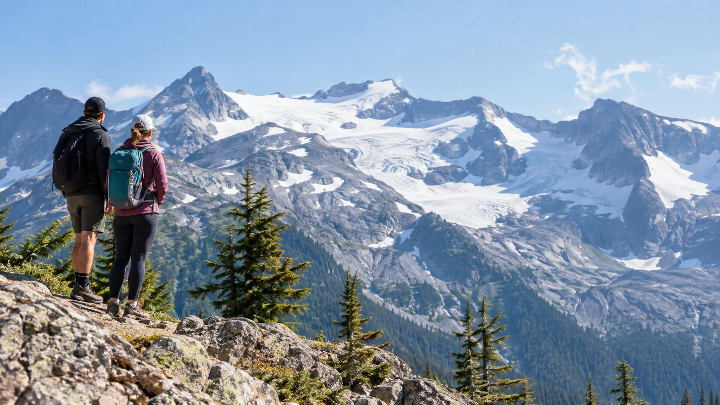
Three prominent glaciers at Whistler and Blackcomb could disappear within decades, according to research by Simon Fraser University master’s student Chloé Monty. Her study examined Whistler Glacier, Horstman Glacier and Blackcomb Glacier, all about 8,000 years old.
Monty used aerial and satellite imagery from 1973 to 2024 to track 50 years of glacier melt and model when the glaciers could disappear completely. Whistler Glacier has shrunk by 95 per cent, Horstman Glacier by 75 per cent and Blackcomb Glacier by 60 per cent.
Monty told Daily Hive that B.C.’s average annual temperature has risen about 2°C since 1948, or roughly 0.26°C per decade. She identified human-caused climate change from greenhouse-gas emissions as the largest driver of the rapid melt. Wildfire ash in Western Canada can also darken glacier surfaces, causing them to absorb more radiation and melt faster.
Because the Whistler Blackcomb glaciers are smaller and at lower elevations than many others, Monty said they are among the first expected to disappear completely as rising temperatures push the snow line and freezing level farther up the mountains. Whistler Glacier is expected to disappear within 10 years, Horstman Glacier within 10 to 30 years, and Blackcomb Glacier within 20 to 70 years.
Melting ice has also contributed to rockfalls around glacier ridges, a trend Monty expects to continue. She said changing terrain is making ski runs and bowl terrain steeper, with some entrances becoming cliffs rather than gradual slopes. She said adaptation is needed alongside mitigation, noting Whistler Blackcomb has replaced its showcase T-bar with a chairlift and that the area will need to be used differently as conditions change.
Monty called the findings a call to action, encouraging people to visit local glaciers and to be more conscious of carbon emissions. Lower emissions could still help preserve larger glaciers and ice sheets and reduce future melting, she said, even if it may already be too late for these smaller glaciers.