 Vancouver
METRO VANCOUVER NEWS
Incoming B.C. government’s SOGI repeal promise raises concerns about increased bullying
The incoming Conservative government says it still plans to eliminate SOGI, but teachers and researchers say the resources remain in use and warn that political debate may contribute to more bullying of gender-diverse students.
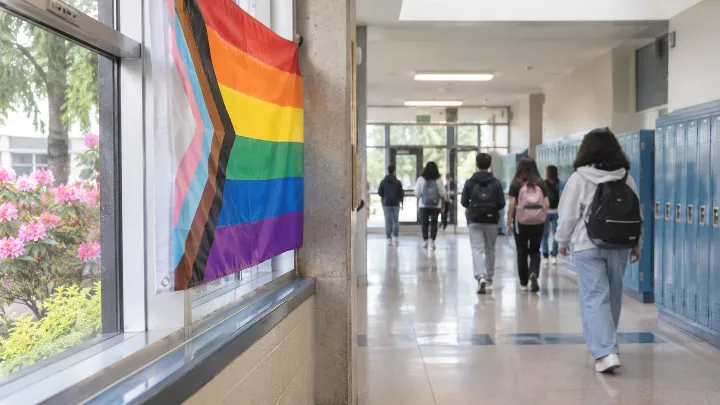
In late October, during the final stretch of the provincial election campaign, premier-designate Lorne Doerkson held a loud rally in a Surrey warehouse. When he mentioned Sexual Orientation and Gender Identity 123 (SOGI 123), a B.C. schools initiative, he shouted: “We are going to get our grades up, and we are going to repeal SOGI!” The line drew thunderous applause.
SOGI 123 is a set of resources from the ARC Foundation to help teachers discuss sexual orientation and gender with students, with the aim of reducing stigma and bullying. It is sometimes mistakenly called a curriculum and confused with sex education, which it is not. Christy Clark’s B.C. Liberal government introduced it through a ministerial directive in 2016, and SOGI-inclusive learning has been woven into the education system over the past 10 years. Clark was at Doerkson’s Surrey rally, cheering him on.
Because SOGI 123 is an educational resource rather than a law, it cannot technically be repealed. What Doerkson means in practice when he says he wants to repeal SOGI, and how schools will continue protecting gender-diverse students from bullying and harassment, remain unclear.
This summer, the B.C. government ended its partnership with the ARC Foundation, which then began winding down its operations. In one sense, the province’s schools have already moved beyond SOGI 123. In a news release, then-Conservative leader Findlay and the party’s education critic at the time, Lynne Block, called the end of the partnership the “end of SOGI.”
B.C. Teachers’ Federation president Carole Gordon called that description misleading. She said SOGI 123 resources are still being used, although they are no longer updated and teachers cannot access them through the ARC website. She compared them to an older textbook: “They stop revising it, and they say we’re no longer supporting this textbook. It doesn’t mean the textbook goes away.”
The new Conservative government is set to take office on Nov. 20. Teachers and researchers who create, implement and expand inclusive education tools are uncertain what “repeal SOGI” would mean. Julia Sinclair-Palm, an associate professor at the University of British Columbia and director of the Robert Quartermain Centre for SOGI-inclusive Excellence in Education, said: “I’m not quite sure what that means when they say that. I think the work will continue around SOGI-inclusive education.” Sinclair-Palm said all students arrive at school with a sexual orientation and a gender, which cannot be ignored and will need to be discussed in the educational setting.
A Conservative spokesperson said ending SOGI remains the plan once the party takes over government. The spokesperson said the party campaigned on restoring confidence in the education system, including a commitment to eliminate SOGI once sworn into government. The party platform says the government would address bullying “directly” and seek to “protect students on an ongoing basis from any harassment based on personal characteristics.” It also refers to parental “opt-out” rights related to SOGI 123.
The party has not provided an in-depth account of how those measures would work, or said whether evidence-based research on bullying of gender-diverse students would inform programming. Parents will have to wait for details. A spokesperson said the party would have more to say about its broader education agenda after cabinet is appointed and ministers are in place.
Gordon doubts the province can force schools to remove SOGI resources. Decisions about which resources to use are generally made by school districts, she said, rather than the province. “Seldom have I seen resources banned,” she said. “That’s essentially what we’re talking about: banning a resource.” Gordon expects teachers will keep supporting children as they see fit. “We’ll continue to teach kids, create really safe and welcoming spaces, help parents understand that and help kids understand that,” she said.
Gordon said teachers are also willing to work with the incoming government, which she believes shares their goal of protecting children from bullying. If the government wants a strong anti-bullying program, she said, it will need resources. Avoiding discrimination requires being clear about who is being discriminated against, she added, so schools have to teach about that.
Gordon and others involved in delivering the programming distinguish it from sex education, which parents can already opt out of. Eli Morris of Out in Schools, an organization that presents in schools and helped develop the SOGI materials, said teachers are answering age-appropriate questions and discussing the diversity already around students. Morris gave the example of a teacher explaining why a student has two dads. The resources are designed to help teachers answer such questions and make children of all genders and sexual orientations feel welcome and included at school, he said.
Morris and Sinclair-Palm cited a 2024 University of British Columbia study that surveyed nearly 100,000 B.C. students and found SOGI 123 helped reduce bullying. The resources were more effective the longer they had been available, and reduced bullying among children of all genders and orientations, including heterosexual children. Researchers contrasted that with generic anti-bullying programs, which SOGI was created to replace after those programs were found ineffective at reducing bias-based bullying aimed at specific groups. The study from UBC’s School of Nursing said SOGI 123 appeared effective in reducing violence and fostering more inclusive environments in B.C. schools, with greater improvement the longer it was implemented.
SOGI has nevertheless become a political flashpoint, particularly among Conservatives who fear the program somehow indoctrinates children. In the July news release celebrating the end of the ARC partnership, Block called it a “wasteful and harmful program.” Morris attributed the controversy to a misunderstanding of what SOGI 123 includes. “There’s a lot of misinformation out there that conflates SOGI resources with sex education,” he said. “There’s a lot of myths out there.”
Morris warned that political discourse has already led to more bullying, even if the resources remain in place. Politicians have a major influence on culture and what is considered acceptable, he said; if they say they do not support SOGI education, people marginalized because of their identity or orientation will experience more violence. Sinclair-Palm is also concerned about how students and teachers will respond to the new government’s direction. “My worry is that students are not going to feel safe at school,” they said. “And that’s really worrying for me.”