 Vancouver
METRO VANCOUVER NEWS
Vancouver council unanimously ends pause on new supportive housing
Vancouver City Council voted unanimously on Nov. 18 to end the city’s temporary pause on providing land or funding for new supportive housing. The motion directs staff to prioritize expansion, while federal funding opportunities formed part of the case for reversing the policy.
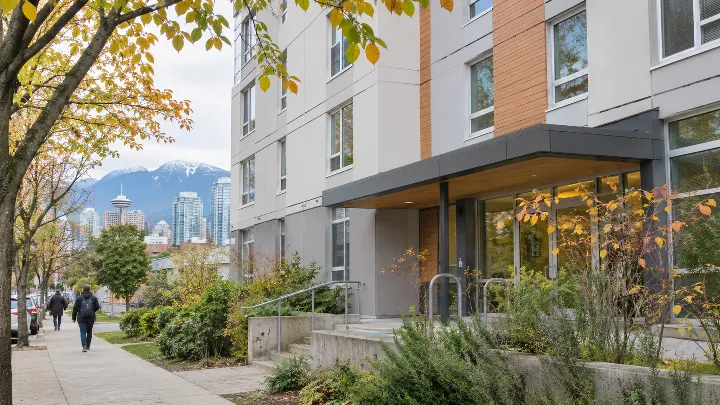
Vancouver City Council voted unanimously on Nov. 18, 2026, to end the city’s temporary pause on providing municipally owned land or funding for new supportive housing projects. The decision reverses a policy adopted by the previous ABC-led council. COPE Coun. Sean Orr brought forward a motion on the issue. A substantial amendment by OneCity Coun. Lucy Maloney replaced Orr’s request for further study of the pause’s effects with an immediate decision to lift the restriction on city support for projects delivering net new supportive housing. ABC Coun. Mike Klassen also supported ending the pause, but objected to calling the earlier policy a “ban,” citing its many exemptions. He called the approach “well-intended, but very poorly executed” and acknowledged the negative public reaction.
The previous ABC-led council approved the pause in February 2025 to prioritize replacing aging, dilapidated single-room occupancy buildings (SROs), supportive housing and temporary modular housing with modern permanent homes. The policy did not halt every net new supportive housing project. It paused city contributions of land or money, with exceptions for projects already underway or funded, replacement housing, additional homes at existing supportive housing sites, certain health-related housing, and housing for seniors, women and families, and youth leaving government care.
For example, the city’s Development Permit Board approved an eight-storey supportive housing project at 343 West Pender St. in fall 2025. At the southern edge of Gastown, it is intended for seniors and veterans at risk of homelessness and/or experiencing mental health or addiction issues. Then-mayor Ken Sim and his ABC party also raised concerns about inadequate provincial support services for residents. Many have complex needs: they have experienced homelessness, face major mental health and addiction challenges, and may not be able to live independently. ABC argued that poorly operated sites contributed to crime, public disorder and other problems in nearby residential and commercial areas.
The pause was also intended to pressure other Metro Vancouver municipalities to provide more supportive housing. The city said at the time that Vancouver had about 25 per cent of the region’s population but more than 75 per cent of its supportive housing supply. Klassen said he asked city staff before the meeting how many provincial government supportive housing proposals had failed to proceed because of the pause since early 2025. According to Klassen’s account, staff were unaware of any provincial project that had failed to advance because of the council direction. He maintained that the original policy’s concerns remained relevant, including the concentration of supportive housing in the Downtown Eastside and elsewhere on the Downtown Vancouver peninsula, the poor condition of many existing buildings, and whether residents receive adequate services.
Under the amendments to Orr’s motion, city staff are now directed to prioritize expanding supportive housing. Replacing existing SROs, supportive housing and temporary modular housing remains part of that work, but Maloney argued that replacement should not be a condition that holds back additional homes. She rejected making the city’s approach dependent on how quickly other municipal governments add to Metro Vancouver’s supportive housing supply.
Maloney said she could not imagine any information staff might report that would dissuade her from voting to lift the pause. She said council should end it immediately and let staff continue their work to find ways to bring people indoors. She also noted that the new, left-leaning council had promised during the civic election campaign to end the pause.
Orr’s original motion would have asked city staff to examine the pause’s effects and the possible consequences of repealing it, including homelessness, replacement of deteriorating housing sites, progress in other municipalities, and access to provincial and federal funding. Orr welcomed Maloney’s stronger direction. He said he drafted the motion in July 2026, but its consideration, like that of several other member motions, was postponed until after the election, following the August break and the start of the campaign period. In introducing it, he argued that supportive housing with adequate services can reduce pressure on police, emergency responders and health services, while leaving people without stable housing also carries substantial costs.
Mayor Pete Fry supported the immediate reversal, citing new opportunities to seek federal funding. Earlier this month, the 2026 federal budget from Prime Minister Mark Carney and Housing and Infrastructure Minister Gregor Robertson, a former Vancouver mayor, allocated $29 billion over 10 years to address homelessness and related health-care and social-service needs. The funding includes $10 billion for new supportive and transitional housing, $5 billion for supportive housing projects integrating health care and social services, and $2 billion for mental health and addiction treatment facilities.
The federal government acknowledges that housing alone is not enough to address homelessness; adequate health care, mental health care and social services are also needed. However, federal contributions would be limited to construction and other capital costs. Funding would depend on individual agreements requiring provincial governments to increase ongoing spending on operations, health care and other support services. Fry told council he would meet with senior government officials later that week. He said the city should eliminate the supportive housing “ban” altogether so it could focus on housing people who need it.
The motion was one of 11 wide-ranging member motions approved by council at the same meeting. They were brought forward by Orr, Fry and Maloney to finish motions carried over from the previous council term, implement new leadership priorities and reverse some ABC policies.