 Vancouver
METRO VANCOUVER NEWS
Police drug seizures rose in first year of decriminalization, SFU study finds
An SFU study of 490 Vancouver participants found self-reported drug seizures without arrest increased during B.C.'s decriminalization pilot and were linked to non-fatal overdose risk.
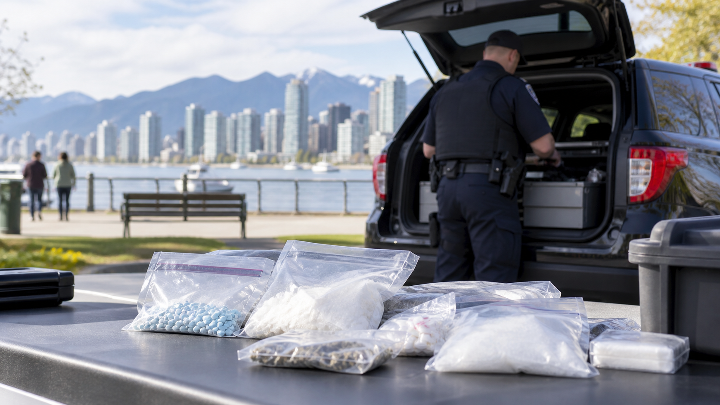
Police drug seizures increased during the first year of British Columbia's drug decriminalization pilot, according to a study released Wednesday by Simon Fraser University.
Under the pilot, police were not supposed to arrest or charge people for possessing up to 2.5 grams of certain illicit drugs for personal use. The initiative was intended to reduce interactions between police and people who use drugs.
Instead, the study found a significant upward trend in police drug seizures without arrest, said co-author Kanna Hayashi, an SFU health sciences professor and St. Paul's Hospital Chair in Substance Use Research.
Vancouver Police reported no possession seizures involving less than 2.5 grams between February and October 2023, according to the study. But self-reported data from people who use drugs showed a different pattern. Researchers said police statistics capture only incidents officers documented as drug-possession interactions, whether or not an arrest was made.
Hayashi said the research data may overlap with police data but likely also captured events that did not make it into police records. Each dataset is incomplete on its own, she said, but they offer deeper insight when considered together.
The decriminalization pilot ended in January 2026. The survey-based study, published in BMC Public Health, analyzed data collected from March 2022 through February 2024 from 490 participants in the Vancouver Injection Drug Users Study.
Before the pilot began, between 0.8 per cent and 2.1 per cent of participants reported having drugs seized without arrest. During decriminalization, that figure rose to between 1.1 per cent and 4.1 per cent. The researchers also found that participants reporting seizures without arrest were three times more likely to experience a non-fatal overdose.
Hayashi said losing a drug supply can have serious consequences during a toxic drug-supply crisis. People may feel compelled to replace drugs immediately, and rushing to obtain drugs from an unknown source and use them to avoid withdrawal symptoms may raise overdose risk.
Scotty Archondous, a researcher-member with Police Oversight with Evidence and Research, said the findings aligned with concerns raised by people with lived experience. Archondous, who is also a board member of the Vancouver Area Network of Drug Users, said he had heard directly from many people whose personal supply was seized during decriminalization.
He said seizures, often without charges or arrest, can place people already living precariously at greater risk of violence and harm through subsequent debts, desperation and, at times, disrupted access to a trusted source.
SFU researchers said the experiences of people who use drugs should be considered alongside police-reported statistics when assessing decriminalization policies. Hayashi said that, although the pilot has ended, understanding what happened and what could be improved can help shape future decriminalization policies in B.C. and elsewhere.