 Vancouver
METRO VANCOUVER NEWS
Federal government plans sweeping airport security changes after CTV News investigation
After a W5 investigation found cases in which airport workers allegedly switched passengers’ luggage tags to move drugs, the government plans tighter security clearances and restricted-area access. Bill C-39 remains in committee, while an opposition critic and an aviation expert say further measures are needed.
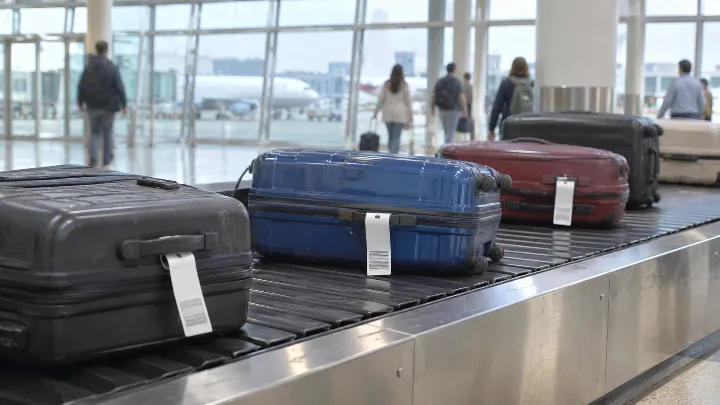
The third instalment of CTV’s W5 five-part investigation follows travellers who say they went from passengers to prisoners in a cross-border scheme that changed their lives. The investigation reported that corrupt airport workers were trafficking drugs using unsuspecting passengers’ luggage tags. Prime Minister Mark Carney’s government is now pursuing sweeping changes. Transport Minister Steven MacKinnon said in a recent interview from Parliament Hill that after seeing the report, officials “went back to the drawing board.” New legislation will tighten security-clearance requirements and access to restricted areas, he said.
In a luggage-tag switching scheme, a corrupt airport employee removes the tag from an unsuspecting passenger’s bag and attaches it to a suitcase filled with drugs bound for that passenger’s destination. A courier waits at the other end to collect it. If security intercepts the bag, the innocent passenger is left to face the consequences. W5 identified more than two dozen cases involving Canadians, almost all of them flying out of Toronto Pearson International Airport. Several were detained overseas, where police were not interested in hearing, “That’s not my bag.” The RCMP told W5 by email that 16 Pearson workers had been arrested over the past five years, mostly in drug-related cases, and at least five in connection with tag-switching schemes. Anyone with information about tag switching or corruption at Canadian airports can contact avery.haines@bellmedia.ca or jack.hauen@bellmedia.ca.
In an earlier W5 documentary, Trafficked: The Airport Conspiracy, a former RCMP investigator said airport insiders flagged for potential links to organized crime routinely keep their security clearances. Months later, the government acknowledged in an online discussion paper that it is not fully equipped to prevent organized criminals from entering “trusted positions within the transportation system.” The paper says the process for granting security clearances is not working properly. It currently focuses on screening out people who could endanger aircraft, but, Transport Canada wrote, this “limits our ability to consider … links to organized crime or patterns of suspicious activity.” The department added that organized crime is a growing threat inside Canadian airports.
MacKinnon said he plans to use expanded powers in Bill C-39, the government’s omnibus Building Canada Strong Act, to set “higher thresholds for security clearances” and further restrict who can enter secure airport areas. He said the government is watching more closely whether employees work in airport restaurants, on ground crews or as baggage handlers. The bill, now before Parliament, would let the minister change the security-clearance application process, grant or revoke individual clearances and expand the list of workers who need one. Transport Canada said the proposed system could screen more comprehensively for links to organized crime networks, involvement in suspicious activities, and signs of coercion, corruption or vulnerability to exploitation. Bill C-39 would also permit more information sharing about clearances with foreign governments and law enforcement. It is in committee and could pass before year-end.
Aviation management expert John Gradek said airport employees should be physically screened when entering secure areas so drug-filled bags can be stopped before they take flight. Cargo, food services and commissary supplies all need screening, he said, to ensure contraband is not brought in along with “50 or 60 packs of toilet paper.” MacKinnon said the government has increased the frequency of employee screening as they arrive for work and plans to increase it further. However, current screening may not stop drugs from coming in through the back door. The agency responsible for that screening looks only for items that could pose a threat to aviation security. Transport Canada spokesperson Hicham Ayoun said searching for drugs is outside the Canadian Air Transport Security Authority’s (CATSA) screening mandate; suspected illegal items found during screening are reported to the police of jurisdiction.
Conservative transport critic Dan Albas said the proposed changes are welcome but will not solve the problem. Organized criminals often seek to work with people who have clean records, he said, and those people may not be screened out by more intensive background checks. Albas suggested airports could photograph travellers’ baggage and review secure areas where employees handle bags to find blind spots used for tag switching. He said the minister could take those steps unilaterally without introducing another bill, adding that he was disappointed not to have seen more action.
The one-hour W5 special, Avery Haines Investigates, is scheduled to stream live on W5’s official YouTube channel Sunday at 10 p.m. ET and to air on CTV and Crave following the Grey Cup. The first two parts of the series covered a Toronto man facing 15 years in Albania after a Pearson luggage-tag switch, and victims suing across the system over responsibility.