 Vancouver
METRO VANCOUVER NEWS
Canada concludes trade talks with the Philippines and ASEAN, opening access to a market of more than 700 million people
Prime Minister Mark Carney announced that Canada has concluded negotiations for a free trade agreement with the Philippines and substantially concluded talks with ASEAN. Both agreements aim for signature in 2027. Ottawa says the ASEAN pact could add nearly $2 billion to GDP and create almost 14,000 jobs once in force.
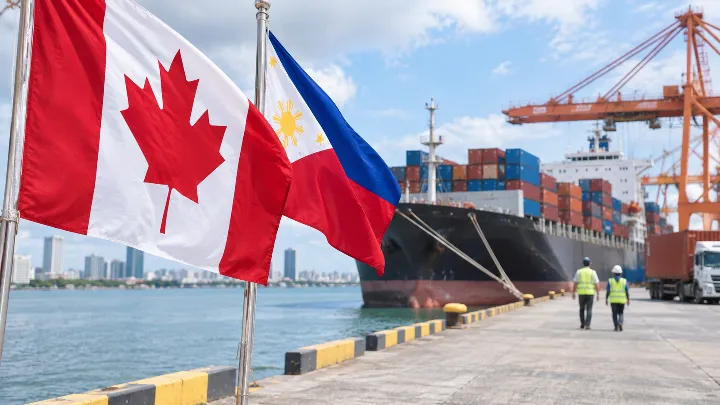
Prime Minister Mark Carney travelled to Manila for the 49th Association of Southeast Asian Nations (ASEAN) Summit and a bilateral visit with Philippine President Ferdinand Marcos Jr. He announced the substantial conclusion of negotiations for an ASEAN-Canada free trade agreement (ACAFTA). Canada and the Philippines have also concluded negotiations on a bilateral free trade agreement, one year after announcing their intention to pursue it. The two countries are working toward signing their agreement in 2027. Canada aims to sign the ASEAN agreement that year as well, with remaining steps to be completed as quickly as possible. Neither agreement is in force yet.
ASEAN has nearly 700 million people and an economy worth close to $6 trillion. Once in force, ACAFTA is expected to add nearly $2 billion to Canada’s GDP and create almost 14,000 Canadian jobs, particularly in agriculture and manufacturing. Canada announced $5 million in assistance to help every ASEAN economy support swift ratification and benefit from the agreement once it takes effect. The government says the pact will deepen Canada’s integration into Asian supply chains and provide more predictable conditions for Canadian workers and businesses.
The Philippines has an economy worth $680 billion and a population of more than 110 million. It is one of Asia’s fastest-growing economies. Once the bilateral agreement is in force, Canadian exports could increase by as much as three times by 2035, giving Canadian businesses greater access and certainty in the market, particularly for agriculture and forest products.
During the visit, Carney and Marcos advanced the Canada-Philippines Strategic Partnership and announced measures to strengthen defence and security cooperation. They include closer co-operation between the countries’ armed forces, a new cybersecurity dialogue, and steps toward agreements on customs co-operation and the protection of sensitive information. Canada will also extend its Dark Vessel Detection (DVD) program to 2033 to continue combating illegal, unreported and unregulated fishing. Developed in partnership with MDA Space, the platform uses satellites to detect and track vessels that have turned off their location-transmitting devices.
Carney announced $26 million in investments to strengthen Canada-Philippines ties in nuclear security and safety, climate-resilient agriculture, community resilience, food security and infrastructure, including in the G7-supported Luzon Economic Corridor.
Carney also welcomed three Canada-Philippines commercial memorandums of understanding. Ocean Supercluster, the Makati Business Club and the University of the Philippines Visayas will collaborate on ocean technology development. Draganfly Inc. and Razon Group will bring Canadian drone technology, training, infrastructure development and investment to the Philippines to support maritime and port operations, critical infrastructure protection and disaster response. JCM Power and the Aurora Pacific Economic Zone Authority will support investments in renewable energy projects to supply power to manufacturers, industrial businesses and data centres in the Philippines.
Carney said that, in a more dangerous and divided world, a dense web of connections helps keep relationships strong. He said the Canada-Philippines agreement, negotiated in one year, creates opportunities for farmers, ranchers, foresters and miners and puts Canada on track to triple exports by 2035. The ASEAN agreement opens a market of nearly 700 million people, he said. Carney described two agreements in one year as the speed and ambition the moment demands, adding that they would provide Canadians with more choice, customers and sovereignty.
International Trade Minister Maninder Sidhu called trade diversification Canada’s “Plan A.” He said Canada had substantially concluded negotiations with ASEAN and concluded talks with the Philippines, expanding opportunities for Canadian businesses across Southeast Asia. Sidhu said the agreements would help reduce tariffs and other trade barriers.
Carney is joined at the ASEAN Summit by Sidhu and Rechie Valdez, Minister for Women and Gender Equality and Secretary of State (Small Business and Tourism). At the summit, Carney will announce investments to strengthen co-operation with ASEAN partners on public safety, ocean protection, nuclear security and clean energy. Combined with the $5 million in technical assistance for ACAFTA, those investments total more than $15.9 million.
ASEAN was Canada’s fifth-largest merchandise trading partner in 2025. Two-way trade was valued at $52.5 billion, up 22.7 per cent from 2024. Negotiations toward ACAFTA began in 2021. At last year’s ASEAN Summit in Kuala Lumpur, Malaysia, Carney announced $25 million in technical assistance to ASEAN countries for effective implementation of the agreement.
The Philippines announcements build on progress made during Marcos’s visit to Canada in July 2026. The leaders established the Canada-Philippines Strategic Partnership, committed to concluding free trade negotiations by year-end and announced new co-operation measures. These included a Joint Declaration of Intent on Energy and Natural Resources Cooperation to support responsible resource development and strengthen resilient supply chains across the Indo-Pacific. They also included implementation of the Status of Visiting Forces Agreement, as well as a Mutual Logistics Support Arrangement and a Statement of Intent on Strengthening Defence Cooperation, to enable closer military collaboration, joint exercises and co-operation on maritime security.
Two-way merchandise trade between Canada and the Philippines totalled $3.4 billion in 2025, up 7.4 per cent from 2024. Canada’s stock of direct investment abroad in the Philippines was approximately $1.7 billion that year, up 44 per cent from 2024. Carney is due to travel next to Cambodia and China to continue efforts to build strength at home and diversify Canada’s partnerships abroad.