 Vancouver
METRO VANCOUVER NEWS
Opinion: An Okanagan community is building layered wildfire detection and response
Predator Ridge says years of investment in sensors, water infrastructure, fire response and community partnerships are central to preparing for worsening wildfire seasons.
Wildfire seasons are worsening in the Okanagan and many other communities, the author writes, pointing to destructive fires this summer in Summerland, Vernon and elsewhere. Predator Ridge says it has spent years investing in infrastructure, technology, people and planning to reduce risk and respond quickly when conditions change. The community received its first FireSmart designation in 2016 and has added a new layer to its system each year since. Its central lesson, the author says, is that wildfire preparedness is never finished.
TJ McNamara, Predator Ridge’s director of land management and development, has worked on that effort for decades. He saw how wildfire changed after the 2003 Okanagan Mountain Park fire, which destroyed 213 homes in the Kelowna area. McNamara said fires became larger and more aggressive after 2003, requiring changed practices. He said homeowners’ preparation and education strengthen the wider community, and that the work requires ongoing collective effort.
A resident-led Community Safety Committee works year-round on wildfire readiness through education, property risk assessments and community cleanups to reduce fuel loads. Predator Ridge also has a fire station on the property operated by Vernon Fire Rescue Services. It is staffed around the clock during high-risk season. At other times, volunteer firefighters can respond to an emerging fire while professional resources are mobilized. The author says fuel mitigation, early detection and an adequate response can help stop fires while they remain manageable.
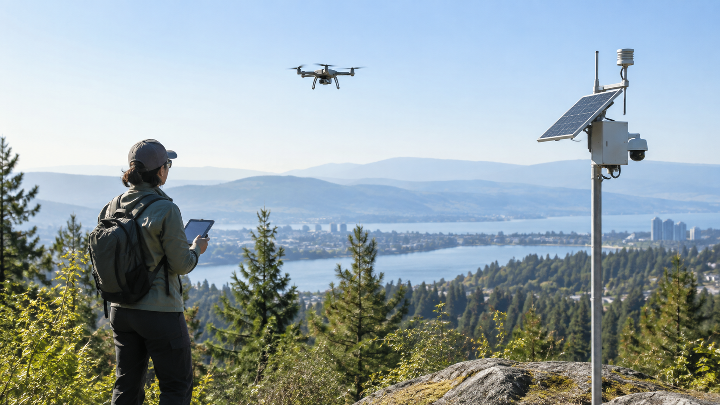
Predator Ridge says it was the first residential and resort community in Canada to invest in SenseNet wildfire detection technology. More than 100 sensors, gateways and cameras now provide coverage around the community. The system combines gas sensing, thermal imaging, artificial intelligence-enabled cameras and other data to identify potential fires early. It is monitored 24/7 in coordination with Vernon Fire Rescue Services and emergency management. McNamara said that when a sensor is triggered, the team can quickly assess the situation and send the right resources rather than guessing what to bring.
The golf courses have an extensive water and irrigation network. During elevated-risk periods, irrigation can be used strategically to raise local humidity and reduce the potential for fire to spread. This summer, Predator Ridge added a dedicated two-inch irrigation line along the full boundary between Ellison Park and Predator Ridge, with sprinkler heads about every 80 feet. The remotely controlled system can be activated without anyone on site and can operate without power because it is at the bottom of a gravity-fed line. The community is also connected to the City of Vernon’s municipal water, sewer and other services, and has numerous fire hydrants. The author says this infrastructure distinguishes it from more remote Okanagan developments, where municipal resources may be farther away.
During the 2023 Okanagan wildfires, Vernon Fire Rescue crews worked from Predator Ridge’s on-site fire station for more than 700 hours. Auxiliary firefighters, security personnel and Predator Ridge staff patrolled, assessed routes and implemented preventive measures. Two years ago, a lightning storm caused five spot fires in the area. Given the nearby threat, Predator Ridge worked with neighbouring property owners and emergency responders to share information and resources. That cooperation has developed into a stronger stakeholder network intended to speed information sharing and resource coordination when conditions deteriorate.
McNamara said it is critical to make homes fire smart, and that better preparation, education and cooperation leave homeowners and the community better positioned. The author argues that communities should treat wildfire resilience as part of how they are designed, built and operated, rather than as a seasonal exercise or checklist. Predator Ridge says it will continue investing in early detection, water infrastructure, fire response, fuel management, technology and people, so residents and neighbours can have confidence the community has planned and is ready to respond if a fire occurs.