 Vancouver
METRO VANCOUVER NEWS
Langley hit-and-run driver sentenced to house arrest
Marek Grundza pleaded guilty after striking an RCMP officer conducting speed enforcement in Langley City and leaving the scene. A judge imposed a two-year conditional sentence with partial house arrest, probation and a long driving ban; the convictions could also affect his ability to remain in Canada.
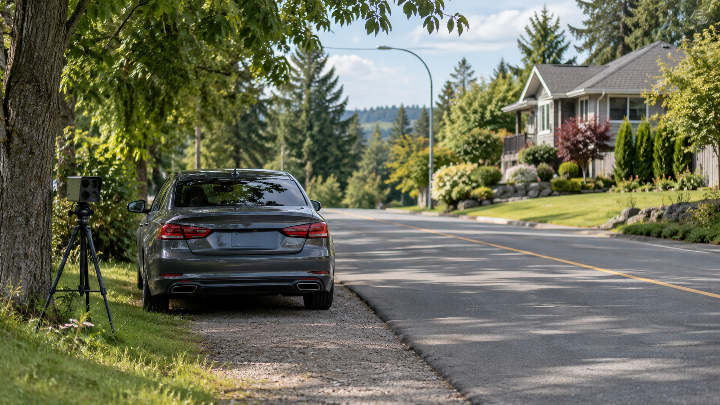
A Langley man who struck an RCMP officer and fled the crash scene will serve a two-year conditional sentence that includes house arrest, a B.C. Provincial Court judge ruled on Oct. 2. Marek Grundza pleaded guilty to criminal negligence causing bodily harm and failing to remain at the scene of an accident.
On Aug. 9, 2024, Grundza, then 22, was driving on 208 Street in Langley City at between 96 and 100 km/h in a 50 km/h zone. RCMP Traffic Section officer Const. Allen Weeks was positioned on the median for speed enforcement. After Weeks clocked Grundza’s speed, he stepped into a crosswalk and signalled for him to stop. Judge Michael Libby noted that Grundza first slowed down, then “suddenly accelerated and drove the vehicle right into Const. Weeks.”
The impact threw Weeks about 12 feet. He suffered a brain bleed and multiple fractures to the tibia and fibula in his left leg; the leg injuries required surgery. Grundza’s car stopped briefly, then he drove away.
Grundza was arrested later that day. His father told him to call his caseworker, a psychiatric nurse with Fraser Health, and the nurse called 911. After a 911 dispatcher called Grundza, he turned himself in to police. He initially lied, saying Weeks had thrown something at his car or flung himself at it. Grundza later admitted that he panicked when he saw the officer.
Before his arrest, Grundza searched Reddit and Google for information about hit-and-runs and calling police, and checked for news stories about the crash. He has no previous criminal record, but accumulated six Motor Vehicle Act offences between 2020 and 2022.
Two years before the crash, his mental health deteriorated sharply. After a head injury, he experienced anxiety and angry outbursts. He was eventually involuntarily committed to hospital and diagnosed with schizophrenia. He had delusions that family members, police officers and his psychiatrist were persecuting him. He was released from hospital with medication and counselling, and was not psychotic at the time of the collision.
Libby said Weeks and his family had suffered considerably, describing the situation as “emotionally devastating” for them. In his sentencing ruling, Libby wrote: “It likely goes without saying that no sentence imposed by the court can undo or lessen the misery caused by a crime or make anything better for the victims.”
Crown prosecutors sought a 2.5-year jail sentence, which would have sent Grundza to federal prison. His lawyers asked for a conditional sentence of two years less a day, which would place him under the provincial prison system and mean he would not serve time in an actual prison. They also sought six months of house arrest and a two-year driving ban. Libby agreed to a two-year conditional sentence, but imposed stricter conditions.
In addition to the conditional sentence, Libby ordered two years of probation and a driving ban lasting throughout the sentence and for five years afterward. The sentence includes an extended period of partial house arrest. For the first 14 months, Grundza may leave home only for medical emergencies, community service, counselling and treatment, and one day of outside work per week. He may also leave from noon to 2:30 p.m. every Saturday “for the purpose of attending to personal needs.”
For the next six months, he must follow a daily curfew from 6 p.m. to 6 a.m. For the final four months, the curfew will be relaxed to 10 p.m. to 6 a.m. He is barred from using any drugs, consuming alcohol or using cannabis throughout his sentence and the two years of probation. He is also prohibited from any contact with Weeks.
The judge noted that the sentence could affect Grundza’s residence in Canada. A Czech national, he has lived in Canada since arriving with his family at age five. He applied for Canadian citizenship but was rejected. “The convictions entered on these offences render him inadmissible to Canada for serious criminality,” Libby wrote in his sentencing ruling.
The federal government could seek to deport him. He would have the right to appeal a deportation order because he was not sentenced to a term behind bars.