 Vancouver
METRO VANCOUVER NEWS
Vancouver to explore tighter oversight and rules for new AI data centres
Vancouver City Council unanimously directed staff to examine stronger oversight of data centres, including third-party impact studies, annual public reporting and fees or other contributions for local benefits. The review comes as Westbank advances two proposed AI data centre projects in Vancouver.
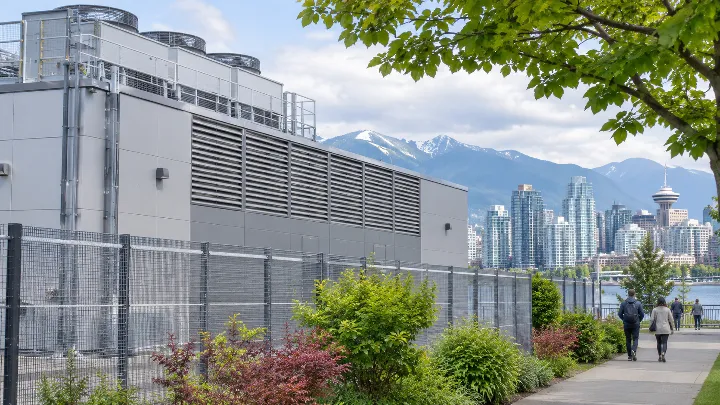
Vancouver City Council has unanimously directed city staff to examine stronger oversight of new data centres, including third-party assessments of their effects on surrounding areas, public reporting on operations and ways to secure benefits for local residents. A motion from OneCity Coun. Lucy Maloney, approved with amendments last week, asks staff to recommend how the city should assess and regulate data centres as artificial intelligence (AI) facilities grow.
Maloney told council that hyperscale data centres can bring significant challenges. Compared with many other industrial businesses, they are more resource-intensive and place greater strain on public infrastructure. They can consume large amounts of water and energy while producing pollution, waste heat and noise, and they tend to create fewer jobs than other industrial uses of the land. Maloney also said host communities often receive economic benefits far below the returns realized by investors. She called this a global issue and said cities are sharing practices to develop effective frameworks and ensure data centres make the best use of valuable land.
The decision comes as local developer Westbank pursues two proposed AI data centres in central Vancouver. One is a new 10-storey building at 150 West Georgia St. in downtown, planned entirely for AI data centre use. It would sit immediately beside BC Place Stadium and be integrated with the Creative Energy industrial steam plant on the same site. Excess heat from the data centre would be used to heat many downtown buildings. The other proposal would convert the existing M3 office building at 111 East 5th Ave., near Main Street, into a data centre. The building was previously part of Hootsuite’s headquarters and is at Westbank’s Main Alley tech campus in the Mount Pleasant Industrial Area.
Both projects are part of Prime Minister Mark Carney’s Enabling Large-Scale Sovereign AI Data Centres initiative. The federal government has identified a national security need for such “sovereign” facilities, intended to keep AI computing infrastructure and sensitive data in Canada and under Canadian control, reducing reliance on foreign providers. The initiative is intended to protect Canadian governments, post-secondary institutions, public institutions, researchers and businesses.
Telus is no longer a partner in the Westbank projects. Earlier this month, both companies confirmed the change: Telus said it is pursuing other projects elsewhere, while Westbank said it would continue with a new partnership that has not yet been announced. A spokesperson for the projects also told Daily Hive Urbanized they support Maloney’s motion.
The existing zoning at 150 West Georgia St. already permits data centre use. The M3 proposal is undergoing further city staff review. The previous council removed it from the July 2026 agenda and directed staff to conduct more public consultation, now scheduled for December 2026. The broader review prompted by Maloney’s motion will also consider facilities already operating or being converted, including one at 175 West Cordova St. on the southern edge of Gastown.
Under the approved motion, staff will examine whether AI data centre applicants should be required to commission third-party studies before seeking rezoning or permits. The studies would assess water use, greenhouse gas emissions, potential air pollutants, noise and heat, as well as ways to reduce those effects, including recovering heat for other uses. They would also compare the jobs a proposed AI data centre would create with those that other industrial activities could reasonably bring to the same site.
Staff will also examine a business licence specifically for data centres. The proposed approach would require annual public reporting of water use, electricity use and noise levels, and give the city a way to hold applicants accountable for commitments made during the approval process. Staff will explore fees or other contributions that could deliver public benefits and help address the demands data centres place on Vancouver. The aim is to put new municipal requirements in place before council considers new rezoning applications or staff approve new development permit applications.
Maloney’s original motion, introduced in July 2026, called for a temporary pause on considering major new AI data centre projects. At last week’s meeting, she said city staff had since told her that provincial legislation under the Vancouver Charter requires applications to be processed, making such a moratorium impossible.
Council also approved an amendment from COPE Coun. Solomon Yi-Kieran directing staff to develop a separate definition for AI data centres. The definition would distinguish them from conventional data centres and better account for significant differences in electricity and water use, noise and emissions.
ABC Coun. Mike Klassen also supported Maloney’s motion. He said the city should welcome technology investment while taking its effects on residents and surrounding neighbourhoods seriously. He pointed to Canadians’ heavy reliance on technology and services based outside the country, citing the recent Microsoft Outlook outage as an example. He also called for co-operation with the federal government, which he said still has considerable work to do on regulating the sector.
Klassen said local considerations should include noise, water and electricity consumption, heat, environmental effects and how data centres fit alongside neighbouring properties. He said clear guidelines and reasonable safeguards benefit residents, businesses and investors. Clearer expectations, he added, would give companies more certainty when proposing facilities and help Vancouver accommodate technology investment while addressing its potential impacts.
The AI data centre review was one of 11 wide-ranging member motions from Maloney, Mayor Pete Fry and COPE Coun. Sean Orr that council approved on Nov. 18.