 Vancouver
METRO VANCOUVER NEWS
Phnom Penh Declaration calls for renewed investment in peace and lasting stability
Francophone leaders adopted the Phnom Penh Declaration at their Nov. 15–16 summit. It sets out commitments on peace, democratic governance, youth participation, reliable information, responsible AI, economic cooperation and environmental protection.
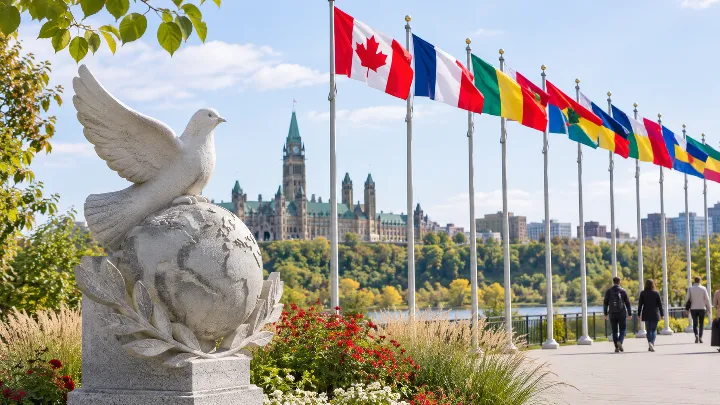
Leaders of countries and governments that share French as a common language met in Phnom Penh, Cambodia, on Nov. 15 and 16, 2026, for the 20th Sommet de la Francophonie. They adopted the Phnom Penh Declaration and chose the theme “Reinvesting in peace for shared prosperity and lasting stability.” The declaration says peace, prosperity and stability are inseparable, dialogue is essential to achieving them, and peace and stability cannot be taken for granted. It reaffirms the commitments in the Charte de la Francophonie and subsequent texts to peace, democracy, human rights, the rule of law, cultural and linguistic diversity, sustainable development, multilateralism and international law. It describes French as a language of international dialogue and negotiation, law, education and training, and a driver of creativity, innovation, solidarity, prosperity, and cultural, scientific and economic exchange.
The leaders say people face many challenges amid an increasingly fragmented and uncertain international order, and that La Francophonie should help find practical solutions. They support the Organisation internationale de la Francophonie (OIF) in promoting the rule of law and democratic governance, including credible, inclusive and sustainable institutional and electoral frameworks. They encourage stronger OIF efforts in crisis prevention and management, support for peace processes—including through mediation—and support for democratic transitions. The declaration calls for stronger engagement between regional and international organizations and backs greater co-operation between the OIF and those organizations, particularly the Association of Southeast Asian Nations (ASEAN) and the Pacific Community.
Support for young people is identified as a strategic priority. The declaration encourages youth civic engagement and commits to practical action through La Francophonie’s youth networks to address young people’s legitimate expectations and aspirations for a shared future. It urges peace education initiatives that help prevent and resolve conflict and reduce violence, in accordance with UN General Assembly Resolution A/RES/80/266. The leaders express concern about declining trust in institutions and its effects on democratic participation. They stress citizenship education and encourage work to promote the rule of law, democratic governance, anti-corruption efforts, inclusive dialogue, equitable access to opportunities and social cohesion. They reaffirm commitments made under the Kigali Call, adopted at the 46th session of the Ministerial Conference of La Francophonie in Kigali, Rwanda. The declaration also says exchanges between people are essential to cohesion and peace, welcomes programs that support French-speaking youth mobility, particularly those introduced since the 2024 Villers-Cotterêts summit, and calls for continued support for them as a priority.
On information, the declaration reaffirms the need for a reliable, high-quality information space and information integrity. It welcomes the Réseau des régulateurs francophones des médias’ contribution to dialogue between regulators and digital platforms. The leaders call for stronger efforts across the French-speaking world to counter information manipulation and foreign interference that could destabilize democratic institutions, and to promote media and information literacy. They also reaffirm the need to respect press freedom and support pluralism among professional, responsible media that provide reliable, high-quality information free of hate speech. The declaration renews support for multilateral public broadcaster TV5, citing its contribution to the French-speaking world’s cultural and economic influence, the discoverability of French-language content and French-language learning. It reiterates a commitment to take appropriate measures to give general-interest channel TV5MONDE, youth channel TiVi5MONDE and digital platform TV5MONDE+ distribution conditions as favourable as those of national channels, and to support their promotion.
The declaration recognizes artificial intelligence (AI) as a major technological innovation with the potential to boost productivity, competitiveness and modernization in support of shared prosperity. It says people must remain central to the transformation so AI is developed and used responsibly, ethically and inclusively. It warns that algorithmic bias and information manipulation can harm vulnerable people and threaten social stability. The leaders recognize AI’s strong influence on the creation, distribution and accessibility of cultural content and call for responsible development that protects and promotes diverse cultural expression while ensuring fair compensation for creators under copyright and neighbouring rights. They stress the importance of producing, managing and continually improving data from the French-speaking world so AI reflects and respects that diversity. The declaration calls on La Francophonie to strengthen its role in global digital governance and responsible, ethical AI, guided by inclusion and equity and relevant instruments such as the 2024 Global Digital Compact, to ensure effective interoperability. It encourages continued engagement in digital policy negotiations and decision-making, particularly through the World Summit on the Information Society process and preparations for the 2027 AI Summit in Geneva. It also calls for stronger AI and digital skills, especially among young people and women, to support appropriate use and participation in economic life.
The leaders say the economic Francophonie can help make societies stable and prosperous. They encourage major infrastructure projects, diversified partnerships, harmonized regulatory frameworks, simpler administrative processes, transparency and best practices to promote investment and sustainable growth. The declaration calls for collective reflection on the economic Francophonie’s structure, the roles of its participants and consistency in their work, as well as mechanisms to scale up initiatives and measure their impact through regular monitoring. It encourages initiatives to improve employability, entrepreneurship, skills and economic opportunities for women and young people, especially in growing areas such as the digital transition, green economy, cultural and creative industries, and innovation. It recognizes that mobility among economic actors can support mutually beneficial co-operation and encourages related initiatives while respecting national sovereignty and legal frameworks.
The declaration identifies the effects on peace and security of the “triple planetary crisis”—climate change, biodiversity loss and pollution—as a major challenge for humanity. It calls for La Francophonie to strengthen its contribution to implementing key international environmental commitments, including the 2015 Paris Agreement, the 2022 Kunming-Montreal Global Biodiversity Framework and the 2023 agreement under the UN Convention on the Law of the Sea on conserving and sustainably using marine biological diversity in areas beyond national jurisdiction (BBNJ). It welcomes the stated conclusions of the 17th Conference of the Parties to the Convention on Biological Diversity (COP17), held in Yerevan, Armenia, in October 2016, and calls for La Francophonie to contribute to the 31st UN climate conference (COP31), scheduled for Nov. 9, 2026, in Antalya, Türkiye, and the first meeting of the BBNJ agreement’s Conference of the Parties in 2027.
The leaders reaffirm that respect for and defence of cultural and linguistic diversity are essential to dialogue and peace. They support efforts to make French-language content discoverable in digital environments, in line with commitments in the declaration adopted at the fifth Conference of Francophonie Ministers of Culture in Québec in May 2025. They also support UNESCO’s work to adapt the 2005 convention to the digital environment. The declaration says sport contributes to personal growth and empowerment, and international sporting events bring people—especially young people—closer together. It welcomes the fourth Youth Olympic Games in Dakar, Senegal, the first time the event is being held in Africa, and wishes success to the 10th Games of La Francophonie, scheduled for Yerevan, Armenia, in 2027.
The declaration describes cultural and natural heritage as collective memory and as a resource for sustainable development, social and economic inclusion, and transmission between generations. The leaders resolve to strengthen French-language expertise in promoting, restoring and protecting heritage, including in conflict and post-conflict situations. They welcome the Réseau Francophone Numérique’s support for French-language documentary heritage and encourage it to continue its work, including capacity building, to bridge the digital divide. The declaration says La Francophonie’s strength lies in the diversity of its participants and unity of action. It offers full support to the summit’s direct and recognized operators and permanent ministerial conferences, and calls for stronger synergies, including through the co-operation council. It welcomes the Parliamentary Assembly of La Francophonie’s work on peace, conflict prevention, the rule of law and democratic dialogue, and notes its ambition to become an observer member of the United Nations.
The declaration recognizes the distinctive and decisive efforts of the summit’s direct and recognized operators to promote peace, shared prosperity and sustainable development through their daily work with populations. It names the International Association of Francophone Mayors, including its programs for cross-border co-operation and regional dialogue; Senghor University; multilateral public broadcaster TV5; and the University Agency of La Francophonie. It says their continuity must be collectively ensured and their funding sources further diversified.