 Vancouver
METRO VANCOUVER NEWS
Vancouver mayoral candidates clash over public safety and business policies
With two weeks until voters choose a mayor, five candidates debated public safety, housing, the economy and city hall operations at a Greater Vancouver Board of Trade forum.
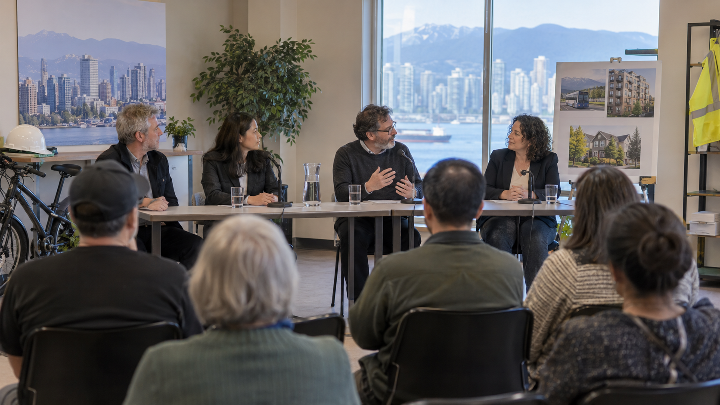
Vancouver voters are two weeks away from choosing their next mayor. On Friday, incumbent Mayor Ken Sim, the ABC Vancouver candidate, and challengers Colleen Hardwick, Rebecca Bligh, Kareem Allam and Pete Fry answered questions on public safety, the economy, housing and how city hall should operate at a Greater Vancouver Board of Trade debate. The candidates outlined their priorities and differences. Sim defended his administration’s record while acknowledging more work remains. He cited funding for 100 new police officers and more than 50 mental-health workers, as well as the Vancouver Police Department’s Task Force Barrage, which targeted crime in the Downtown Eastside. He also said the city removed more than 2,000 pages of bylaws, digitized processes and cut business licence categories from nearly 600 to fewer than 100. Sim said business licence approval times fell from 16 weeks in 2022 to two days. He described his focus as safer streets, a stronger economy and a city that works.
Public safety was central to Sim’s campaign message. He supports a plebiscite asking whether the city should strengthen its bylaws to prohibit hard drug use in public spaces. He argued that such a change would let police issue tickets and confiscate drugs without arresting someone. Sim also called on the provincial government to provide voluntary and involuntary care beds for people dealing with addiction and mental illness.
Former city councillor Hardwick, running with Team for a Livable Vancouver, emphasized fiscal discipline, economic development and reducing what she called unnecessary bureaucracy at city hall. She said her business background shaped her approach and that Vancouver needs to review spending, set priorities and measure performance. She described permitting and other municipal processes as too complicated. Hardwick said she would simplify building and business permitting, set service standards and reduce administrative burdens. In her first 90 days, she said, she would repeal the official development plan passed in March. She argued it takes a centralized, top-down approach and said neighbourhood planning should have a greater role. “Permitting should not be an endurance sport,” she said.
Bligh, a two-term Vancouver city councillor and former president of the Federation of Canadian Municipalities, focused on city finances, intergovernmental relations and business services. She criticized the city’s budget approach, saying a zero-per-cent property tax increase does not necessarily reduce the overall financial burden. She cited projected user fee increases and the use of money from the city’s property endowment fund as examples. Bligh also said Sim’s administration had not delivered the leadership Vancouver needs. She proposed indexing property taxes to inflation, with stable, predictable increases over a four-year term. For businesses, she proposed a small-business concierge service offering one point of contact to help owners navigate city departments, permitting requirements, costs and timelines. She said homelessness and street disorder require co-ordinated action by the city, province and health authorities, and proposed a leadership table involving the mayor, premier and Vancouver Coastal Health.
Allam, running for the Vancouver Liberals, made housing and economic development central to his campaign. He argued that young people are leaving Vancouver because of housing costs and availability, a lack of jobs, and concerns about front-line services and public safety. He proposed replacing Vancouver’s building code with the provincial code, saying the city’s rules add complexity. Allam also said 12 City of Vancouver departments can veto a project and proposed bringing approvals and permitting into one department. His other proposals included restoring the Vancouver Economic Commission, protecting industrial land and pursuing an innovation corridor connected to UBC.
On public safety, Allam argued the city should address organized crime and money laundering as well as street-level disorder. He cited concerns about illegal currency exchanges and bitcoin ATMs and said the city should act on reports Vancouver Police had previously sent to council. Asked what would define his term four years from now, he said he would measure success by whether Vancouver’s average age had become younger.
Fry, the Green Party of Vancouver candidate and a two-term city councillor, focused on transparency, street disorder and support for small businesses. He criticized the current city budget as much shorter and less detailed than previous versions. Fry said a priority in his first 90 days would be returning to a more detailed budget so residents and businesses could see where money is spent. He also proposed a “business navigator” to give businesses one point of contact at city hall. On public safety, Fry proposed a 24/7 non-police outreach team for non-emergency situations involving people in crisis. He also said he would repeal the bans on supportive housing and overdose prevention sites.