 Vancouver
METRO VANCOUVER NEWS
New $29-billion federal plan to put Canada on a path to end homelessness emphasizes adequate treatment and support services alongside housing
The 2026 federal budget proposes about $29 billion over 10 years to build supportive and transitional housing, treatment facilities and other services. Ottawa would cover capital costs and expects provinces and territories to fund ongoing operations and resident supports.
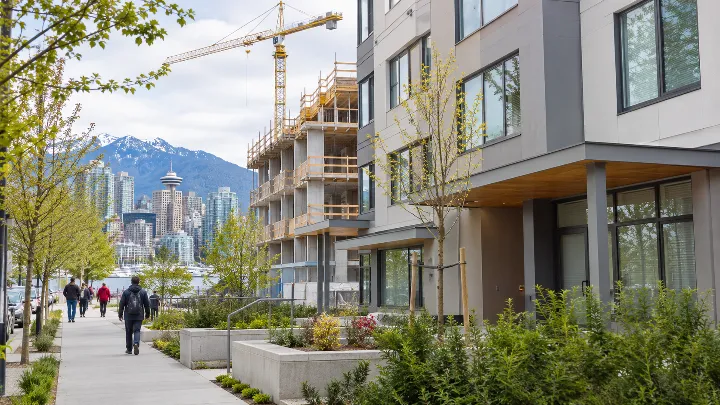
Prime Minister Mark Carney’s 2026 federal budget sets a 10-year goal of putting Canada on a “path to end homelessness,” backed by about $29 billion for housing construction, specialized health facilities for people with complex needs, rent assistance and other community supports. The federal government would help pay the upfront capital costs of buildings and facilities, while expecting provinces and territories to fund ongoing operations and the services residents need. The stated goal depends on co-operation among federal, provincial, territorial and municipal governments, Indigenous partners, non-profit organizations, charities, businesses and developers.
The budget says Canada has the resources, people and will to end homelessness, but every level of government and sector has a role. It calls for stable housing alongside health care, mental health and addictions treatment, crisis services and community supports. Planned spending includes $11.2 billion over four years beginning in the 2027/2028 fiscal year, followed by $17.8 billion over the remaining six fiscal years. By year, the plan allocates $2.36 billion in 2027/2028, $3.62 billion in 2028/2029, and $2.62 billion in each of 2029/2030 and 2030/2031. The package combines new initiatives with extensions of existing programs, including monthly rent assistance for low-income Canadians.
Finance and National Revenue Minister François-Philippe Champagne said in his budget address that thousands of Canadians would sleep in shelters or on the street that night without the security and stability of adequate housing. He said the government would renew Reaching Home and the Veteran Homelessness Program, work with provinces, territories and Indigenous partners to connect housing with mental health, addictions and community care, and build more affordable housing through Build Canada Homes.
**A focus on treatment as well as housing**
Under the revised approach, housing would be linked with mental health care, addictions treatment, employment assistance, training and income support. The aim is to help people find a home and address circumstances that could otherwise leave them homeless again.
The federal government plans an additional $10 billion through Build Canada Homes for supportive and transitional housing across the country. That includes $3.6 billion over four years beginning in 2027/2028, followed by another $6.4 billion in later years. Federal funding would cover capital costs such as construction; provinces and territories would be expected to pay for ongoing operations and resident services.
Another $5 billion would establish an Integrated Supports Fund through Build Canada Homes. The federal contribution would be $1.8 billion over four years beginning in 2027/2028, followed by $3.2 billion in later years. The fund would support projects combining housing with health care and social services. It could help build supportive and transitional housing, convert existing buildings, and attract investment from businesses and charitable donors.
The budget also provides $2 billion over two years beginning in 2027/2028 for the Health Infrastructure Fund under the Build Communities Strong Fund. The money would help build mental health and addictions treatment facilities so people can receive treatment before their conditions become part of the country’s mental health and addictions crisis.
The government is also looking to extend two existing homelessness programs for another decade. Reaching Home and the Veteran Homelessness Program would receive a combined $2.1 billion over three years starting in 2028/2029, plus $4.4 billion in subsequent years. The funding would continue homelessness services and prevention, including assistance specifically for veterans.
The Canada Housing Benefit would be renewed for 10 years, with $1.7 billion over three years beginning in 2028/2029 and another $3.9 billion in later years. It provides monthly rent assistance to low-income Canadians to help them find and keep housing.
The new approach addresses a longstanding gap: providing someone with a home does not, by itself, provide the treatment and daily assistance they may need to stay there. The federal government’s previous “Housing First” policy and funding priorities began in 2014 under Prime Minister Stephen Harper’s Conservative government. The approach emphasized moving people into permanent housing without requiring abstinence or treatment beforehand. A 2025 Mental Health Commission of Canada report identified inadequate funding, staffing challenges and inconsistent implementation as barriers to delivering the model effectively, which also includes health care and individual support.
In British Columbia, the outgoing BC NDP-led provincial government had acknowledged that some people with severe mental health and addictions issues, brain injuries and other complex conditions need more care than conventional supportive housing provides. The province’s supportive housing standard is largely non-clinical. In 2022, the B.C. government created complex care housing, a variation that provides extensive clinical and other support services. Some complex care units are located within supportive housing buildings.
In Metro Vancouver, residents and businesses near some supportive housing sites have blamed inadequate care, staffing and oversight for crime, open drug use, public disorder and sanitation problems spreading into nearby neighbourhoods and commercial areas. The complaints, and fears of similar effects elsewhere, have fuelled local opposition to new supportive housing and related services. Residents and businesses have also called for adequate mental health and addictions treatment, stronger security and greater accountability from governments, health authorities and non-profit housing operators. The federal government now explicitly links its housing investments to an expectation that provinces and territories strengthen funding for ongoing operations, health care and other supports, and demonstrate results. The budget says homelessness is not inevitable but results from gaps across housing, health, mental health, addictions and social support systems.
**Manitoba partnership**
The federal budget points to Winnipeg as an early example of how a model combining housing and health services could work through a federal-provincial partnership. The budget announcement highlighted an agreement with Manitoba’s provincial government the previous day. Prime Minister Carney and federal Housing and Infrastructure Minister Gregor Robertson were in Winnipeg the following day for the partnership’s formal announcement.
The partnership would bring more than $1 billion in new capital spending through Build Canada Homes. It includes the Winnipeg Centre for Mental Health and Addictions, which would provide acute and outpatient care alongside permanent supportive housing, transitional housing and wraparound services. Up to $800 million would go toward building 2,000 new supportive and transitional housing units in Manitoba. The provincial government agreed to provide funding to enable a certain standard of ongoing health care and support services.
For other parts of the country facing acute challenges, the federal government intends to negotiate separate housing agreements with other provinces ahead of the federal Spring 2027 Economic Update. The budget says the agreements would align with the 10-year goal, protect existing non-market housing, account for Build Canada Homes’ expanded role, and clarify responsibilities for affordable housing and targeted affordability supports. As federal capital investment grows, provinces and territories would be expected to increase funding for operations, health care and wraparound supports, and show progress against shared outcomes.
**How realistic is the 10-year goal?**
The budget’s repeated references to putting Canada on a path to “end homelessness” echo in Vancouver, described in the article as the epicentre of the country’s homelessness, mental health and addictions crisis. Federal Housing and Homelessness Minister Gregor Robertson was Vancouver’s mayor from 2008 to 2018. During his first mayoral campaign in 2008, he promised to end street homelessness in Vancouver by 2015. That deadline passed without the goal being achieved. The two goals are framed differently: Robertson’s 2008 promise was to end street homelessness in Vancouver by 2015, while the 2026 budget emphasizes creating the conditions to put Canada on a path toward ending homelessness within 10 years.
At a press conference in Winnipeg that day, reporters asked Robertson why he thought the federal effort could succeed when his Vancouver pledge had not. He pointed to insufficient funding and co-operation from the federal and provincial governments during his mayoral tenure, saying they had not co-ordinated or invested at the scale needed to address Vancouver’s challenge. He said the severity of the city’s homelessness crisis had motivated him to run for mayor. As examples of progress, he cited shelters later opened and operated by the city and the construction of 500 temporary modular homes in a single year near the end of his mayoral tenure, with provincial assistance.
Robertson said lasting results require a broader effort involving all levels of government and the people delivering services on the ground. He also stressed the need for Indigenous governments to be involved, noting the significant challenges homelessness poses for Indigenous people across Canada. He said all parties must work together, focus jointly on the goal, connect assistance with housing and health care, integrate those services and deliver them at pace.