 Vancouver
METRO VANCOUVER NEWS
ABC Vancouver platform proposes 4,200 rental homes on city-owned land and tougher rules for supportive housing operators
Ken Sim’s party says its housing platform would add middle-income rentals, speed approvals and seek provincial funding for care beds and replacement homes for aging SROs ahead of the Oct. 17 civic election.
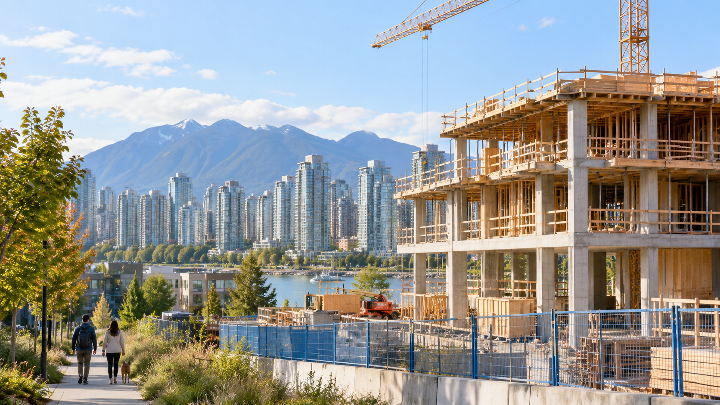
ABC Vancouver, led by Mayor Ken Sim, has released its “Keep Building Vancouver” housing platform, proposing construction incentives, about 4,200 middle-income rental homes on city-owned land and tougher enforcement for supportive housing operators with persistent safety problems. The party says the platform combines steps it would pursue within the City’s jurisdiction with requests to the next Government of British Columbia. Vancouver’s civic election is Saturday, Oct. 17, 2026, and the provincial general election is Saturday, Oct. 24. ABC also released its “Vancouver Agenda,” a set of 10 broader priorities covering housing, public safety, education, childcare and economic development, along with a plan for its first 100 days if re-elected.
ABC would explore a temporary “Start Building Vancouver” program to encourage developers to start approved projects sooner. If construction began within a specified period, certain municipal fees could be reduced or deferred. Rental housing, larger family-suitable homes and below-market rentals could qualify for additional incentives. The platform does not identify eligible fees, the amount of relief or the deadline for starting construction.
The party would give the City’s Vancouver Housing Development Office (VHDO) a stronger role in identifying vacant parcels, older civic properties and other underused city-owned sites for housing, while retaining or replacing existing public amenities where needed. The City would keep ownership and make land available through long-term leases and partnerships. Third-party organizations would build and operate a mix of secured purpose-built market rentals, strata market ownership housing and co-operative housing, while the City received ongoing revenue. ABC says an initial group of city-owned sites has been identified with potential for approximately 4,200 middle-income rental homes, which would also create a non-tax revenue source. Earlier this year, City Council approved several major rental projects proposed by the VHDO, but non-ABC councillors rejected the overarching implementation framework.
A separate workforce housing initiative would seek partnerships with employers, unions, non-profit organizations, and provincial and federal governments to help people working in Vancouver find homes in the city. Potential beneficiaries include nurses, teachers, firefighters, police officers, childcare workers and other middle-income workers. ABC says using city-owned land and partnerships on suitable sites could make projects financially feasible without placing the entire cost on property taxpayers. Its broader affordability approach is to reduce construction barriers and increase the number and variety of homes, giving renters more choice and putting downward pressure on prices. The party supports provincial and federal funding for social and middle-income housing, while arguing that Vancouver property taxes cannot sustainably subsidize housing across the wider market.
For smaller developments, ABC wants to make townhouses, rowhouses, multiplexes and family-sized apartments easier to build. It proposes more pre-approved designs, including buildings with four or six homes, to reduce design costs and approval delays for homeowners and smaller builders. The party would review rules it says add unnecessary costs to three-bedroom and other family-sized homes, and accelerate implementation of the City’s Official Development Plan (ODP) around SkyTrain stations, major streets and neighbourhoods identified for growth.
Faster permitting remains central to the platform. ABC says it would continue working toward its 3-3-3-1 targets: three days for renovations, three weeks for single-family detached homes, three months for multi-family and mid-rise developments, and one year for high-rise towers and other large projects. More applications would be handled through combined development and building permits, digital systems, and faster or automated reviews where appropriate. The party says projects that already meet zoning and building requirements should face fewer delays.
ABC cites City figures showing 12,795 homes approved in 2025, 54 per cent above the annual target, including 10,277 secured purpose-built rental homes. The City separately recorded more than 2,300 completions of secured purpose-built market rental homes, an annual level not seen in more than 40 years. ABC also cites permit-time reductions of 50 per cent for laneway homes, 36 per cent for single-family detached houses and 46 per cent for development permits for multi-family and mid-rise projects.
Voters in the civic election will also answer two non-binding public safety plebiscite questions: whether they support stronger enforcement against public hard drug use and the creation of a secure medical treatment facility. ABC is asking for at least 100 new involuntary and voluntary care beds somewhere in the city, potentially in part of the old St. Paul’s Hospital in the West End or at another suitable location. It wants the provincial government to commit to the strategy and provide a timeline and funding to implement and operate a facility.
The party wants overdose prevention sites (OPS) kept away from schools, parks and major commercial streets. It points to past experiences with some highly disruptive OPS facilities, saying nearby residents and businesses reported increased crime, public disorder and cleanliness problems in their neighbourhoods and business districts. For supportive housing, ABC proposes an enforcement system it calls “Three Strikes and You’re Out,” aimed at non-profit operators it considers unconcerned about being good neighbours. Operators whose buildings have repeated serious problems, such as drug dealing, violence, fires or other dangerous conditions, would have to make improvements. Measures could include stronger security, better management, tenant protections and closer work with health and emergency services. Providers that receive formal warnings and repeatedly fail to resolve serious, ongoing safety issues would face escalating enforcement. After three strikes, the City would seek to legally revoke the operator’s business licence.
On justice, ABC wants the provincial government to fund prosecutors, courts and other resources needed to support tougher federal bail and sentencing measures and address repeat offending. It also wants the province to press the federal government for a broader port-security strategy targeting organized crime, illegal goods and stolen-vehicle exports.
ABC is seeking binding provincial targets requiring municipalities across Metro Vancouver to accommodate supportive housing and homeless shelters, with future capacity prioritized in communities that have provided less. The party says Vancouver has about 25 per cent of Metro Vancouver’s population but more than 75 per cent of its supportive housing, much of it in or near the Downtown Eastside. Sim has repeatedly argued that Vancouver carries a disproportionate share and has called on other municipalities to enable supportive and complex-care housing and related services in their communities. In 2025, under ABC’s leadership, the City suspended projects that would add net new supportive housing in Vancouver, focusing instead on one-for-one replacement of aging single-room occupancy (SRO) buildings and temporary supportive housing.
For aging SROs, ABC wants the province to create a funded program providing residents with self-contained homes with private kitchens and bathrooms. It calls for sustained BC Housing construction funding over several years and protections against displacement for current residents. The platform criticizes provincial spending on SROs and argues that more investment should reach working families, single-parent households and young people who need inexpensive rental housing.
On education, ABC wants provincial school-tax revenue collected in Vancouver directed back to students in the city. It also seeks predictable childcare funding over several years, adjusted for population growth, new housing and local demand. The funding would cover both the cost of creating spaces and ongoing annual operating costs, at levels reflecting Vancouver’s costs. For energy infrastructure, the platform calls on the province to support the proposed Pacific Link oil pipeline to Metro Vancouver. Sim backs Prime Minister Mark Carney’s decision to designate the pipeline a project of national interest, arguing it would help Canada reach more export markets, create jobs and reduce dependence on the United States.
If re-elected, ABC says its first 100 days would include a new review of core municipal services to identify duplication and make the findings public, plus a single business assistance desk to simplify access to City support. It also promises better coordination among City Council, the Park Board and the School Board; visits to every school to hear from parents and students; and monthly public question-and-answer sessions with the mayor and relevant City representatives. The party would begin an audit and select five community centres for attention, deliver its agenda to provincial and federal governments and pursue discussions with the federal government. It also lists launching a “Good Neighbour Policy” and an “Affordability Action Plan.”