 Vancouver
METRO VANCOUVER NEWS
Clinical trial offers hope for Surrey boy who had infant leukemia
Beckett Tessarolo was diagnosed with acute lymphoblastic leukemia at nine months and joined a trial adding two drugs to treatment. Now 7 and in remission, he remains in follow-up and his family has raised about $475,000 for research and children’s care.
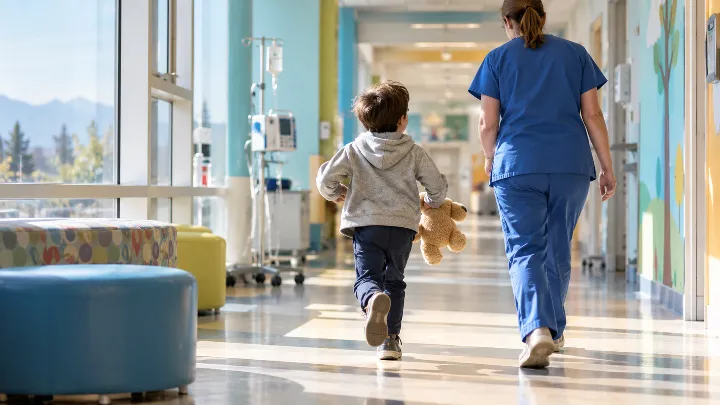
Seven-year-old Beckett Tessarolo is known for his big smile and quick one-liners. He started Grade 2 at Crescent Park Elementary in September and keeps busy with activities such as hockey and baseball. It is hard to imagine that he began a fight for his life just three months before his first birthday. His mother, Melanie, said in a recent interview that people who meet him now may not know he was ever sick. “You would not know it looking at him,” she said.
Beckett may not remember his diagnosis or the eight months he spent in hospital during the initial phase of a clinical trial, but Melanie remembers it clearly. She said everything was frightening and overwhelming. She took nine-month-old Beckett to a doctor because he had become unusually clingy and his skin colour had changed. The South Surrey mother recalled that he seemed out of sorts and was not acting normally. Bloodwork showed a serious condition. Their doctor came to the family’s home around midnight, woke them and told them to go to BC Children’s Hospital, where staff were expecting them. Melanie said she and Beckett did not come home afterward; she recalls that the first hospital stay lasted 57 days.
Beckett’s story began in February 2020, two weeks before the COVID-19 pandemic shut down “everything.” His experience was highlighted in September, during Childhood Cancer Awareness Month, alongside the launch of OPTIMISE, a clinical trial being conducted across Canada in collaboration with Australia. A news release said the study is designed to match children, adolescents and young adults with high-risk, hard-to-treat cancers to targeted therapies based on the genetic makeup of their tumours. It also said donations for this research are driving discoveries that improve children’s and youths’ lives today while helping redefine the future of child health.
Beckett was one of four B.C. children in the North America-wide TINI clinical trial. His parents had 24 hours to choose between enrolling him and proceeding with the standard chemotherapy protocol for acute lymphoblastic leukemia (ALL). Dr. Rebecca Deyell, a clinical instructor in UBC’s Department of Pediatrics, said the early-phase study added two drugs, bortezomib and vorinostat, to an already “very intensive” treatment regimen. Researchers hoped the drugs would improve outcomes for babies with the hardest-to-treat leukemia. Infant leukemia cases are typically more aggressive and harder to treat if they relapse later than cases diagnosed in children older than one year, Deyell said.
All four B.C. participants in TINI had improved outcomes, Deyell said. The two new drugs are now part of an upcoming TINI2 clinical trial, which will add a third drug to the regimen.
The choice to enrol Beckett in the trial was difficult. Melanie said she and her husband, Geoff, ultimately followed the doctors’ advice. When the parents asked one oncologist what she would choose for her own children, the doctor replied that she believed in science. Melanie recalled the doctor saying she believed the study aimed to find better outcomes and treatments, and that was what she would do. “So far … he has done well, so we’re grateful for that,” Melanie said.
The early journey was still difficult. Side effects kept Beckett in hospital for most of the first eight months, with only occasional, short stays at home. During the pandemic, only Melanie and Geoff could visit him, and Beckett could not be left unattended. Melanie did most of the hospital vigil while Geoff stayed home to care for their two older children, who were three and six at the time. Beckett later gained another brother, now four. Melanie called it a difficult juggle. The children could not see each other, and Geoff was the only person who could visit her in hospital, she said.
Despite the anticipated difficulties, Melanie said she has no regrets about choosing the clinical-trial path. She said families cannot know what will happen because the treatment is part of a study and had not been done before. There is fear of the unknown, she said, along with hope that science can improve care. Her family was grateful for access to the trial. Beckett was technically in remission within the first couple of months of treatment, Melanie said. He received treatment for two years in total, first through a central line and later through a port under his skin. He will remain under Deyell’s care, with appointments every six to 12 months, and in the trial until he is 18.
Deyell said Beckett did “really well” in the trial. She acknowledged that enrolling a child in a clinical trial is a hard decision for any family. Studies such as TINI often compare the best-known gold-standard treatment with that treatment plus something new that researchers hope will be better, she said. They do not know whether it will be better, but families may feel that taking part is worthwhile for their child and for children in the future.
Reflecting on the experience, Melanie said she believes everything happens for a reason and that it has made her appreciate the little things more, such as being home together for holidays. She knows some families cannot go home, she said. The hospital foundation was also very supportive, checking in often to ask whether the family needed help, from laundry to food.
The family began fundraising to support research and help fill gaps in access to diagnosis, treatment and client services. Melanie said they try to do whatever they can, including taking part in Balding for Dollars and the Leukemia & Lymphoma Society’s annual Light the Night event (https://www.lightthenight.ca/). They began in the first year because pandemic shutdowns had halted many fundraising events, limiting how much people trying to help them could do, she said.
The family’s efforts have raised about $475,000 to date, most of it benefiting the Leukemia & Lymphoma Society of Canada (LLSC). That includes $50,000 raised so far for the society’s 2026 Light the Night. They raised $75,000 for BC Children’s Hospital Foundation in 2021 (https://www.bcchf.ca/). Melanie is now working with the foundation to determine what more can be done. She hopes to support Deyell’s work directly and that Beckett’s story will raise awareness and encourage people to donate where they can. “It does make a big difference,” she said.