 Vancouver
METRO VANCOUVER NEWS
B.C. party leaders campaign on transit, the Massey Tunnel and public safety
The day after the leaders’ debate, B.C. parties returned to the campaign trail. The BC NDP pledged funding for bus rapid transit between Surrey and White Rock, while the BC Conservatives proposed replacing the Massey Tunnel project with a 10-lane bridge. Other parties outlined policing and labour policies.
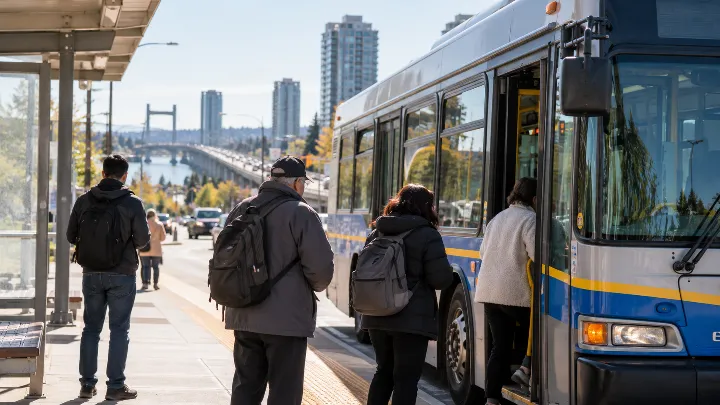
The day after the leaders’ debate, B.C.’s political parties were back on the campaign trail. BC NDP Leader David Eby returned to Surrey for the fifth time on Thursday, promising a plan to eliminate the $45 bus pass fee for low-income seniors and expand eligibility. He also announced funding for a major regional bus rapid transit project.
Eby said the commitment includes $250 million to work with the federal government to deliver bus rapid transit between Surrey and White Rock.
The BC Conservatives also addressed transportation on Thursday, promising to scrap the Massey Tunnel replacement project and build a 10-lane bridge instead. Ian Paton, the party’s candidate in Delta South, said a bridge would save taxpayers money, be built faster than the tunnel and be much further ahead environmentally.
In 2013, then-premier Christy Clark announced a $3-billion, 10-lane toll bridge that was to open in 2022. The new BC NDP government scrapped it four years later and announced an eight-lane tunnel replacement in 2021. In 2026, the government fired the main design consortium. The estimated cost has now doubled to more than $8 billion, with completion slated for 2031.
Eby said construction of a staging area for the tunnel is already underway and changing course again would come at a cost. He said redesigning the project yet again would mean years of additional waste and leave drivers stranded. He also said $3 billion in federal funding could be put at risk, perhaps never to be seen again.
Eby also criticized his Conservative opponent, Lorne Doerkson, for not yet releasing a costed platform explaining how much his promises would cost or how he would pay for them.
Meanwhile, the BC Conservatives dropped a candidate after he was accused of posting online remarks about Hitler and the Holocaust. The party confirmed in a reply on X that Jordan McIntosh, its candidate in Vancouver-Strathcona, would no longer be a Conservative candidate. The party also said online that, if elected, he would not sit in caucus.
CentreBC Leader Elenore Sturko also campaigned in Surrey. She said she would hire more police officers if elected and help fight extortion crime and dangerous repeat offenders. Sturko said CentreBC would hire 500 additional RCMP officers for the provincial business line. She said the RCMP provincial line had remained at 2,602 officers under the NDP and previous governments. The party wants to increase the number over five years, at a rate of 100 officers a year, to fill vacancies and expand important units.
The BC Green Party continued its campaign on Vancouver Island. Leader Emily Lowan was in North Saanich and outlined economic differences between her party and the others. She said governments had taken workers for granted for too long and used the NDP brand to enact an anti-labour agenda. She pointed to what she called the longest public-sector strike and longest nursing strike in the province’s history under Eby’s BC NDP government.
Lowan said that when the Greens sat across the table from the BC NDP to renegotiate a deal, they asked which side the party was on. She said the Greens then pushed for sectoral bargaining, a labour-rights model developed by Vince Ready, the same labour mediator Eby had relied on to support his tense relationship with unions. Lowan said David Eby’s refusal to support sectoral bargaining confirmed he was not on the side of workers.
According to a Green Party release, the Baigent-Ready model of sectoral bargaining would allow unions to reach a collective agreement covering all workers in an economic sector, rather than negotiating workplace by workplace. Lowan also said the BC Green Party plans to increase the minimum wage annually by the rate of inflation plus one per cent until it reaches parity with the living wage.