 Vancouver
METRO VANCOUVER NEWS
Burnaby uses Indigenous art to explain local natural hazards
The City worked with Musqueam artist Kelly Cannell on four works about Burnaby’s highest-risk hazards: fire, flood, earthquakes and tsunamis. The pieces support emergency management and share Host Nations’ perspectives.
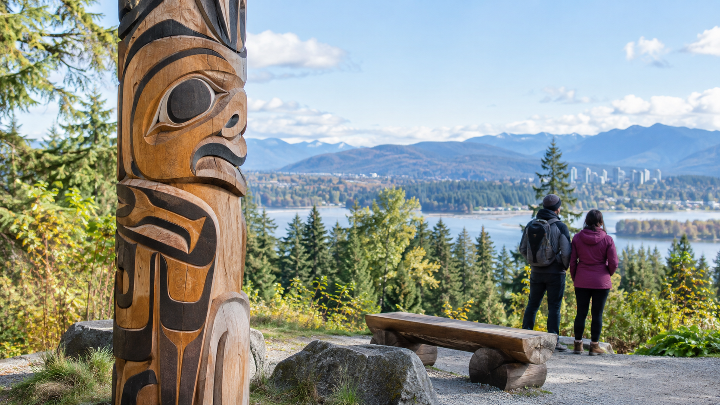
Burnaby staff collaborated with renowned Musqueam artist Kelly Cannell to illustrate the city’s four highest-risk hazards: fire, flood, earthquakes and tsunamis. The original designs tell a visual story of the relationship between land, water and people who have lived with these natural forces since time immemorial. They will help communicate the City’s emergency management principles and support mitigation, preparedness, response and recovery. The artworks include translations in hən̓q̓əmin̓əm̓ and Sḵwx̱wú7mesh sníchim, offering an opportunity to learn about the Host Nations’ experiences with and understanding of the hazards.
The earthquake design shows two Thunderbirds rising behind a fractured mountain peak. In Coast Salish teachings, the Thunderbird is a powerful being whose wingbeats bring storms, thunder and lightning. Triangular and weaving-inspired patterns on the mountain represent a traditional mountain-and-valley motif. The composition connects traditional stories and design elements to forces in nature without interpreting an earthquake solely as a spiritual event.
The flood design depicts two Sturgeon swimming through rising water. Sturgeon have long been an important food source for Coast Salish communities, particularly along the Fraser River, which connects communities across the Lower Mainland and farther north. Once abundant, they sustained generations, and their legends continue in oral traditions. Sturgeon also symbolize wealth, resilience and longevity. The artwork places them at the centre to link rising water with the river and honour their cultural role as guardians and sustainers.
The fire design depicts an Eagle emerging from flames. In Coast Salish culture, the Eagle symbolizes power, wisdom and prestige. It is revered as a master of the skies and a messenger between realms that carries prayers and teachings. The Eagle and fire are intertwined, reflecting fire’s dual nature as a force that can destroy, purify or renew, and its capacity to consume and regenerate.
The tsunami design features an Orca, described as a guardian of the sea, emerging within a rising wave as its pod breaches nearby. In Coast Salish culture, the Orca represents power, protection, family and connection, with teachings about unity, respect for nature and caring for one another. Legends tell of humans becoming Orcas and joining their ocean relatives. The design conveys the force of a tsunami while honouring the relationship between people and surrounding waters.
The City thanked Cannell for sharing her cultural knowledge, artistic talent and guidance. It said her work invites reflection on Coast Salish resilience and teachings, and on how traditional knowledge can deepen understanding of hazards and risk mitigation while supporting cultural safety and humility. The project was funded by the Province of British Columbia’s Indigenous Engagement Requirement Funding Program. The City said it is committed to advancing reconciliation through positive relationships and looks forward to continuing that work.
Cannell is a celebrated Indigenous Coast Salish artist from the Musqueam Nation in Vancouver, B.C. Her work reflects a deep connection to her culture and the natural environment, combining intricate detail and vivid colour with new approaches to traditional themes. Her interest in glass art has taken her to institutions including Pilchuck Glass School in Washington and The Glass Furnace in Istanbul, Turkey. In 2019, she received a contemporary art scholarship that gave her the opportunity to collaborate with master glassblowers at Berengo Glass Studio in Murano, Italy. She also refined her silk-screen printing and acrylic painting skills at Emily Carr University, combining traditional and modern techniques.
Her public art installations appear across Greater Vancouver and beyond, reflecting her commitment to environmental themes, cultural preservation and community engagement. In 2024, she received the Polygon BC Achievement First Nations Art Award. Further installations are planned. Through her art, she continues to preserve and evolve Coast Salish traditions and connect past and future.