 Vancouver
METRO VANCOUVER NEWS
U.S. trade war could push Vancouver rents higher, Rentals.ca analysis says
Tariff-driven increases in construction costs could delay or cancel purpose-built rental projects in Vancouver, tightening supply as population growth is expected to recover, Rentals.ca says.
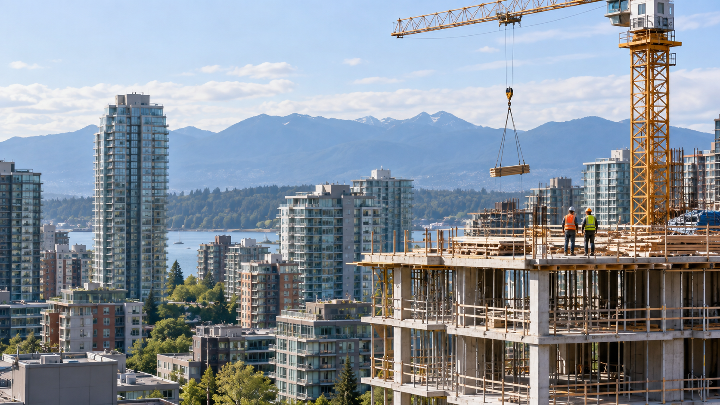
Vancouver rents have fallen steadily in recent years, but a new Rentals.ca analysis says the U.S.-Canada trade war could make that relief short-lived. The analysis says tariffs are likely to have an outsized effect on Vancouver’s rental market by increasing the cost of key materials used in high-rise construction.
Urbanation president Shaun Hildebrand said tariffs will affect the rental market through employment and construction costs before appearing in rent figures. Rental housing now accounts for most of the housing pipeline, he said, concentrating cost pressure on the main type of housing being built. Projects shelved this year could mean missing completions near the end of the decade, when population growth is expected to return.
Vancouver’s average asking rent peaked at $3,335 in September 2023 after rising rapidly following the pandemic. Demand then exceeded supply amid Canada’s long-standing shortage of purpose-built rental housing and unprecedented population growth. Since then, federal measures limiting population growth and incentives for new purpose-built rentals have put downward pressure on rents. A weak economy has also contributed, with young Canadians delaying moving out on their own.
Rentals.ca said tariff-related inflation is expected to have a greater impact on Vancouver and Toronto because both cities predominantly build concrete high-rises that depend on affected materials. Statistics Canada’s Building Construction Price Index showed metal fabrication prices rose 2.1 per cent quarter over quarter in the second quarter of 2026. Structural steel framing rose 1.8 per cent over the quarter and 7.2 per cent since the first quarter of 2025, while wood, plastics and composites fell 0.3 per cent in the quarter.
The blog said tariff pass-through is already measurably raising construction costs, particularly for steel and metal products, with less impact on materials produced in Canada. Alberta and Quebec may be less exposed because low-rise wood-frame buildings are more common there. Vancouver’s largely concrete high-rise development is more exposed to inflation in steel, rebar, curtain walls, elevators and mechanical systems, and many of those projects are purpose-built rentals.
Rising costs could lead already challenged projects to be shelved or cancelled, Rentals.ca said. Starts deferred in 2026 could become missing completions in 2030 and 2031, potentially coinciding with renewed population growth and a rebound in demand.
Housing starts in Vancouver have already been falling. Earlier this year, the BC Real Estate Association warned that if starts continue to decline and real-estate demand returns, home prices could eventually rise 27 per cent by 2032. Developers expecting to finance projects through presales in 2025 did not do so, while investors have been hesitant to return amid declining rents and real-estate prices. With little condominium construction to support supply, Rentals.ca said Toronto and Vancouver are doubly exposed to potential supply-side price shocks.