 Vancouver
METRO VANCOUVER NEWS
Carney and Ford launch $8.7-billion plan to protect workers and strengthen Ontario industries
Prime Minister Mark Carney and Ontario Premier Doug Ford announced $8.7 billion in investments and new measures for steel, automotive and critical minerals, aimed at supporting tariff-affected workers and businesses and strengthening the province’s industrial base.
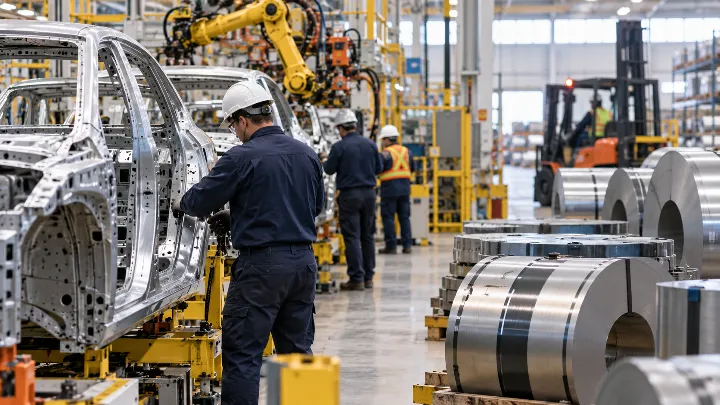
Prime Minister Mark Carney and Ontario Premier Doug Ford announced $8.7 billion in investments and measures to strengthen strategic industries, support workers and businesses affected by U.S. tariffs, and promote long-term economic growth. The federal and provincial governments say the plan will protect jobs, attract investment and keep Ontario industries competitive as Canada builds domestic strength and diversifies trade relationships amid global uncertainty. Ontario has major automotive and steel industries and extensive critical mineral deposits.
For steel, the governments will establish a Joint Steel Action Fund with five-year commitments of $3.55 billion from Canada and $1.67 billion from Ontario. The fund is intended to diversify production, prepare Canadian steel firms to supply emerging and growing industries such as defence, advanced manufacturing, energy and trade infrastructure, and open overseas markets. The governments will use the Buy Canadian Policy and Buy Ontario Policy to prioritize Canadian steel in public procurement and strengthen domestic demand. They also plan enhanced Canada Border Services Agency enforcement and tighter trade-remedy practices and compliance measures to address foreign steel dumping and unfair subsidies.
A Canada-Ontario Steel Task Force will advise on measures to support the sector and improve competitiveness. Its first priority is to identify ways to reduce steel shipping costs and recommend further measures as needed. It will also assess the effectiveness of trade measures and recent import trends.
For automotive manufacturing, the governments will invest an additional $2.5 billion over two years in capital projects: $1.5 billion from the federal government and $1 billion from Ontario. The funding is intended to help manufacturers purchase modern machinery and upgrade production lines for future connected and electric vehicles. Canada will keep greenhouse gas emissions standards for new light-duty vehicles at 2026 levels through the 2029 model year. Annual increases are to resume in the 2030 model year, in line with the country’s 2035 electric vehicle target in its new Auto Strategy. A Canada-Ontario Automotive Task Force will support the industry’s transition and coordinate implementation of new measures.
For the critical mineral supply chain, the federal government will match Ontario’s initial investment of up to $1 billion over three years for road infrastructure supporting development in Northern Ontario’s Ring of Fire region. The governments will set up a coordinated provincial and federal permitting process to streamline approvals and speed construction. They will identify priority projects that could benefit from federal initiatives, including the Canada Critical Minerals Accelerator, the First and Last Mile Fund, investment tax credits, cost-sharing arrangements and federal and provincial support measures. A working group will engage meaningfully with First Nations and identify economic and community development opportunities. Its work will also include studying options for conservation and/or Indigenous protected areas as development in the region proceeds.
The governments say the plan will fortify the industrial base, strengthen domestic manufacturing and open markets for Canadian-made goods. Carney called it an example of co-operative federalism and said Canada and Ontario were protecting jobs and investing in a stronger, more resilient and independent economy. Ford said the partnership would provide tariff-affected workers with certainty and stability while unlocking Ontario’s critical mineral resources and building a more competitive, resilient economy.
The federal government says it has provided more than $25 billion in support to Canadian workers and businesses affected by U.S. tariffs, and announced a further $7.5 billion in new and enhanced measures in August 2026. The package includes $1.5 billion through the Regional Tariff Response Initiative to help small and medium-sized enterprises, including with liquidity; a $500-million liquidity stream under the Business Development Bank of Canada’s Pivot to Grow program for immediate cash-flow pressures, alongside targeted programs for forestry, steel and aluminum; and broader access to the bank’s tariff-related programs by lowering the minimum applicant revenue requirement to $1 million. It also includes $2 billion through the new Canada Strong Diversification Fund for tariff-affected businesses with shovel-ready projects supporting ongoing capital maintenance, and $3.5 billion in Rapid Response Supports. Those supports help workers access income support through extended and additional temporary Employment Insurance flexibilities and assist their transition to new opportunities.
Canada’s automotive sector supports more than 120,000 direct jobs and contributes more than $16 billion annually to GDP. In February 2026, Carney launched a strategy to transform the sector, protect Canadian auto workers and businesses, accelerate domestic automotive manufacturing investment and position Canada as a global leader in electric vehicle production. The strategy allocates $3 billion from the Strategic Response Fund and up to $100 million from the Regional Tariff Response Initiative to help the industry adapt, grow and diversify into new markets. It also committed to maintaining counter-tariffs on auto imports from the United States to ensure a level playing field for Canadian automotive manufacturers in the domestic market.
Steel supplies materials for major infrastructure projects, homes, vehicles and energy facilities, and supports domestic manufacturing and supply chains. Canada’s steel industry supports more than 23,000 direct jobs and is integral to the 172,000 jobs in fabricated metals. Since March 2025, the federal government has announced measures to protect and transform the industry, including $1 billion for investment in domestic steel production, $150 million through the Regional Tariff Response Initiative, and $70 million for worker training and income supports. The investments have been accompanied by stronger protections against unfair trade practices, including tariff-rate quotas for free-trade and non-free-trade partners, and the Buy Canadian Policy, which prioritizes Canadian steel in federal procurement and infrastructure investments.