 Vancouver
METRO VANCOUVER NEWS
Richmond's municipal and B.C. elections one week apart could confuse voters, Brodie says
Richmond voters will choose municipal officials on Oct. 17 and provincial MLAs on Oct. 24. Outgoing Mayor Malcolm Brodie says signs for both campaigns could leave voters unsure about candidates, parties and which level of government is responsible.
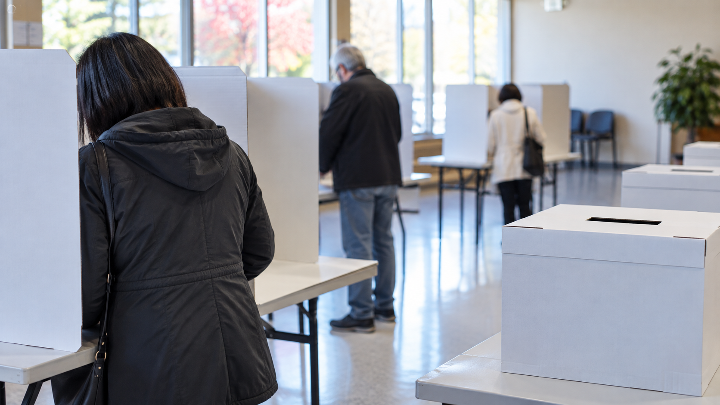
Richmond voters could mix up candidates in the municipal and provincial elections, which are only one week apart. Outgoing Mayor Malcolm Brodie told the Richmond News that confusion could “kick into high gear” when signs for both elections appear on city boulevards. Voters may be unsure about their choices, the parties candidates represent and which level of government they seek to join. Brodie called the premier’s decision to schedule the elections this way “very unfortunate” and said there was no need for it; it was the premier’s decision.
On Saturday, Oct. 17, Richmond residents will elect a mayor, eight city councillors and seven school trustees. A week later, on Saturday, Oct. 24, they will elect four members of the legislative assembly for Richmond Centre, Richmond-Queensborough, Richmond-Bridgeport and Richmond-Steveston. The municipal election has 90 candidates: seven for mayor, 55 for city council and 28 for school board. Fourteen candidates from five political parties are running for the provincial seats.
Brodie said there are “distinct differences” between the two levels of government, but also “a great deal of overlap.” The Canadian Constitution sets out provincial and federal jurisdictions. He noted that the province can delegate authority in certain areas to municipalities under the Local Government Act and the Community Charter. Cities are generally responsible for “everything you see around you,” Brodie said, including infrastructure, water and sewer systems, city planning and creating an Official Community Plan. The province is responsible for programs such as health care, social programs and education.
Municipal budgets are much smaller than the province’s, and cities rely largely on property taxes. Municipalities are estimated to receive about 10 to 12 cents of each tax dollar. Despite legislation, Brodie said, the line between provincial and municipal powers remains “a great deal of imprecision,” and cities often step in to fill gaps left by higher levels of government. The province is supposed to be responsible for the city’s social fabric, he said, but municipalities cannot ignore problems that arise in their communities.
Emergency shelter for unhoused people is one example: the province pays to operate shelters in Richmond, while the city provides the land for the buildings. Last year, when the Richmond Board of Education had to cut back its food program for low-income students, the city helped fund it. Brodie said cities could avoid responsibility for many local issues, but that is difficult when problems are right in front of them.
During his time as a municipal politician, Brodie said he has seen repeated confusion over whether the city or province is responsible for an issue. A common assumption is that anything happening in Richmond falls to the city. The city regularly receives correspondence about schools, for example, asking why there is no high school in Hamilton. Encampments on provincial land are also outside the city’s jurisdiction. When officials point out that an issue is a provincial or federal responsibility, people may think the city is passing the buck, Brodie said, but it is not.
### Province legislates density in cities
Despite the separation of powers, the province can override municipalities. Brodie cited legislation introduced nearly three years ago that required all municipalities to do away with single-family zoning. Under Bills 44 and 47, areas zoned for single-family homes had to allow four to six housing units, and density was permitted within 800 metres of rapid transit.
Before the legislation took effect, Brodie said, he spoke with the premier, the housing minister and several MLAs to argue that municipalities should decide how to increase density. He said he offered that the province could set its desired density, growth and housing requirements, while each city would determine how to meet them: every city is different, and “one size doesn’t fit all.” But, he said, the legislation was imposed “from southern Vancouver Island to the North.” He called that unrealistic, in his opinion, while acknowledging the province was constitutionally entitled to do it.
Brodie said the legislation would have allowed high-density housing and some high-rises in Steveston. Richmond city council secured a temporary five-year deferral of densification in the historic neighbourhood because the city is planning sewer and pipe work there. He also said he raised Steveston’s zoning with senior officials, asking why Vancouver’s Shaughnessy had heritage protections when Steveston is older. He said he never received an answer.