 Vancouver
METRO VANCOUVER NEWS
Former project director says a 10-lane Fraser River crossing could still become a bridge
Geoff Freer, who led the original bridge project, says its design could still be updated and used. He argues a bridge would be cheaper, faster and less risky than a tunnel, even as tunnel construction has begun and its projected cost has risen to $8.5 billion.
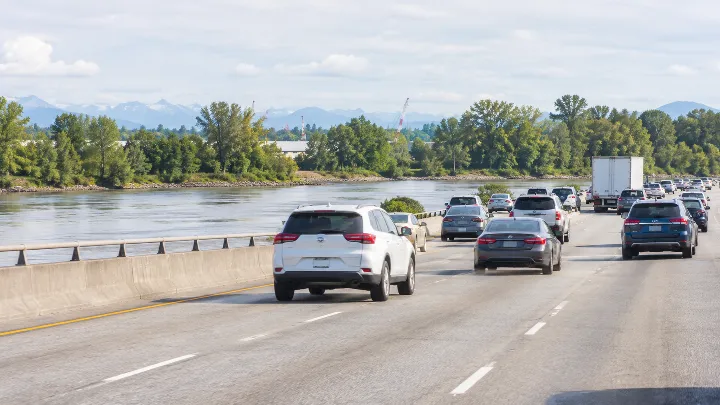
A new Fraser River bridge could be open by 2031 if work starts soon, says Geoff Freer, the former project director for the bridge once intended to replace the ageing George Massey Tunnel. Freer led the project from 2012 until the NDP government cancelled it in 2017. He previously directed the South Fraser Perimeter Road project and the Lion’s Gate Bridge rebuild. Now CEO of the Firth Group, he says a bridge would be quicker and cheaper than a tunnel, and that the original design could still be used.
Freer said he would retrieve and update the original plans because so much work had gone into them. He said people want the project completed with less risk. From what he can see while driving by, most of the work completed so far could be incorporated into a bridge project. He also said bridge costs and schedules are easier to predict.
Freer argued that digging a trench in the moving Fraser River and floating tunnel sections into place, with salmon in the river, is far less straightforward than building a bridge across the whole river with no piers in the water. After consultations, he said, a bridge was the obvious choice: the public and emergency responders preferred it, and the options pointed to a bridge that would cost less. He said significant time had been spent testing whether a bridge and piers could be built in the area, and that the work showed they could.
A tunnel had been considered before and underwent a risk analysis, Freer said. One concern was building a new tunnel beside the existing one. He cited seismic issues, soil conditions, the Fraser River current and tides as factors that make a tunnel much riskier. A bridge, he said, carries far less risk. Planning and preparation for the bridge more than a decade ago took several years and involved extensive consultation.
Freer said the project held five years of consultations with stakeholders, First Nations, municipalities and industry. His figures show 1,000 people attended five environmental review open houses; the public made 570 submissions; and a working group provided 1,500 comments. The project information office received 6,000 visitors between 2014 and 2017. The project team held 135 meetings with the City of Richmond, 125 with the City of Delta, more than 50 with Metro Vancouver and 35 with TransLink. Freer called it the most extensive consultation for any project in B.C.
The former bridge design included an underpass allowing northbound traffic on River Road to exit Ladner. Freer said the bridge had previously received an environmental assessment certificate, though he believes one is almost unnecessary because the bridge would span the river without piers in the water. The certificate was mainly needed because the project also included removing the old tunnel. Once complete, he said, the impact on the river would be “virtually negligible.” The Ministry of Transportation and Transit says the tunnel project will receive its environmental assessment certificate by the end of the year.
Freer said the project would fit with the Steveson interchange project. He noted that 60 per cent of northbound traffic on Highway 99 is headed to Richmond and 40 per cent to Vancouver. The proposed eight-lane tunnel, with two lanes dedicated to transit, would provide the same number of lanes as the existing George Massey Tunnel when its counterflow lane is in use. Freer praised the original project and its consultation work, and again said a bridge would be much cheaper than a tunnel, adding that people in the industry know this.
According to the Ministry of Transportation and Transit website, early construction on the tunnel began in January 2026. Work included tree clearing, utility relocations and preparation of a casting basin for the tunnel sections. It also included three jetties, a trestle bridge to Deas Island, access roads and retaining walls for the casting basin.
Last July, the government withdrew from the consortium of four companies formed to build the tunnel. It said it would retender and divide the work into separate projects to allow more local contractors to participate. The decision to proceed with a tunnel was formally announced in August 2021, with an original estimated cost of $4.15 billion. The estimate has since risen to $8.5 billion, and completion is still planned for 2031. The federal government has confirmed it will contribute $3 billion whether the crossing is a bridge or a tunnel. Federal Transport Minister Steven MacKinnon confirmed the funding at the Oct. 30 announcement of the RBT2 project.