 Vancouver
METRO VANCOUVER NEWS
Ottawa designates proposed Pacific Link oil pipeline a national priority project
The proposed pipeline would carry an additional one million barrels of Alberta crude a day to the B.C. coast for export. Ottawa aims to set construction conditions by September 2027.
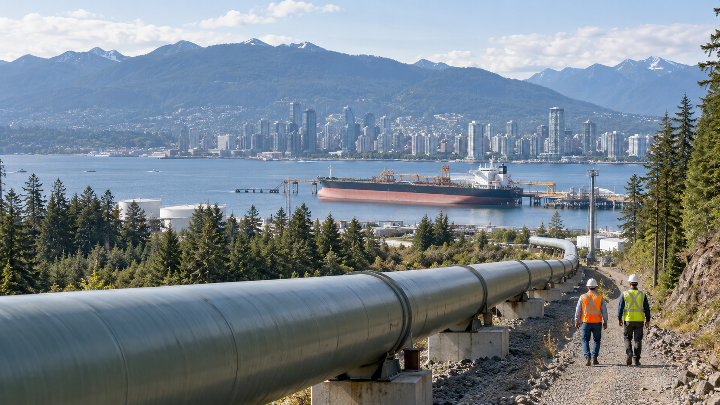
Prime Minister Mark Carney has designated the proposed Pacific Link oil pipeline a Project of National Interest under the federal Building Canada Act. The project would run from near Edmonton to Metro Vancouver and carry an additional one million barrels of crude a day to the coast for shipment to Asia and other international markets. Carney said it is critical to efforts to double Canadian exports to countries other than the United States and reduce reliance on a single trading partner.
Alberta has identified a southern route through British Columbia to Metro Vancouver as its preferred option. It would avoid the province’s North Coast and other sensitive coastal areas where a tanker ban remains in place, and largely follow the existing Trans Mountain corridor. The pipeline would cross some of Metro Vancouver’s southernmost areas to reach a major new storage and marine export terminal in Tsawwassen. The terminal would require a new causeway peninsula in the Strait of Georgia. Detailed route planning and environmental studies remain to be done. The federal government says it is also working with B.C. on the Vancouver Fraser Port Authority’s Roberts Bank 2 container terminal in Tsawwassen and the future Pacific Link oil export terminal.
The designation creates a single federal review process. The Major Projects Office and Canada Energy Regulator will develop requirements covering environmental protection, Indigenous considerations, ownership, economic benefits, local hiring and oversight. Carney’s target is to complete that work by September 2027, clearing the way for major construction. In the meantime, the companies and provincial and federal governments will work on detailed design, cost estimates, route mapping, environmental surveys, equipment and material purchases, and workforce needs. Trans Mountain Corporation would develop, build and operate Pacific Link on behalf of its backers. The federal government says Pembina Pipeline Corporation is a private investor contributing expertise to the project’s development.
The federal government says it and Alberta will each hold an equal ownership interest, while First Nations will be offered at least a 10 per cent stake, backed by federal and Alberta loan-guarantee programs. Alberta is participating through the Alberta Petroleum Marketing Corporation. Ottawa says officials consulted more than 130 Indigenous communities near potential routes in Alberta and B.C. over the past three months while considering the designation. The B.C. government was also consulted.
Alberta Premier Danielle Smith welcomed the decision, saying the pipeline would help Canadian energy reach more buyers and generate revenue for public services. Her government estimates the project could support up to 140,000 jobs at the peak of construction across Alberta and B.C. Operations, oil production, maintenance and trade could support another 50,000 jobs annually. The federal government estimates Pacific Link would add more than $20 billion a year to Canada’s gross domestic product and generate $100 billion in government revenue by 2060. Smith’s government separately projects that the additional oil production needed to supply the pipeline could generate more than $265 billion in extra provincial royalties over an expected operating life of more than 50 years.
The federal move to prioritize the project comes weeks before Alberta’s first separatism referendum. The province has clashed with previous federal administrations, particularly Justin Trudeau’s government, over pipeline proposals. The source says past federal policies and strategies were a major contributing factor in the growth of independence sentiment in Alberta. Smith said Canadians had watched investment leave, projects stall and opportunities slip away. She described Pacific Link as a vision built on growth and confidence, with Alberta energy reaching customers around the world.
In July 2026, under the new Canada-British Columbia Cooperative Prosperity Agreement, B.C. Premier David Eby said his BC NDP-led government had agreed to work with Alberta and Ottawa on routing and permitting. In exchange for the pipeline crossing the province and construction of a new marine export terminal, B.C. will receive a meaningful share of ongoing revenues from construction and operations of the pipeline and terminal. As of publication, the BC NDP had not issued a statement on Carney’s latest decision.
Conservative Party of British Columbia Leader Lorne Doerkson also welcomed the federal decision. He said B.C. should help other parts of Canada reach overseas buyers and benefit from the investment, jobs and public revenue major energy projects could bring. At a news conference, he called opposition to nation-building projects bad policy and “un-Canadian” during an economic crisis. If elected premier, he said he would call for a working group with Alberta, the federal government and First Nations to address environmental concerns and other issues. He said protecting the coast and building the economy could both be done.
Asked about residents concerned about construction near their homes or waterways, Doerkson acknowledged that parts of the route remain unclear and promised transparent discussions with residents and First Nations. He said some people he had spoken with viewed the project as “a short-term inconvenience for long-term gain for the province.” Asked whether a Conservative government elected after the October 2026 provincial election would seek to repeal the northern oil tanker ban, he voiced concern about the restriction but did not explicitly commit to removing it. He said he wanted to be cautious and environmentally aware rather than simply opening everything up.
Doerkson also promoted the Conservatives’ BC Energy Superpower Plan, which aims to double B.C.’s natural gas production by 2032 and triple it by 2035. He said a Conservative government would shorten permitting and approval timelines, seek international investment, and direct provincial ministries and agencies to work toward the targets. He argued that increased energy revenues could help fund hospitals, schools and infrastructure while keeping taxes low.
The Greater Vancouver Board of Trade welcomed the announcement, saying wider access to overseas customers would make Canada less vulnerable to disruptions involving existing trading partners. Its president and CEO, Bridgitte Anderson, said Pacific Link could help spur a broader wave of investment, alongside LNG Canada’s second phase, mining and critical-mineral projects, potash expansions and transportation infrastructure such as Roberts Bank Terminal 2. Earlier this week, LNG Canada’s private-sector owners made the business decision to proceed with the $33-billion second phase of their liquefied natural gas production and export facility in Kitimat, B.C.