 Vancouver
METRO VANCOUVER NEWS
Maple Ridge advances biodiversity health and indicators study
Maple Ridge is moving ahead with a study to understand and monitor local biodiversity. The proposed framework will connect community values, indicators and municipal action, with the study expected to be completed in early 2027.
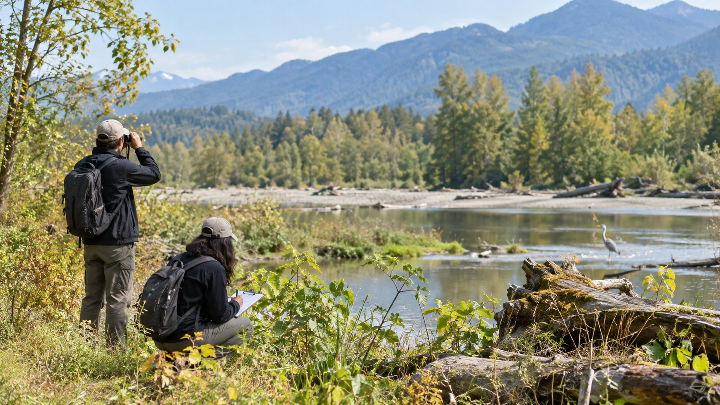
The City of Maple Ridge is moving forward with a Biodiversity Health and Indicators Study to better understand, monitor and support biodiversity across the community. Council recently received an update on initial community engagement and preliminary framework direction shaped by the community’s vision. The proposed approach links biodiversity to Maple Ridge’s long-term health, safety, resilience and prosperity. It looks beyond individual environmental features to consider how lands, waters, wildlife and people are connected, and how City decisions can protect and restore natural systems over time as the community grows.
The work builds on existing City plans and initiatives, including the Official Community Plan, Resilient Future 2050 Climate Action Plan, Urban Forest Management Plan and Green Infrastructure Management Strategy.
**What the City heard**
The City’s Thriving Maple Ridge online survey and interactive map were open to the public from June 8 to Aug. 4, 2026, and received 112 responses. An open house was held June 15, and the City’s Climate and Environment Advisory Committee took part in an engagement exercise on July 15.
Water was the strongest theme. Residents identified streams, wetlands, groundwater, salmon, watershed health, water quality and water availability as priorities. Participants described Maple Ridge’s natural environment as a connected living system rather than a collection of separate assets or issues: streams, forests, wildlife, food systems and neighbourhood character are closely linked. Many shared personal experiences, including gathering food and medicines, teaching children near creeks, observing seasonal changes, tending gardens and boulevards, collecting rainwater, and responding to low well levels in Thornhill.
The City is continuing engagement with Katzie First Nation and Kwantlen First Nation, as well as community organizations, local land managers, under-represented groups and the broader public. Their perspectives will help refine the framework and priority actions as the work progresses.
**Draft framework**
The proposed Biodiversity Health Indicator Framework will help the City connect environmental values, measurement activities and on-the-ground responses. It will include a community-informed vision and values focused on healthy lands and waters, stewardship, reciprocity, intergenerational well-being and people’s relationships with nature. Decision-making principles will include responsibility, respect for Indigenous interests, transparency, evidence-informed action, long-term thinking and accountability. Its stewardship direction will prioritize protecting ecological integrity, avoiding harm, restoring degraded areas and contributing positively to natural systems.
The framework will also set goals, objectives and indicators to monitor biodiversity conditions and identify City actions that can support improvement over time. Monitoring and response tools will track trends, pressures and concerns, identify emerging risks, and support timely action through City policies, programs, stewardship initiatives and management practices. Potential tools include a biodiversity ledger and a detailed habitat-balance approach, linking monitoring with meaningful response and continuous improvement.
The source also emphasizes that everyday actions by residents support biodiversity. The community-informed vision and values focus not only on healthy lands and waters, but also on intergenerational well-being and knowledge transfer, relationships and reciprocity with place, and the important role people play in caring for and learning from where they live.
**Next steps**
The study is expected to be completed in early 2027. Next steps include identifying where important ecological and community values overlap with growing pressures and impacts, while understanding strengths and pressures in community programming; creating maps showing community well-being and relationships with biodiversity; improving potential biodiversity measures, limits and management actions; recommending approaches for monitoring, stewardship, policy and governance; exploring ideas for a guardianship program and a future Water Balance Model; and creating an internal roadmap for including biodiversity in City decisions, such as development reviews, capital planning, parks management, budgeting and Council reporting.
At a time when biodiversity is declining globally, local communities have a pivotal role in protecting and restoring the lands and waters that sustain life. The City says the framework aims to support informed action and long-term accountability through monitoring, stewardship, governance and community partnerships. More information is available at https://engage.mapleridge.ca/BiodiversityFramework.